
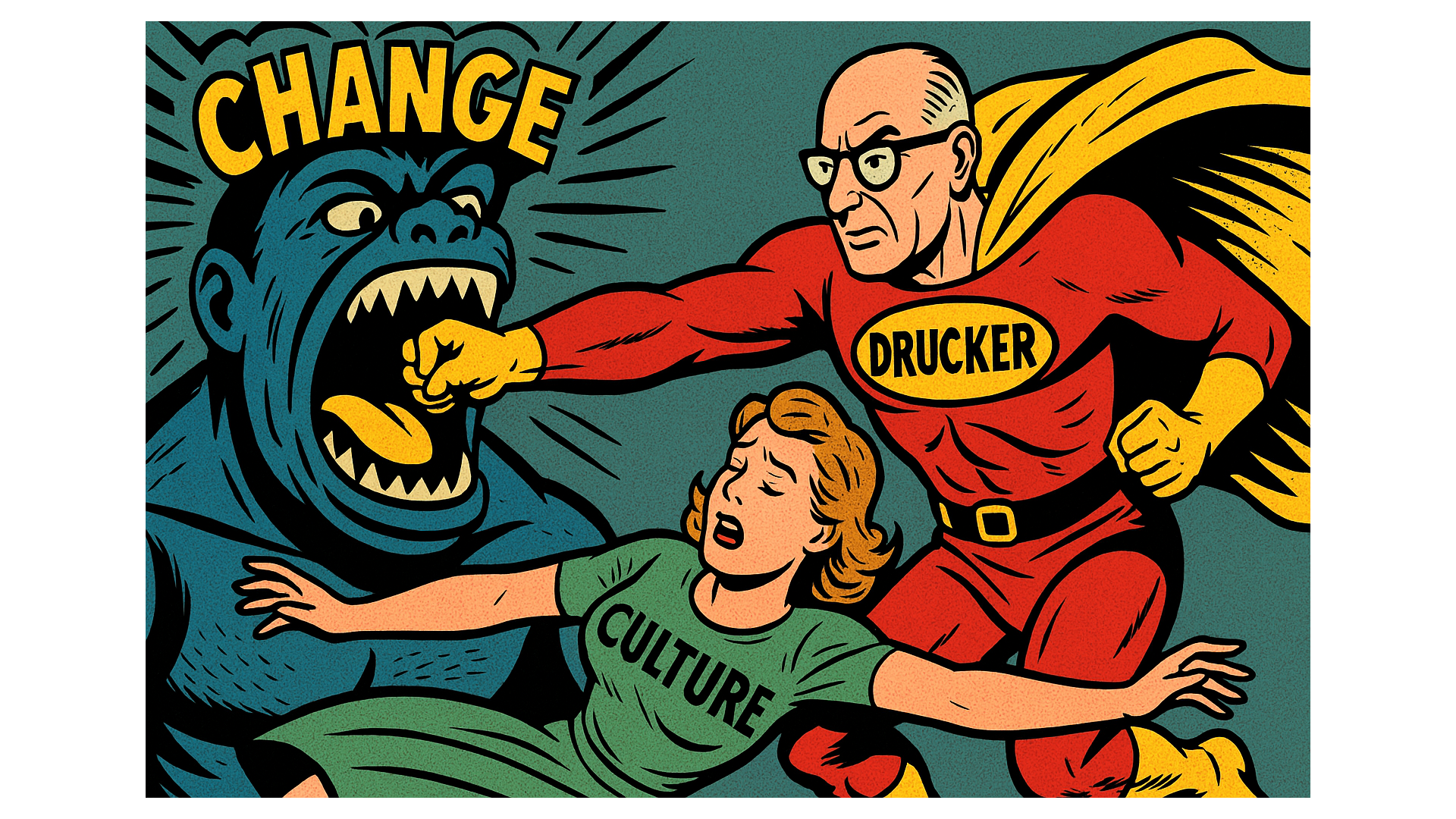
Peter Drucker famously warned that “Culture eats strategy for breakfast.” Today, as organizations race toward AI-driven futures, his wisdom has never been more relevant. Boards ask for AI roadmaps, pilot programs, and productivity breakthroughs, but experienced technology leaders recognize one crucial truth: Your culture, not your technology, determines your AI success.
You can invest significantly in top-tier AI talent, sophisticated models, and robust infrastructure. Yet if your organizational culture resists innovation and experimentation, even the most ambitious AI strategies will stall.
The Cultural Disconnect Is Real and Expensive
Consider these recent findings:
- According to BCG, 70% of digital transformations fail, and more than 50% of these failures are directly linked to cultural resistance.
- Gartner highlights that just 19% of organizations move successfully from AI experimentation to broad adoption.
In other words, the biggest obstacle isn’t technology, it’s your people.
Why Culture is Your Real AI Enabler
AI reshapes how teams operate, make decisions, and deliver value. Organizations thriving in an AI-powered environment typically share these cultural traits:
- Open to experimentation (instead of focusing solely on perfection)
- Driven by outcomes (rather than task completion)
- Decentralized and agile (rather than rigidly hierarchical)
Without embracing these cultural shifts, your AI initiatives risk becoming ineffective investments.
Critical Questions for Technology Leaders
Before diving into AI projects, pause to reflect on these questions about your organizational culture:
- Do employees see AI as a threat or as a helpful partner?
- Are leaders genuinely comfortable learning from failures, or is perfection still expected?
- Do innovation activities translate into meaningful business outcomes, or are they primarily for show?
- Is your decision-making process agile enough to support rapid AI experimentation and implementation?
Your responses will help identify the key cultural barriers and opportunities you need to address.
Success Stories: Companies Mastering Culture-First AI
Here are organizations that successfully navigated cultural challenges to harness the power of AI:
- Microsoft: CEO Satya Nadella introduced a growth mindset, fostering experimentation and cross-team collaboration. This culture paved the way for successful AI products such as Copilot and Azure OpenAI.
- DBS Bank: DBS embedded a “data-first” culture through widespread employee AI education. This investment led to rapid AI adoption, significantly improving customer service and reducing response times by up to 80%.
- USAA: USAA positioned AI clearly as an augmentation tool rather than a replacement. This approach fostered employee trust and improved both customer satisfaction and internal productivity.
Cheat Codes for Technology Leaders: How to Accelerate Cultural Readiness for AI
Instead of complicated frameworks, here are three practical cheat codes to drive rapid cultural change:
1. Shift the AI Narrative from Threat to Opportunity
- Clearly position AI as an ally, not an adversary.
- Share success stories highlighting how AI reduces repetitive tasks, increases creativity, and boosts employee satisfaction.
2. Democratize AI Knowledge Quickly
- Rapidly roll out AI training across your entire organization, not just among tech teams.
- Use accessible formats like quick-start guides, lunch-and-learns, and internal podcasts. Quickly increasing organizational AI fluency helps accelerate cultural change.
3. Celebrate Rapid, Open Experimentation
- Foster a culture that openly celebrates experimentation and accepts failures as valuable learning opportunities.
- Publicly reward teams for trying innovative ideas, clearly communicating that experimentation is encouraged and safe within defined boundaries.
Final Thought: AI Transformation is Fundamentally Cultural
Technology opens the door, but your culture determines whether your organization steps through. AI transformation requires more than strategy and investment in tools. It requires intentional cultural shifts influencing how your teams operate daily.
As Peter Drucker emphasized decades ago, culture can derail even the most ambitious strategy. However, technology leaders who master the cultural aspects of AI transformation will create an enduring competitive advantage.
#DigitalTransformation #AI #CTO #CIO #ProductStrategy #Culture #EngineeringLeadership #FutureOfWork #PeterDrucker
 bencoding