
In product management, we often obsess over features, user stories, and roadmaps. But the most strategic conversations often center around two deceptively simple questions: How much should we charge? and What do people think we’re worth? These two questions cut to the heart of the relationship between brand and price, a relationship every product leader must learn to navigate.
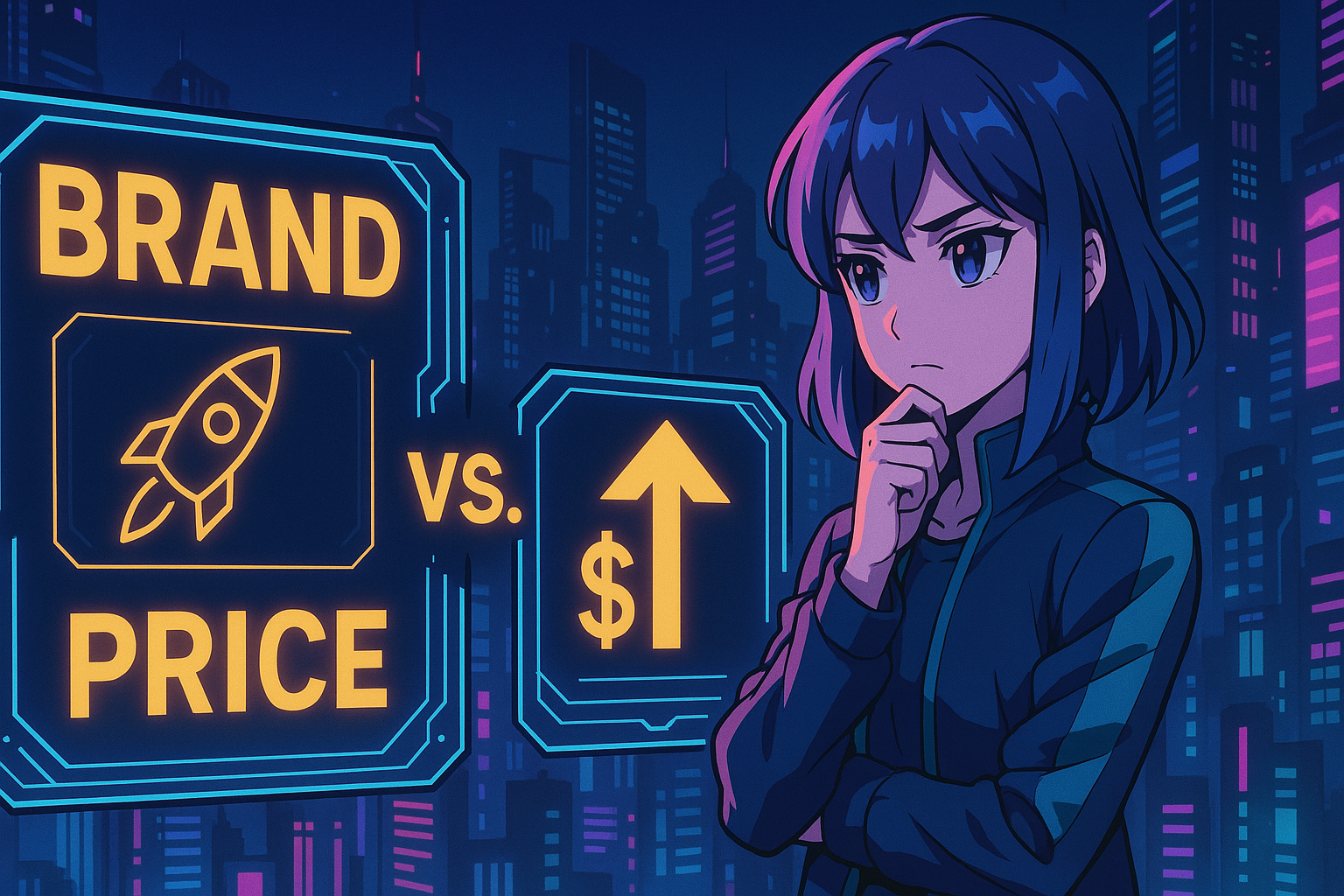
Brand and Price Are Not Separate Tracks
Too often, brand is viewed as a marketing function and price as a finance lever. But in reality, they are deeply interconnected. Your brand defines perceived value, and your price captures it.
If your product is seen as premium, strategic, or mission-critical, you can justify higher pricing, lower churn, and even slower delivery cycles. If your brand is weak or undifferentiated, you may find yourself in a race to the bottom, competing primarily on features and discounts.
How Brand Impacts Product Strategy
A strong brand gives product managers room to:
- Delay commoditization. Apple’s iPhone rarely leads in specs but consistently leads in margins.
- Build for long-term value. Atlassian’s success came from building utility over time, not hype at launch.
- Design pricing tiers around perceived value. Notion and Figma used design and UX to justify professional pricing, even with freemium entry points.
How Pricing Shapes Brand Perception
Pricing is not just a revenue tactic. It is also a clear statement of positioning.
- Zoom vs. Google Meet. Zoom priced higher and leaned into reliability and enterprise readiness. Meet was bundled into G Suite, signaling simplicity and convenience.
- Airtable vs. Excel. Airtable’s polished experience and higher per-seat cost suggest modernity and innovation, compared to Excel’s utilitarian legacy.
Low pricing can diminish perceived value. Overpricing without strong brand signals can drive away potential customers. Product teams must ensure that pricing reflects strategic intent, not just cost or competitor benchmarks.
A Framework for Brand and Price Alignment
To align brand and price through product decisions, ask yourself:
- What does our target market value most: price, prestige, reliability, or speed?
- Does our current roadmap reinforce our brand promise or contradict it?
- Are we bundling and pricing in ways that strengthen our market position?
- How does our pricing compare to our competitors, and what does that say about us?
Examples in Action:
- Slack offers free team versions and usage-based pricing, reinforcing its identity as a friendly, accessible work tool.
- Salesforce embraces premium and complex pricing that reinforces its reputation as the enterprise standard.
- Linear maintains a minimalist, premium feel by carefully curating its features and emphasizing speed over bloat.
The Role of Growth Teams
Growth teams act as the connective tissue between product, marketing, and revenue. They provide valuable insights into how users perceive brand and respond to pricing.
- Conversion data highlights where perceived value breaks down. If users drop off at the paywall, the issue may be the mismatch between expectation and price.
- Pricing experiments validate assumptions. Growth teams can test package structures and feature gates to learn what resonates.
- Brand-led growth loops, like Superhuman’s invite-only onboarding or Notion’s template ecosystem, build perceived value without discounting.
In many cases, growth teams help product managers answer the hardest question: Do people value what we’ve built enough to pay for it?
Final Thought
Brand and price are not just marketing or finance concerns. They are fundamental to how your product is designed, delivered, and perceived. Every roadmap decision and packaging choice shapes how customers see your value.
Great product leaders do more than ship features. They shape perception, define value, and build trust through intentional design and strategic pricing.
#ProductStrategy #CPO #CTO #CIO
 bencoding