
-
Context Window Compaction in Mastra: How to Keep Agents Sharp as Conversations Grow
Some teams think about long context the wrong way. They treat the context window like a storage upgrade. Bigger model. Bigger window. Bigger bill. Problem solved. That is not how this works in production. As conversations get longer, the real challenge is not whether the model can technically accept more… Read more ⇢
-
How to Ship Microsoft Agent Framework Skills from a CMS Instead of the File System
Most teams start with Microsoft Agent Framework skills on disk because that is the default mental model the framework encourages today. In .NET, FileAgentSkillsProvider is explicitly documented as an AIContextProvider that discovers skills from filesystem directories and follows a progressive disclosure pattern: advertise the skill, load the full SKILL.md only when needed, then read supporting resources… Read more ⇢

-
How to Read Microsoft Agent Framework Skills from a Database Instead of the File System
Most teams start with file-based skills because that is the built-in model in Microsoft Agent Framework today. In .NET, the built-in FileAgentSkillsProvider discovers SKILL.md files from directories, advertises skill names and descriptions in the prompt, returns the full skill body through load_skill, and reads supporting files through read_skill_resource. That model is clean, portable, and easy to… Read more ⇢
-
Task Context vs Shared Context: The Mental Model That Makes AI Product Teams Actually Scale
AI did not introduce the need for context. It exposed how little of it most teams have. Right now, “context engineering” is having its moment. People talk about RAG, long context windows, tool calling, and standards like the Model Context Protocol. (Model Context Protocol) Those are real advances. But they… Read more ⇢

-
Your Agent Does Not Need More Prompt. It Needs Memory.
Most teams try to fix weak agents by rewriting prompts. That is usually the wrong move. The real issue is that the agent has no durable memory model. It can answer the current turn, but it cannot reliably carry forward user preferences, prior decisions, task context, or the small facts… Read more ⇢

-
Defining Product Value: Stop Treating Products Like Projects
Most leadership teams say they are building “product value,” then immediately measure it like a finance exercise. ROI. LTV. Payback period. Those numbers matter, but they are also the fastest way to undervalue the most important products you will ever build. The uncomfortable truth is that many of the products… Read more ⇢
-
How to Add a Secure JavaScript Execution Tool to Microsoft Agent Framework
There is a recurring moment in agent design where a team realizes the model does not just need to reason. It needs to compute. It needs to transform JSON, run a formula, post-process extracted fields, normalize dates, build a dynamic object, or apply domain logic that is simply easier to express in… Read more ⇢

-
The Steinberger Threshold
Most leaders are asking the wrong question about AI. They ask whether their teams are using it. They ask which model to standardize on. They ask whether agents are ready for production. They ask how quickly they can drive adoption. That is all downstream. The real question is simpler and… Read more ⇢
-
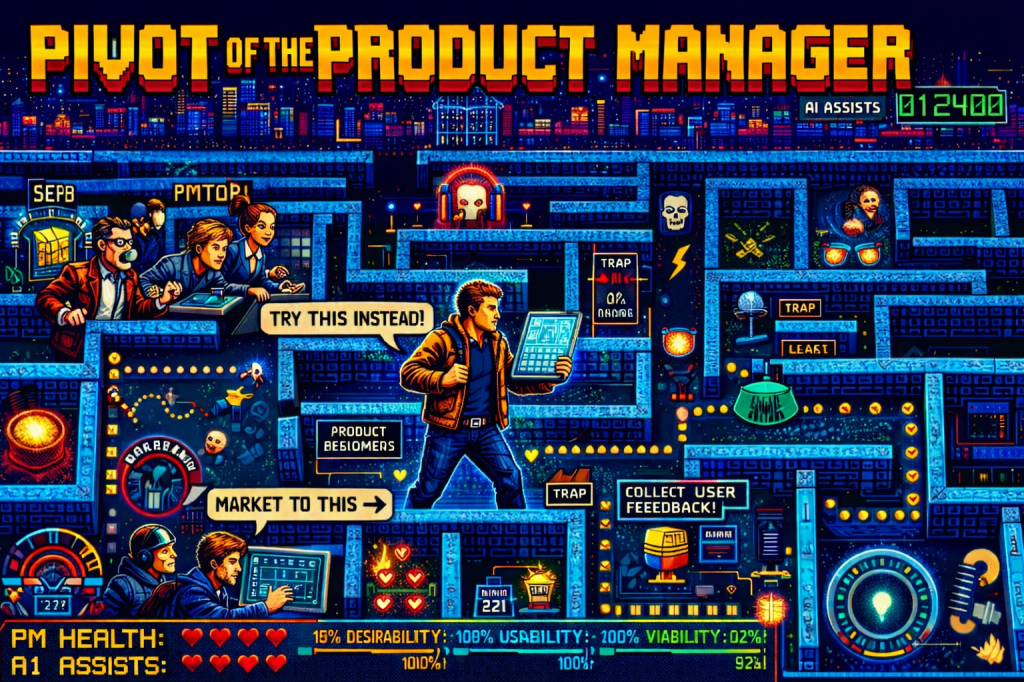
AI is not killing the PM role. It is being forced to grow up.
Agile changed the choreography of delivery, but it did not fundamentally change the cast. We kept the same job titles, the same swim lanes, and mostly the same power dynamics. AI is different because it collapses the distance between intent and execution. Engineers can prototype in hours. Designers can ship… Read more ⇢
-
Subscribe
Subscribed
Have a WordPress.com account? Log in now.

