Aligning Technology and Marketing for Success in the AI Era

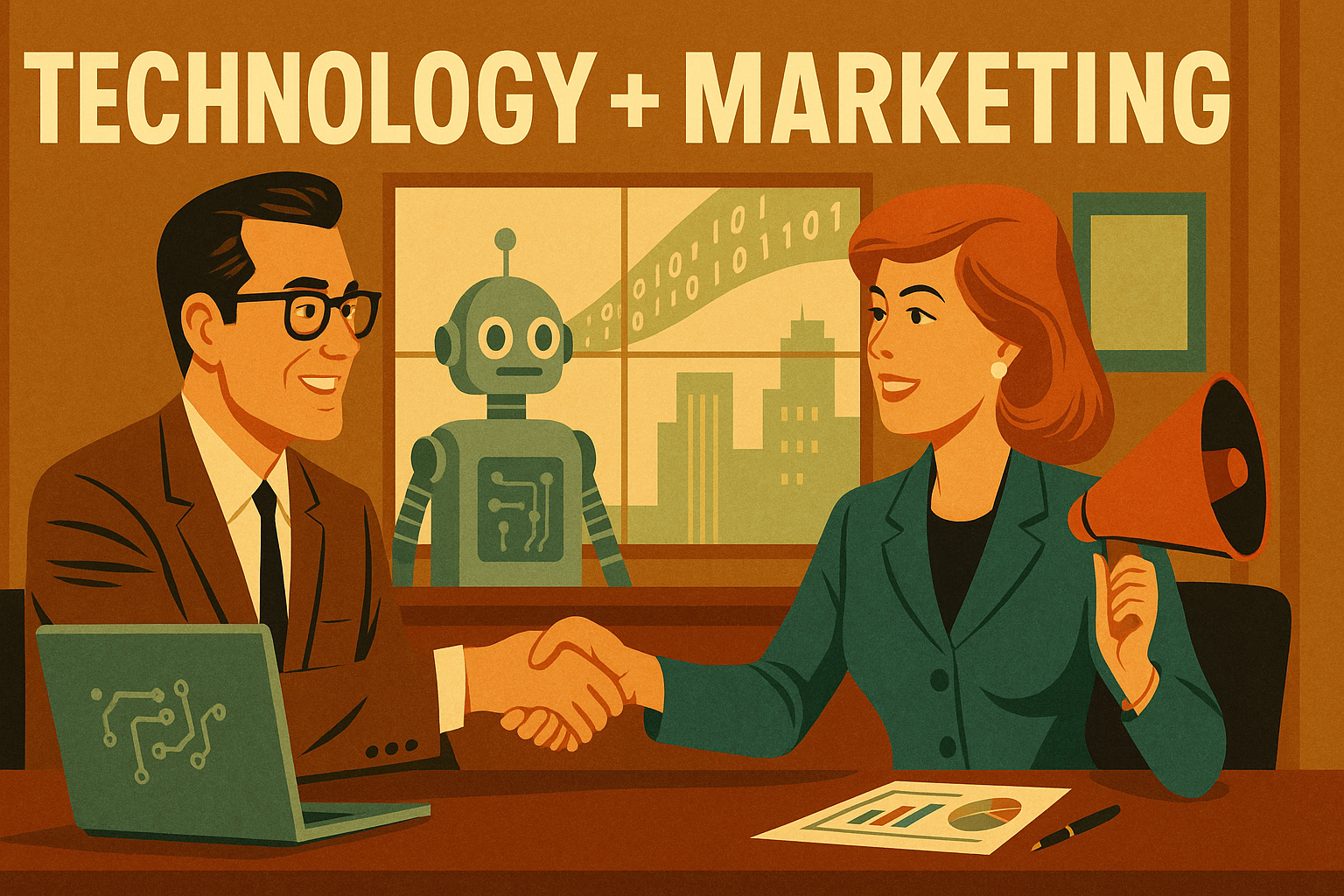
In today’s hyper-competitive marketplace, the alignment between Technology and Marketing is more crucial than ever. Companies that fail to integrate these critical functions often miss significant opportunities to enhance customer engagement, optimize marketing effectiveness, and leverage technological innovation for competitive advantage. Despite recognizing the importance, many organizations still operate in silos, resulting in fragmented strategies, disconnected customer experiences, and missed opportunities in leveraging data and AI advancements.

The explosion of AI technology has intensified the need for deeper alignment. When Technology and Marketing teams collaborate effectively, they unlock transformative growth, drive superior customer engagement, and position their organizations at the forefront of innovation. Here are the top five things Technology teams need to align with Marketing teams:

1. Customer Data Strategy

Technology and Marketing must jointly define a cohesive strategy for customer data collection, governance, and utilization. Companies like Netflix and Spotify demonstrate exceptional collaboration, using data to personalize customer experiences dramatically.

Reference: How Spotify Uses AI for Personalized Experiences

2. AI-driven Customer Insights

AI’s ability to process vast amounts of data and derive actionable insights necessitates close coordination between Technology and Marketing. Marketing teams rely on AI-powered insights provided by Technology teams to refine segmentation and personalization strategies. Starbucks leverages AI through its “Deep Brew” initiative to personalize promotions and optimize store operations.

Example: Starbucks AI Personalization Case Study

3. Marketing Automation and Infrastructure

Marketing teams require robust, flexible technological infrastructure to deliver personalized content efficiently. Technology teams must align closely with Marketing to select and implement platforms like Salesforce or HubSpot that support agile, scalable marketing operations.

Resource: Salesforce Marketing Automation

4. Security, Privacy, and Compliance

As marketing increasingly utilizes sensitive consumer data, Technology and Marketing teams must jointly address cybersecurity, privacy regulations (like GDPR and CCPA), and data ethics. Apple’s collaborative approach between technical and marketing leadership on privacy underscores the strategic advantage of this alignment.

Insight: Apple’s Privacy Leadership

5. Innovation and Product Roadmapping

Collaboration on innovation and product roadmaps ensures customer-driven technology initiatives. Adobe exemplifies this, as their marketing and technology teams work hand-in-hand to anticipate customer needs and rapidly develop new product features.

Example: Adobe’s Customer-centric Innovation

Product Development Success and Failures

Effective alignment between Technology and Marketing significantly influences software product development outcomes. When these teams collaborate closely, software products align better with customer expectations, market needs, and technological capabilities. Slack’s collaborative approach to product development, driven by continuous feedback loops between its technology and marketing teams, has resulted in user-centric features and widespread adoption.

Conversely, a lack of alignment can lead to significant software product failures. Google’s initial launch of Google Wave illustrates this point; despite advanced technology, the product suffered from unclear marketing positioning and a misunderstanding of user needs, ultimately resulting in discontinuation.

Example: Google Wave Case Study

The AI Opportunity: A New Frontier for Technology and Marketing Collaboration

AI represents a unique opportunity and challenge, requiring tighter Technology-Marketing coordination. Both teams must align on the deployment of generative AI for content creation, customer service chatbots, predictive analytics, and beyond. Ensuring AI implementations drive meaningful business outcomes—without undermining brand integrity or consumer trust—is paramount.

Further Reading: McKinsey: How AI is Transforming Marketing and Technology Collaboration

In summary, AI significantly reshapes the collaborative landscape for Technology and Marketing teams. Companies that master this alignment will capture disproportionate value in the AI-driven market era.

What strategies has your organization implemented to align marketing and technology effectively in this age of AI?

#AI #Technology #Marketing #ProductStrategy #CTO

The Actor Model vs. AI Agent Architectures – A Systems Thinking Perspective

As intelligent systems move from experimentation to production, architects are searching for the right architectural patterns to support this transition. Lately, I’ve noticed that this includes not only adopting cutting-edge AI agent frameworks but also a return to more traditional patterns-such as the Actor Model-that offer proven scalability and concurrency benefits.

While both share a foundation in distributed message-passing and encapsulated state, their design goals and implementation models diverge significantly. This post compares the Actor Model, which underpins many scalable infrastructure systems, to the architectural patterns used by AI agents, such as those powered by LLMs and tool-chaining ecosystems.

🔹 The Actor Model: Decentralized Concurrency

Definition: The Actor Model defines a computational pattern where independent actors communicate through asynchronous messages. Each actor maintains private state and processes one message at a time.

Popular Frameworks:

Real-World Examples:

  • WhatsApp uses Erlang actors for millions of concurrent connections.
  • Microsoft Halo game backend uses Orleans to model players and game state.
  • Lightbend’s Lagom uses Akka for reactive microservices at scale.

Strengths:

  • Natural fit for concurrency and distributed fault tolerance.
  • High throughput, low-latency communication.
  • Mature ecosystem for supervision trees, crash recovery, and isolation.
  • Scales well under heavy, real-time transactional loads (e.g., telecom switches, messaging apps).

Weaknesses:

  • Not inherently intelligent-actors follow fixed, pre-programmed rules.
  • Coordination between actors can require complex message protocols and state synchronization.
  • Difficult to express long-term goals, adaptability, or learning behavior.
  • Limited utility in open-ended or creative problem-solving domains.

🔹 AI Agent Architectures: Reasoning and Autonomy

Definition: AI agents are autonomous software entities capable of making decisions, executing tasks, and adapting over time. They combine planning, memory, and tool usage-often orchestrated by large language models (LLMs).

Popular Frameworks:

Real-World Examples:

  • Devin (by Cognition Labs) – A fully autonomous software engineer.
    👉 https://www.cognition-labs.com/
  • GPT Agents for Zapier / Slack / Notion – Agents that take actions using APIs.
  • AutoGPT / BabyAGI – Research projects showcasing autonomous task completion.

Strengths:

  • Designed for autonomy: can pursue goals independently, react to feedback, and chain actions.
  • Capable of dynamic tool use via APIs and external plugins (e.g., calculators, web searches, file readers).
  • Memory-enabled behavior through context caching, embeddings, and persistent data stores.
  • Supports planning, task decomposition, and iterative improvement loops.
  • Natural language interfaces make them flexible for end-user interaction.

Weaknesses:

  • Higher latency and compute cost due to LLM inference and reasoning overhead.
  • Non-deterministic behavior makes testing, validation, and monitoring difficult.
  • Risk of hallucination or unpredictable outputs if improperly scoped or prompted.
  • Ongoing challenges around observability, failover, and resource governance.
  • Most frameworks are still evolving, with production-readiness varying by stack.

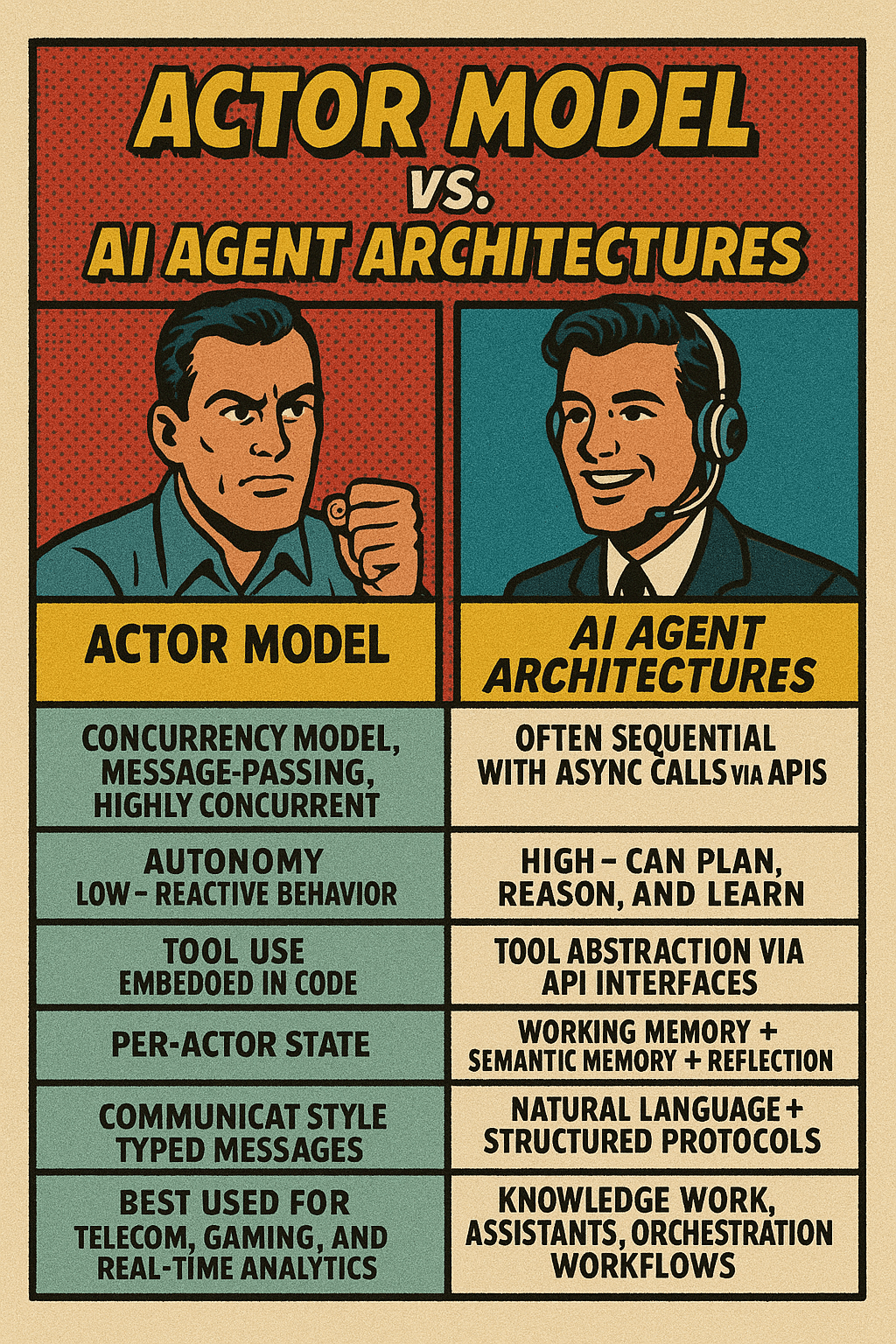
🔸 Comparison Table

FeatureActor ModelAI Agent Architectures
Concurrency ModelMessage-passing, highly concurrentOften sequential with async calls via APIs
AutonomyLow – reactive behaviorHigh – can plan, reason, and learn
Tool UseEmbedded in codeTool abstraction via API interfaces
MemoryPer-actor stateWorking memory + semantic memory + reflection
Communication StyleTyped messagesNatural language + structured protocols
Typical LanguageScala, Erlang, .NETPython, TypeScript, JSON-based protocols
Best Use CasesTelecom, real-time systems, IoTKnowledge work, assistants, orchestration workflows
Example FrameworksAkka, Erlang/OTP, OrleansLangChain, CrewAI, AutoGen, AgentOps, LlamaIndex

🧭 When to Use Which?

Use CasePreferred ModelRationale
Real-time messaging with high concurrencyActor ModelLow-latency, resilient patterns
Autonomous assistants or copilotsAI Agent ArchitectureGoal-driven, natural interaction
Fault-tolerant microservices architectureActor ModelSupervision trees + state isolation
Knowledge-based orchestration (e.g., RAG)AI Agent ArchitecturePlanning, memory, and tool use
Game state modeling with concurrencyActor Model (Orleans)Virtual actors for high-scale objects
Multimodal LLM-powered system agentsAI Agent (e.g., AutoGen)Collaboration between agents using LLMs

🔄 Emerging Convergence

Hybrid architectures are starting to appear where AI agents handle reasoning and planning, while actor-based systems execute high-performance backend tasks.

For instance:

  • An agent might decide which documents to extract data from, but delegate file ingestion and validation to an actor-based micro-service.
  • Orchestrators like CrewAI route tasks across AI agents that call backend services built with Akka or gRPC.

Conclusion
The Actor Model and AI Agent patterns aren’t rivals-they’re tools optimized for different layers of complexity. If you need deterministic concurrency at scale, lean on the Actor Model. If you need autonomy, reasoning, and adaptable behavior, AI agents are your best bet.

Understanding their differences-and where they might complement each other-will help you build scalable, intelligent systems with the right mix of predictability and flexibility.

From Golden Records to Golden Insights: AI Agents Redefining Enterprise Data

The traditional Golden Record, once seen as the pinnacle of enterprise data management and unifying customer, employee, and asset data into a single authoritative truth, is rapidly becoming a legacy pattern. Today, enterprises are shifting towards a more dynamic concept known as the Golden Source, a foundational layer of continuously validated data from which AI Agents generate real-time, actionable Golden Insights.

The Shift from Golden Records to Golden Sources

Historically, enterprises relied on centralized Master Data Management (MDM) or Customer Data Platforms (CDPs) to maintain static golden records. However, these rigid data structures fail to meet the demands of real-time decision-making and agility required by modern businesses.

Now, organizations adopt a more fluid Golden Source, where data remains continuously updated, validated, and accessible in real-time, allowing AI agents to act dynamically and generate immediate, context-rich insights.

AI Agents: Catalysts of Golden Insights

AI agents leverage real-time data from Golden Sources to provide actionable, predictive, and prescriptive insights:

  • Hightouch’s data activation rapidly resolves identity and enriches customer data directly from the Golden Source, empowering agents to instantly deliver personalized interactions (Hightouch).
  • Salesforce’s Data Cloud and Agentforce continuously analyze data streams from a Golden Source, delivering dynamic insights for sales, service, and marketing (Salesforce).

AI agents no longer rely solely on static data snapshots; instead, they generate real-time Golden Insights, informing instant decision-making and workflow automation.

Impact on Enterprise SaaS Solutions

HRIS (Workday)

Workday’s Agent System of Record exemplifies the transition from static employee records to dynamic, real-time insights. Agents proactively manage payroll, onboarding, and compliance using immediate insights drawn directly from an always-updated Golden Source (Workday).

CRMs (Salesforce)

Salesforce leverages its Data Cloud as a dynamic Golden Source. AI agents continuously analyze customer data streams, generating immediate insights that drive autonomous sales outreach and customer support actions.

Enterprise Implications

  1. Dynamic Decision-Making: Enterprises gain agility through real-time Golden Insights, enabling rapid response to market conditions and customer behaviors.
  2. Enhanced Agility and Flexibility: Continuous validation and enrichment of data sources allow businesses to swiftly adapt their strategies based on current insights rather than historical data.
  3. Improved Operational Intelligence: AI agents provide actionable insights in real-time, significantly improving operational efficiency and effectiveness.

Strategic Implications for SaaS Providers: Securing Data Moats

Major SaaS providers such as Salesforce and Workday are embracing the shift from static Golden Records to dynamic Golden Sources to strengthen and preserve their data moats. By embedding these real-time capabilities deeply into their platforms, these providers:

  • Enhance their platform’s value, reinforcing customer dependency.
  • Increase switching costs for enterprises, maintaining long-term customer retention.
  • Position themselves as indispensable partners, central to their customers’ data-driven decision-making processes.

Recommended Actions

StakeholderRecommendations
EnterprisesTransition from static Golden Records to dynamic Golden Sources to enable real-time, actionable insights. Prioritize agile data governance.
Salesforce/WorkdayAccelerate the adoption and promotion of dynamic Golden Source strategies, integrating deeper AI capabilities to maintain competitive differentiation.
Other SaaS VendorsInnovate beyond legacy MDM models by building flexible, interoperable data platforms capable of generating immediate Golden Insights.

✨ Final Thoughts

The evolution from static Golden Records to dynamic Golden Sources and real-time Golden Insights powered by AI agents signifies a transformational shift in enterprise data management. This transition enables enterprises to move from reactive to proactive decision-making, resulting in increased agility, improved customer experiences, and higher operational efficiency. Moreover, it opens the door to innovative business models such as predictive and proactive services, subscription-based insights, and outcome-driven partnerships where real-time data and insights directly contribute to measurable business outcomes. Enterprises embracing this shift are well-positioned to capture significant competitive advantages in the evolving digital landscape.

🔗 Further Reading

Understanding AI Agent Integration Protocols: MCP, A2A, ANP, and ACP

AI agents are moving beyond simple task execution to become autonomous, composable components in distributed systems. As this shift accelerates, integration protocols are becoming foundational infrastructure. For anyone looking to use AI Agents, understanding these protocols is key to architecting scalable and maintainable AI-driven systems.

Let’s explore four emerging integration protocols—Model Context Protocol (MCP), Agent-to-Agent Protocol (A2A), Agent Network Protocol (ANP), and Agent Communication Protocol (ACP)—and evaluates their architectural fit, capabilities, and constraints.

🧠 1. Model Context Protocol (MCP)

What it is:
MCP provides a mechanism for injecting structured context into an LLM’s prompt window. This includes retrieved documents, tool states, memory, and intermediate outputs, usually through retrieval-augmented generation (RAG) or embedding-based techniques.

Strengths:

  • Enables stateless LLMs to simulate memory and reasoning using retrieved or serialized data
  • Lightweight and deployable within standard inference pipelines (e.g., LangChain, LlamaIndex)
  • Can be layered with vector databases (e.g., FAISS, Weaviate) for semantic context injection

Limitations:

  • Bound by the model’s token limit; limited support for long-horizon planning or deep tool state awareness
  • No inter-agent autonomy or feedback mechanisms
  • Not protocol-based; relies on prompt engineering and deterministic ordering

Best For:

  • Single-agent tasks augmented with real-time or historical data
  • LLMs operating in isolation with RAG or external memory needs

🤝 2. Agent-to-Agent Protocol (A2A)

What it is:
A2A formalizes communication between discrete autonomous agents. Typically JSON- or function-call based, it includes metadata like intent, confidence, execution state, and error handling.

Strengths:

  • Promotes modular architecture by decoupling agent roles and responsibilities
  • Agents can dynamically delegate tasks, making use of multi-role ecosystems (e.g., planner, executor, validator)
  • Easy to implement over HTTP, gRPC, or pub/sub messaging layers

Limitations:

  • Requires consistent schema enforcement and error propagation controls
  • Coordination overhead grows as agent count increases
  • Lacks global state awareness without orchestration layer

Best For:

  • Specialized agent collaboration within bounded domains
  • Use cases involving decomposition of tasks across micro-agents

🌐 3. Agent Network Protocol (ANP)

What it is:
ANP provides the substrate for distributed agent ecosystems, including routing, lifecycle management, health checking, and consensus on shared context. Typically implemented atop orchestration layers (e.g., LangGraph, ReAct agents, Temporal, or Kubernetes-based systems).

Strengths:

  • Scalable to hundreds or thousands of agents with persistent state and topology-aware routing
  • Enables parallel execution, load balancing, fallback strategies, and agent health checks
  • Supports DAG-style execution graphs with context-aware execution state

Limitations:

  • High complexity in deployment and observability
  • Requires distributed state synchronization and often custom middleware
  • Debugging emergent behavior across agents is non-trivial

Best For:

  • Distributed AI systems requiring fault tolerance and long-running workflows
  • Enterprise-grade agent mesh architectures or federated cognitive systems

💬 4. Agent Communication Protocol (ACP)

What it is:
ACP governs semantic communication among agents. Inspired by multi-agent systems in robotics and planning, it handles message intent, negotiation, and shared vocabulary. Often paired with reasoning agents or symbolic planning frameworks.

Strengths:

  • Enables collaborative problem-solving, negotiation, and context negotiation between agents
  • Supports advanced reasoning techniques such as epistemic logic or goal decomposition
  • Can support formal language structures or emergent communication training

Limitations:

  • High cognitive and computational overhead
  • Requires a common ontology or learned communication channel (often via RL or LLM fine-tuning)
  • Less applicable to deterministic or narrow-scope tasks

Best For:

  • Research or enterprise applications involving agent collectives, planning, or self-organizing behavior
  • Experimental environments testing emergent communication or autonomous negotiation

📊 Comparison Grid

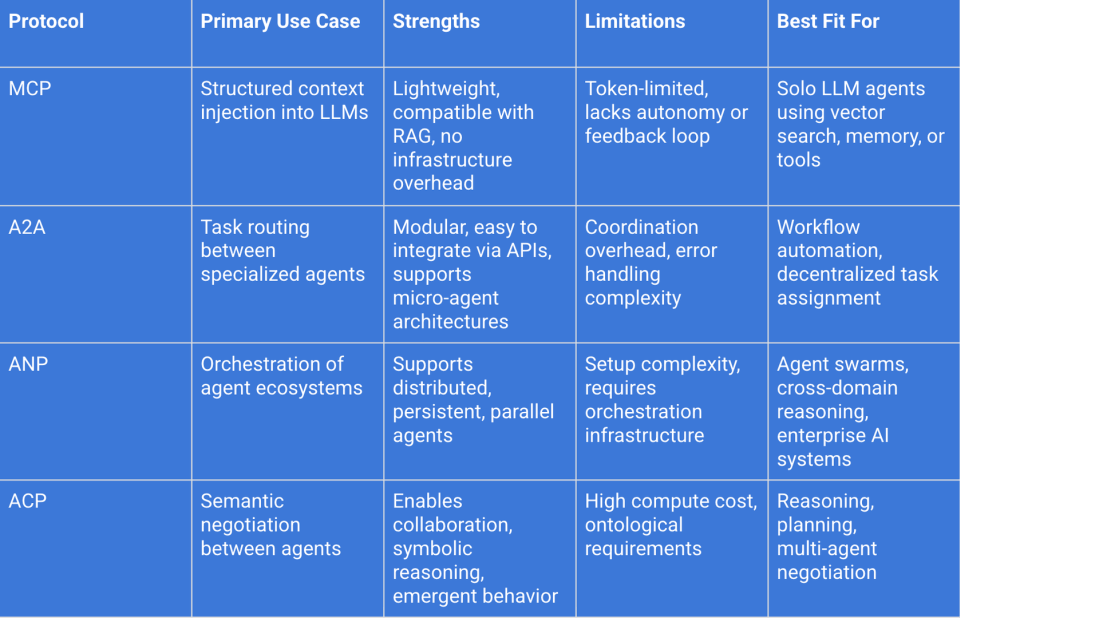
ProtocolPrimary Use CaseStrengthsLimitationsBest Fit For
MCPStructured context injection into LLMsLightweight, compatible with RAG, no infrastructure overheadToken-limited, lacks autonomy or feedback loopSolo LLM agents using vector search, memory, or tools
A2ATask routing between specialized agentsModular, easy to integrate via APIs, supports micro-agent architecturesCoordination overhead, error handling complexityWorkflow automation, decentralized task assignment
ANPOrchestration of agent ecosystemsSupports distributed, persistent, parallel agentsSetup complexity, requires orchestration infrastructureAgent swarms, cross-domain reasoning, enterprise AI systems
ACPSemantic negotiation between agentsEnables collaboration, symbolic reasoning, emergent behaviorHigh compute cost, ontological requirementsReasoning, planning, multi-agent negotiation

🧭 Summary

As AI architectures evolve beyond monolithic agents, these protocols are becoming the glue for composable, intelligent systems. MCP provides a quick win for memory and context enrichment. A2A supports modular delegation. ANP is essential for scalability. ACP enables collaborative intelligence but is still in early stages of maturity.

For most organizations, start with MCP to boost single-agent effectiveness. Layer in A2A when you need specialization and clarity in task delegation. Adopt ANP when your agent fleet begins to grow. Explore ACP if you’re building the next generation of self-coordinating intelligent systems.

The choice of protocol is not just a technical decision—it is a blueprint for how your AI infrastructure scales, adapts, and collaborates.

#AIAgents #AgentArchitecture #EnterpriseAI #CTOk #MCP #A2A #ANP #ACP #AIInfrastructure #MultiAgentSystems

Timing the AI Wave: The Risk of Being Too Early vs Too Late

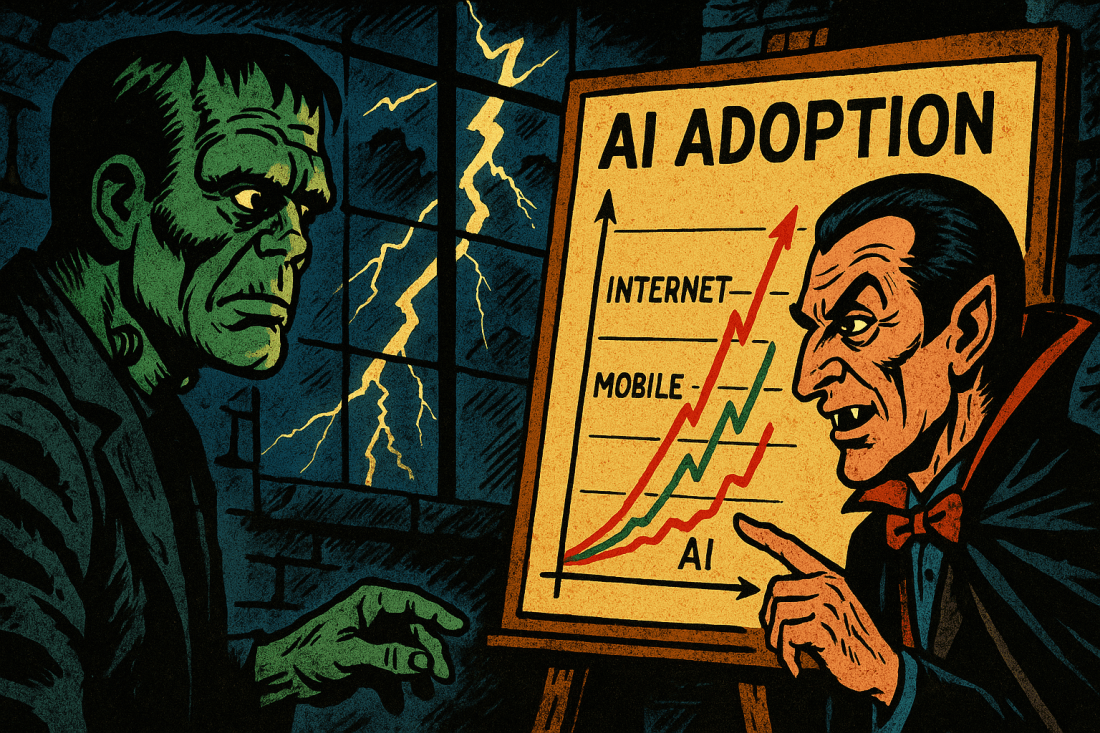
Is your organization at risk of being too early to the AI party, or too late to matter?

Is your organization sprinting toward AI adoption or inching along the sidelines? Both extremes can crush value. Act before the tech or market is ready and you burn capital. Wait for perfect clarity and competitors pass you by. Winning leaders master the sweet spot: they experiment early, but only where there is a credible path to profitable revenue, and they bake in a clear stop-loss if results do not materialize.

What History Teaches About Timing

Think of innovation history as a long-running movie about timing. Some players burst onto the screen too early, winning applause from futurists but empty wallets from buyers. Others arrive fashionably late, discovering the party has moved to a cooler venue. Only a few walk in just as the music peaks, cash in hand and product in pocket.

  • Apple Newton vs. iPhone: Newton proved the concept years too soon; the iPhone launched when components, networks, and consumer behaviors aligned.
  • GM EV1 vs. Tesla: GM’s electric pioneer lacked charging infrastructure and market demand; Tesla timed its debut with falling battery costs and eco-tailwinds.
  • Blockbuster vs. Netflix: Streaming looked niche until broadband became ubiquitous. Blockbuster hesitated and lost the market it once owned.
  • IBM Watson vs. ChatGPT: Watson dazzled on Jeopardy! but struggled to generalize, whereas ChatGPT struck when intuitive chat interfaces met broad public curiosity.

The pattern is clear: an early mover wins only when the surrounding ecosystem can sustain scalable, profitable growth.

From Anecdote to Action: A Readiness Framework

It is easy to point at cautionary tales, but far harder to decide “Should we jump now?” In executive war rooms worldwide, that single question dominates slide decks and budget debates. Before you write the next check, pause at four gates:

  1. Strategic Fit: Does AI solve a mission-critical problem or merely scratch an innovation itch?
  2. Market Maturity: Are peers already generating ROI, or are most use cases still proofs of concept?
  3. Organizational Capacity: Do you have clean data, sound governance, and talent that understands both AI and the business domain?
  4. Risk Appetite & Governance: Can you fund controlled pilots and shut them down quickly if metrics fall short?

Passing through all four gates does not guarantee success, but skipping any one is like building a bridge without the middle span.

When Being Early Is a Feature, Not a Bug

If your answers came back green, congratulations, you may be ready to step out in front. Early, however, is not synonymous with reckless. The smartest pioneers tie their boldness to a fiscal seat belt:

  • Profitable Revenue Roadmap: Draft a line of sight to margin-positive performance within a set horizon.
  • Stop-Loss Trigger: Commit to KPIs and a sunset date. If adoption, cost, or risk thresholds are not met, shelve or pivot.
  • Iterative Funding: Release capital in stages tied to hard milestones, limiting downside while preserving speed.

These constraints may sound unromantic, yet they keep early bets from turning into bottomless pits.

Knowing When to Stop

Even the best pilots can stall. Leaders who cling to pride projects burn cash that could have powered the next winner. Watch for four flashing red lights:

  • Stalling Traction: User adoption plateaus despite targeted change-management pushes.
  • Shifting Economics: Compute, data, or compliance costs erode projected margins.
  • Strategic Drift: The pilot’s goals diverge from core business priorities.
  • Better Alternatives: New vendors or open-source models deliver the same value faster or cheaper.

Institute quarterly go-or-no-go reviews; retire or repurpose any initiative that fails two consecutive health checks. Capital freed today funds tomorrow’s breakthroughs.

Moving From Concept to Cash: Three Steps

Once the green lights stay on, it is time to leave PowerPoint and hit the factory floor:

  1. Prioritize High-Value Use Cases: Hunt for pain points with measurable upside such as cycle-time reduction, revenue lift, or cost savings.
  2. Run Controlled Pilots: Use real data and real users. Measure ruthlessly and iterate weekly.
  3. Scale What Works: When KPIs prove profitable potential, invest in robust data pipelines, cloud infrastructure, and upskilling.

These steps look simple on paper and feel grueling in practice; disciplined execution is exactly what separates AI winners from headline chasers.

The Bottom Line

The AI race is not about being first or last; it is about being right. Move when the value path is visible, learn fast through disciplined pilots, and stop faster when evidence says so. Organizations that master this rhythm will convert AI hype into durable, profitable growth, while their rivals are still debating the next move.

Because in the end, it’s not about being early or late, it’s about being ready.

#DigitalTransformation #CPO #CTO #CIO #FutureOfWork

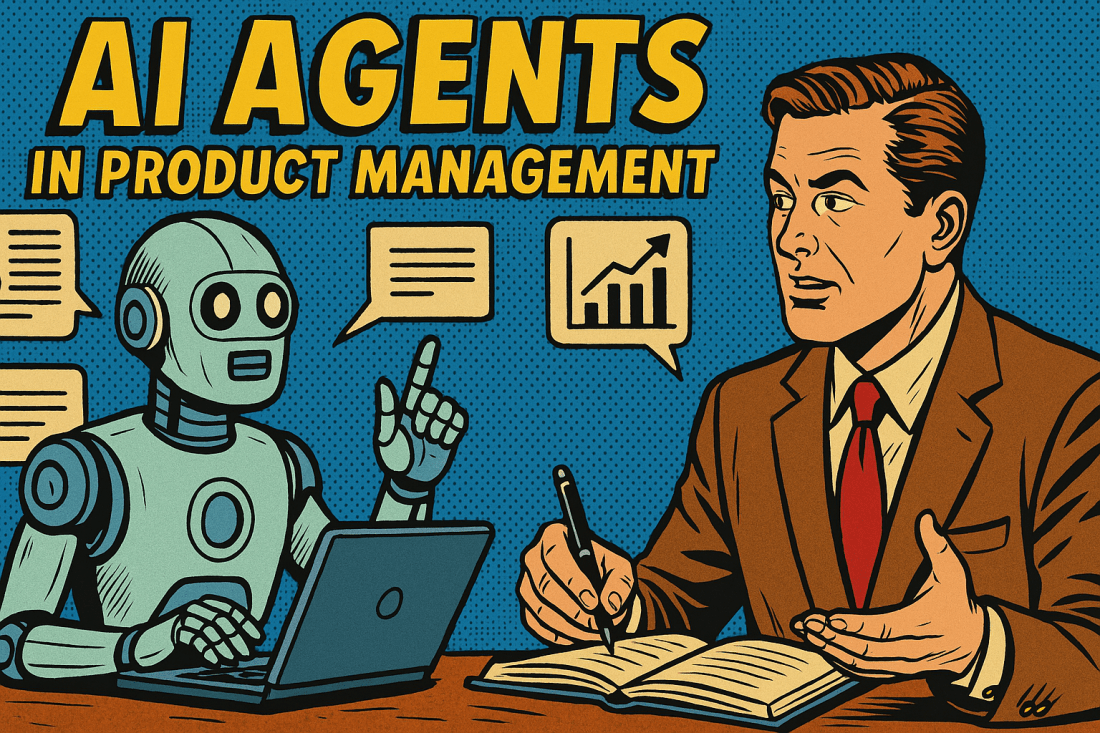
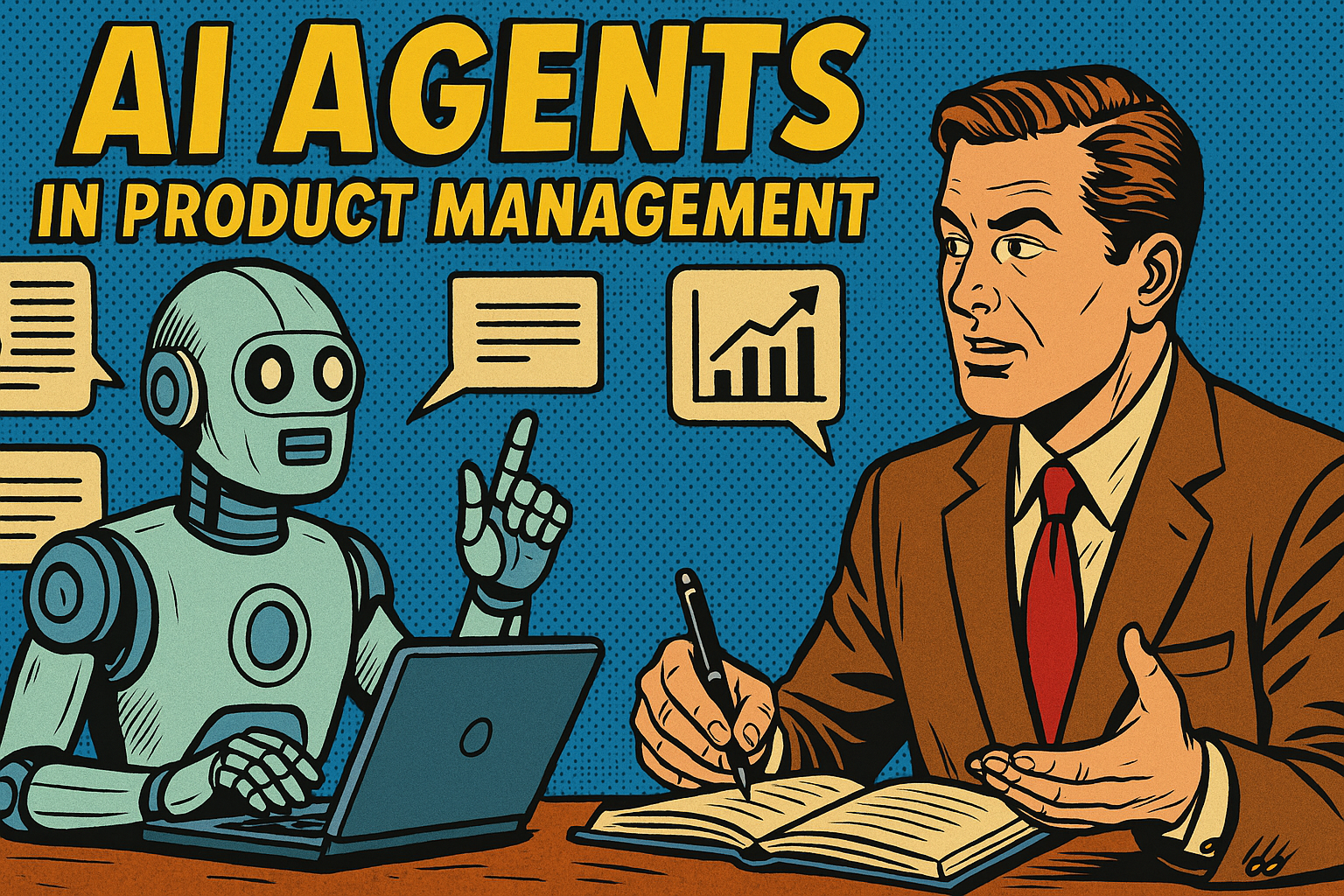
The AI Agent Revolution: How Product Management Will Transform

AI is rapidly reshaping every discipline, but its impact on Product Management may be one of the most profound and underestimated shifts happening today. The rise of autonomous AI Agents is not just a tool change. It represents a fundamental evolution in how products are envisioned, built, and scaled.

The Current State: AI Agents as Accelerators

Today, AI Agents are already augmenting Product Managers (PMs) in several key ways:

  • Market & User Research: Tools like ChatGPT and Claude can quickly synthesize user feedback, summarize competitive research, and even generate personas from large datasets.
  • Roadmapping & Prioritization: AI-driven solutions such as Productboard’s AI Assist analyze customer requests, trend data, and engineering capacity to recommend feature prioritization.
  • Experimentation & Analysis: PMs are using AI Agents to automate A/B test design and result interpretation. For example, Amplitude’s AI tools surface actionable insights from product usage data that would take human analysts days to uncover.
  • Documentation & Communication: Agents are writing release notes, synthesizing meeting transcripts, and even drafting stakeholder emails. This reduces busywork and gives PMs back valuable time.

Example in Practice:
At Microsoft, PM teams are using Copilot to automate status reporting, aggregate feedback from Azure DevOps, and provide intelligent next-step suggestions all within the workflow. This allows PMs to spend more time with users and less time on repetitive updates.

Historical Parallels: From Waterfall Product Management to Agile, and Now AI

To fully appreciate where we are headed, it is important to look back at how product management has evolved. Traditionally, the product management process mirrored the Waterfall methodology of software development. It was linear, rigid, and heavily reliant on upfront planning and documentation. Product managers would spend months gathering requirements, building detailed roadmaps, and defining release cycles, with limited ability to adapt quickly to market feedback or changing user needs. Progress was measured in milestone documents and phased handoffs, rather than in real-time impact.

The shift to Agile changed everything. Agile methodologies empowered PMs and teams to embrace iteration, rapid prototyping, and close feedback loops. The focus moved from static plans to continuous delivery, learning, and adaptation. This evolution unlocked greater speed, innovation, and customer alignment.

Now, with the arrival of AI Agents, we are on the brink of another revolution. Just as Agile replaced Waterfall, AI is poised to move product management beyond even Agile’s rapid cycles. We are entering an environment where autonomous agents learn, iterate, and act in real time, allowing PMs to focus on the highest-value strategic decisions.

What’s Changing: From Assistant to Autonomous Product Agent

We are at an inflection point where AI Agents will move from being helpers to actual doers. The next wave of agents will be able to:

  • Proactively Identify Opportunities: Instead of waiting for PMs to define problems, agents will monitor usage, NPS, and market shifts to surface new product bets.
  • Draft and Validate Solutions: Agents will suggest wireframes, create PRDs, and even run early prototype tests with real users using digital twins and simulation.
  • Own Tactical Execution: Routine backlog grooming, user story mapping, and sprint planning will become automated. This will allow PMs to focus on vision and business outcomes.
  • Close the Loop with Engineering & Design: With multi-agent collaboration (see OpenAI’s GPTs and Google’s Gemini), AI agents will interact directly with design and engineering tools. They will push changes, create tickets, and track dependencies with minimal human intervention.

Emerging Example:
Startups like Adept and LlamaIndex are building agent frameworks that enable AI to take action across tools. This includes pulling analytics, updating Jira, and even creating Figma prototypes autonomously. Motional uses AI product agents to run simulations for autonomous vehicle feature testing, shortening cycles from weeks to hours.

The Next Frontier: AI-Powered Market Research

As product management embraces AI, one of the most promising developments is the use of AI agents for market research and user insights. According to a recent a16z analysis, AI tools are beginning to automate and transform the market research process. This shift enables PMs to understand customer needs at a scale and speed previously impossible.

Traditionally, market research involved time-consuming interviews, surveys, and manual data analysis. AI is now disrupting this model in several key ways:

  • Automated, Large-Scale Qualitative Research: AI can conduct thousands of simultaneous interviews, analyze sentiment, and summarize key themes across vast datasets in hours instead of weeks.
  • Deeper, Real-Time Consumer Insights: AI agents can tap into social media, review sites, and support channels, continuously surfacing new patterns and unmet needs as they emerge. This means PMs get early signals and can iterate faster.
  • Rapid Prototyping and Testing: The blog highlights how product teams can use generative AI to test product concepts, messaging, or UI designs with virtual users or real consumers at scale, getting statistically significant feedback almost instantly.

AI-powered market research, as highlighted by a16z, gives product managers faster, deeper insights for feature prioritization, user segmentation, and go-to-market decisions. PMs who leverage AI for continuous, automated market understanding will build more relevant products and outperform those using traditional methods.

The Future: Product Management as Orchestration

By 2030, product management will look very different:

  • The PM as an Orchestrator: The PM’s role will evolve into orchestrating swarms of specialized AI agents. Each will focus on a specific domain, such as research, delivery, or customer insights.
  • Faster, Smarter, More Iterative: Prototyping cycles will shrink from months to days. Products will launch with AI-managed experiments running in the wild, learning and adapting at a scale no human team could match.
  • New Skills Required: Success will depend on mastering AI orchestration, agent prompt engineering, and understanding the ethical and strategic implications of AI-driven product cycles.
  • Radical Collaboration: With autonomous agents handling the “what” and “how,” PMs will double down on the “why.” Their focus will shift to customer empathy, market positioning, and strategic bets.

Quote from Marty Cagan, SVPG:

“The next era of product creation will be led by those who can harness AI to not just accelerate, but fundamentally reimagine the product development process.”
(SVPG: The Era of the Product Creator)

References & Further Reading

Final Thoughts

AI agents are here, and they are quickly moving from simply augmenting product management to fundamentally transforming it. The best PMs will embrace this shift, not as a threat, but as a once in a generation opportunity to build better products, faster, and with more impact than ever before.

How are you preparing for the era of AI-augmented product management?

Are AI Use Cases Skipping Product Discovery? Reconciling Speed with Strategy in the Age of AI

Organizations today are rapidly adopting artificial intelligence (AI) by prioritizing specific “use cases” to swiftly realize business value. While this approach accelerates the integration of AI into operations, it raises a critical question: Are organizations inadvertently bypassing the traditional product management process, specifically the discovery phase, by jumping directly into solution mode?

Definitions:

  • AI Use Case: A clearly defined scenario applying artificial intelligence to solve a specific business or operational challenge, typically outlined as: “We will use [AI method] to solve [business problem] to achieve [measurable outcome].” For example, using natural language processing (NLP) to automatically classify customer feedback and extract trends in real-time.
  • Product Management Process: The structured lifecycle of transforming market problems into valuable, usable, and feasible solutions. This process generally includes strategy, discovery, delivery, and measurement and iteration.
  • Discovery (within Product Management): The structured exploratory phase where product teams understand user problems, validate assumptions, and assess potential solutions before committing development resources. Effective discovery ensures teams solve the correct problems before building solutions.

How AI Use Cases Differ from Traditional Discovery

AI use cases typically start with a predefined technology or capability matched to a business challenge, emphasizing immediate solution orientation. In contrast, traditional discovery prioritizes deeply understanding user problems before identifying appropriate technologies. This difference is significant:

AI Use Case ApproachTraditional Discovery Approach
Business-problem focusedUser-problem focused
Solutions identified earlySolutions identified after exploration
Tech-centric validationUser-centric validation
Accelerates time-to-solutionPrioritizes validated, scalable solutions

Pros and Cons of a Use Case-Led Approach

Pros:

  • Quickly aligns AI investments with tangible business outcomes.
  • Simplifies AI concepts for stakeholder buy-in.
  • Accelerates experimentation and deployment cycles.
  • Example: McKinsey’s AI use case library effectively demonstrates how AI can practically solve specific business challenges.
  • Example: Amazon’s implementation of AI-driven recommendations demonstrates rapid alignment of AI solutions with business outcomes, significantly increasing sales revenue.

Cons:

  • Risks developing solutions without thorough user validation, leading to potential misalignment.
  • Limited scalability if AI solutions narrowly fit specific contexts without broader applicability.
  • Risks technology-driven solutions searching for problems, rather than responding to validated market needs.
  • Example: Early chatbot implementations frequently lacked user adoption because user interaction needs were not thoroughly researched beforehand.
  • Example: IBM Watson’s ambitious AI projects sometimes struggled due to insufficient initial user validation, leading to significant costs without achieving anticipated adoption.

Pitfalls of Skipping Discovery

Neglecting traditional discovery can lead to substantial failures. Gartner Predicts 30% of Generative AI Projects Will Be Abandoned After Proof of Concept By End of 2025, often due to lack of initial user validation and insufficient market fit. Organizations frequently invest significantly in sophisticated AI models, only to discover later these solutions don’t solve actual user needs or achieve business goals effectively.

Three-Step Framework: Integrating AI Use Cases with Discovery

Step 1: Outcome Before Algorithm
Define clear, user-centric outcomes alongside your AI use cases. Ensure alignment with overarching business goals before committing to specific technologies.

Step 2: Pair Use Cases with Discovery Sprints
Conduct lean discovery sprints concurrently with AI solution development. This parallel approach validates assumptions and ensures the technology solves validated, critical user problems.

Step 3: Embed Product Managers in AI Teams
Involve experienced product managers in AI projects to maintain a balanced focus on user needs, market viability, and technical feasibility, ensuring long-term product success.

Conclusion

AI use cases present a compelling path to rapid innovation but should not replace disciplined discovery practices. By blending the strengths of both approaches, organizations can innovate faster while delivering meaningful, validated, and scalable AI-driven solutions.

#AI #ProductStrategy #CTO #CPO

Culture Eats AI Strategy for Breakfast: Cheat Codes for Technology Leaders Driving AI Transformation

Peter Drucker famously warned that “Culture eats strategy for breakfast.” Today, as organizations race toward AI-driven futures, his wisdom has never been more relevant. Boards ask for AI roadmaps, pilot programs, and productivity breakthroughs, but experienced technology leaders recognize one crucial truth: Your culture, not your technology, determines your AI success.

You can invest significantly in top-tier AI talent, sophisticated models, and robust infrastructure. Yet if your organizational culture resists innovation and experimentation, even the most ambitious AI strategies will stall.

The Cultural Disconnect Is Real and Expensive

Consider these recent findings:

  • According to BCG, 70% of digital transformations fail, and more than 50% of these failures are directly linked to cultural resistance.
  • Gartner highlights that just 19% of organizations move successfully from AI experimentation to broad adoption.

In other words, the biggest obstacle isn’t technology, it’s your people.

Why Culture is Your Real AI Enabler

AI reshapes how teams operate, make decisions, and deliver value. Organizations thriving in an AI-powered environment typically share these cultural traits:

  • Open to experimentation (instead of focusing solely on perfection)
  • Driven by outcomes (rather than task completion)
  • Decentralized and agile (rather than rigidly hierarchical)

Without embracing these cultural shifts, your AI initiatives risk becoming ineffective investments.

Critical Questions for Technology Leaders

Before diving into AI projects, pause to reflect on these questions about your organizational culture:

  • Do employees see AI as a threat or as a helpful partner?
  • Are leaders genuinely comfortable learning from failures, or is perfection still expected?
  • Do innovation activities translate into meaningful business outcomes, or are they primarily for show?
  • Is your decision-making process agile enough to support rapid AI experimentation and implementation?

Your responses will help identify the key cultural barriers and opportunities you need to address.

Success Stories: Companies Mastering Culture-First AI

Here are organizations that successfully navigated cultural challenges to harness the power of AI:

  • Microsoft: CEO Satya Nadella introduced a growth mindset, fostering experimentation and cross-team collaboration. This culture paved the way for successful AI products such as Copilot and Azure OpenAI.
  • DBS Bank: DBS embedded a “data-first” culture through widespread employee AI education. This investment led to rapid AI adoption, significantly improving customer service and reducing response times by up to 80%.
  • USAA: USAA positioned AI clearly as an augmentation tool rather than a replacement. This approach fostered employee trust and improved both customer satisfaction and internal productivity.

Cheat Codes for Technology Leaders: How to Accelerate Cultural Readiness for AI

Instead of complicated frameworks, here are three practical cheat codes to drive rapid cultural change:

1. Shift the AI Narrative from Threat to Opportunity

  • Clearly position AI as an ally, not an adversary.
  • Share success stories highlighting how AI reduces repetitive tasks, increases creativity, and boosts employee satisfaction.

2. Democratize AI Knowledge Quickly

  • Rapidly roll out AI training across your entire organization, not just among tech teams.
  • Use accessible formats like quick-start guides, lunch-and-learns, and internal podcasts. Quickly increasing organizational AI fluency helps accelerate cultural change.

3. Celebrate Rapid, Open Experimentation

  • Foster a culture that openly celebrates experimentation and accepts failures as valuable learning opportunities.
  • Publicly reward teams for trying innovative ideas, clearly communicating that experimentation is encouraged and safe within defined boundaries.

Final Thought: AI Transformation is Fundamentally Cultural

Technology opens the door, but your culture determines whether your organization steps through. AI transformation requires more than strategy and investment in tools. It requires intentional cultural shifts influencing how your teams operate daily.

As Peter Drucker emphasized decades ago, culture can derail even the most ambitious strategy. However, technology leaders who master the cultural aspects of AI transformation will create an enduring competitive advantage.

#DigitalTransformation #AI #CTO #CIO #ProductStrategy #Culture #EngineeringLeadership #FutureOfWork #PeterDrucker

AI Agents: Expanding or Contracting TAM?

Artificial Intelligence (AI) agents, are transforming industries and reshaping market dynamics. When evaluating AI’s strategic implications, understanding whether these agents expand or contract your Total Addressable Market (TAM) is crucial.

AI Agents: Catalysts of Market Expansion

AI agents are notably expanding markets by enabling businesses to reach previously underserved customer segments or create entirely new use cases. Consider Shopify’s “Sidekick,” an AI assistant empowering small businesses to launch sophisticated e-commerce stores with minimal expertise. Similarly, GitHub Copilot drastically enhances developer productivity and even empowers non-developers to participate in software creation. Klarna’s AI-driven customer support bot performs the work equivalent to hundreds of support staff, allowing even smaller enterprises to offer around-the-clock customer service.

These examples underline a significant trend: AI agents democratize advanced capabilities, significantly broadening markets by making sophisticated solutions accessible to broader audiences.

Where AI Agents Contract TAM

However, the integration of AI agents also means contraction in specific traditional markets, primarily those heavily reliant on human labor. TurboTax’s AI tools are reducing the need for professional tax preparation services, while Microsoft’s Copilot for Excel threatens niche data analytics tools by embedding powerful AI directly into mainstream products. Likewise, legal firms face revenue contraction from AI-driven contract reviews and document analysis tools automating what previously required extensive manual labor.

Thus, markets reliant on routine human-intensive services face significant disruption and potential TAM contraction unless they strategically adapt.

Products vs. Services: Divergent Impact

AI’s impact diverges between products and services:

  • Products: Enhanced by AI integrations, digital products like Microsoft’s Office suite become vastly more appealing and broadly applicable, increasing their market reach. However, niche or standalone products risk commoditization and obsolescence if they don’t integrate competitive AI capabilities.
  • Services: AI automation opens scalable delivery opportunities, expanding service reach. Financial advisory bots or healthcare symptom-checkers exemplify how traditionally premium services now scale affordably. Yet, human-intensive services without AI augmentation may find themselves losing customers who switch to lower-cost, AI-driven alternatives.

Industry-Level Implications

Industries experiencing significant TAM expansion include:

  • Education: AI tutors (e.g., Khan Academy’s Khanmigo) democratizing personalized learning globally.
  • Healthcare: AI symptom-checkers (Babylon Health) extending care access to remote populations.
  • Retail & E-Commerce: AI-powered shopping assistants and merchant tools driving customer engagement and business growth.
  • Software & Technology: AI expanding software capabilities into roles previously requiring human labor, drastically enlarging software’s market.

Conversely, industries facing contraction pressures include:

  • Legal Services: Automation of routine legal work reducing traditional billable services.
  • Customer Support BPOs: AI-driven support bots displacing entry-level customer support roles.
  • Basic Financial Advisory: Robo-advisors capturing lower-tier investment advisory markets previously served by human advisors.

Overall Industry Outlook: Industries centered on information, analysis, and routine communication are seeing parts of their TAM shrink for traditional players but expand for tech-enabled ones. Meanwhile, industries that can harness AI to reach underserved populations or create new offerings see TAM expansion. Importantly, the total economic opportunity doesn’t vanish – it shifts. As one venture study put it, AI agents let software and automated services compete for a “10-20x larger opportunity” by doing work that used to be outside software’s scope lsvp.com. Companies need to recognize whether AI agents enlarge their particular market or threaten it, and adapt accordingly.

Recommendations

If you are aiming to harness AI agents for market expansion you should:

  1. Embed AI in Products to Access New Users: Companies should integrate AI agents or assistants directly into their products to enhance functionality and usability. By offering AI-driven features (such as natural language queries, smart recommendations, or autonomous task completion), products become accessible to a wider audience. This can unlock new user segments who lack expertise or resources – for example, a software platform with an AI helper can attract non-specialist users and expand the product’s TAM. Strategic tip: Identify core user pain points and implement an AI agent to solve them (e.g. an AI design assistant in a web builder). This not only differentiates the product but also positions the company to capture customers who were previously underserved. Successful cases like Adobe adding AI generative tools into its suite or CRM systems adding AI sales assistants show that built-in AI features drive adoption and usage lsvp.com.
  2. Reframe Service Offerings as “Agent-Augmented”: Service organizations (consultancies, agencies, support providers, etc.) should redesign their offerings around AI + human collaboration. Instead of viewing AI as a pure substitute, present it as a value-add that makes services faster, more affordable, and scalable. For instance, a marketing agency might offer an “AI-augmented content creation” service where AI drafts content and humans refine strategy – delivering faster turnaround at lower cost. This reframing helps retain clients who might otherwise try a DIY AI tool, by giving them the best of both worlds. It also attracts new clients who were priced out of the fully human service. The key is to train staff to work alongside AI agents and emphasize the enhanced outcomes (better insights, quicker service) in marketing the service. Organizations that position themselves as AI-empowered advisors or providers can expand their TAM by capturing clients who demand efficiency and still value human judgment.
  3. Use Tiered Models to Avoid Cannibalization: When introducing AI agents that could undercut your existing offerings, use tiered product/service models to segment the market. Offer a basic, AI-driven tier targeting cost-sensitive or new customers, and a premium tier that includes high-touch human expertise. This prevents the AI solution from simply cannibalizing your top-end revenue – instead, it lets you capture a new low-end market while preserving an upscale segment for those willing to pay more. For example, a software company might offer a free or low-cost AI tool to appeal to a broad audience (expanding TAM), while reserving advanced features and support for a paid enterprise version. In services, a law firm could provide an AI-powered contract review service for simple cases (low fee, high volume) and a specialized attorney review for complex cases (high fee). By tiering, organizations can widen their market reach with AI without eroding the value of premium offerings. Over time, some customers may even upgrade as their needs grow. The goal is a balanced portfolio where the AI-based tier brings in new business and the premium tier continues to generate high-margin revenue – together growing the total addressable market served by the firm.

In conclusion, the mandate is clear, embrace AI agents proactively to drive growth, but do so strategically. AI agents are reshaping markets: expanding them in aggregate, but shifting where value flows. Organizations that thoughtfully integrate AI into their products and services, adjust their business models, and target emerging opportunities can ride this wave to capture a larger TAM. Those that resist or neglect the trend risk seeing their addressable market captured by more agile, AI-powered competitors. In summary, AI agents should be viewed as a catalyst for expansion, and with prudent strategy, businesses can ensure that they are on the expanding side of the TAM equation rather than the contracting side, leveraging AI to unlock new horizons of growth.

The Role of JS in the Agent Ecosystem

“Any application that can be written in JavaScript, will eventually be written in JavaScript.” – Jeff Atwood

This insight from Jeff Atwood has never felt truer, especially as we witness TypeScript and JavaScript rapidly emerging as leading languages in AI agent development—an area traditionally dominated by Python.

The recent “Tiny Agents” article from Hugging Face, alongside innovations like Vercel AI SDK (1m+ weekly downloads), raises an important question: As someone that spends more time with JavasScript (preferably TypeScript) than I should it raises the question, are we seeing the rise of a new generation of developers looking to bring AI into their applications, or is this the beginning of a broader shift within AI itself?

With fewer than 50 lines of TypeScript code, developers can now create AI agents that manage workflows, access tools, and orchestrate tasks—all while integrating smoothly with APIs. Frameworks like LangGraphJS (1.3k GitHub Stars), Mastra (12.7k GitHub Stars), LlamaIndex.TS (2.6k GitHub Stars), and tools from the Vercel ecosystem highlight how accessible and developer-friendly this space has become.

Why are Agents and TypeScript a good match?

  • Static Typing: Ensures code reliability, reduces runtime errors, and enhances maintainability.
  • Superior JSON handling: Optimizes integration with APIs, crucial for agent interactions.
  • Robust Async/Await Support: Ideal for handling asynchronous operations, central to AI workflows.
  • Unified Frontend & Backend Development: Allows developers to use one language across their entire application stack.

Examples like KaibanJS (1.1k GitHub Stars) and StageHand (11.6k GitHub Stars) further demonstrate TypeScript’s growing ecosystem for AI agents, underscoring its ability to facilitate scalable, secure, and maintainable applications.

This evolution prompts a deeper reflection: Is AI agent development becoming a core part of full-stack engineering? As tooling and frameworks continue to improve, the lines between app developer and AI developer may continue to blur.