

If you have ever watched a product manager and an engineering lead debate whether a security improvement “counts” as roadmap progress, you have seen a symptom of a deeper problem. The argument is rarely about the work itself. It is about ownership, incentives, and an outdated mental model where “product” means features and “security” means delay.
That mindset is legacy. It made sense when software shipped quarterly, lived behind corporate networks, and only a small slice of customers ever evaluated your security posture. It does not make sense in a world where your product is continuously delivered, deployed across a messy supply chain, and sold into procurement processes that treat trust as a first-class requirement.
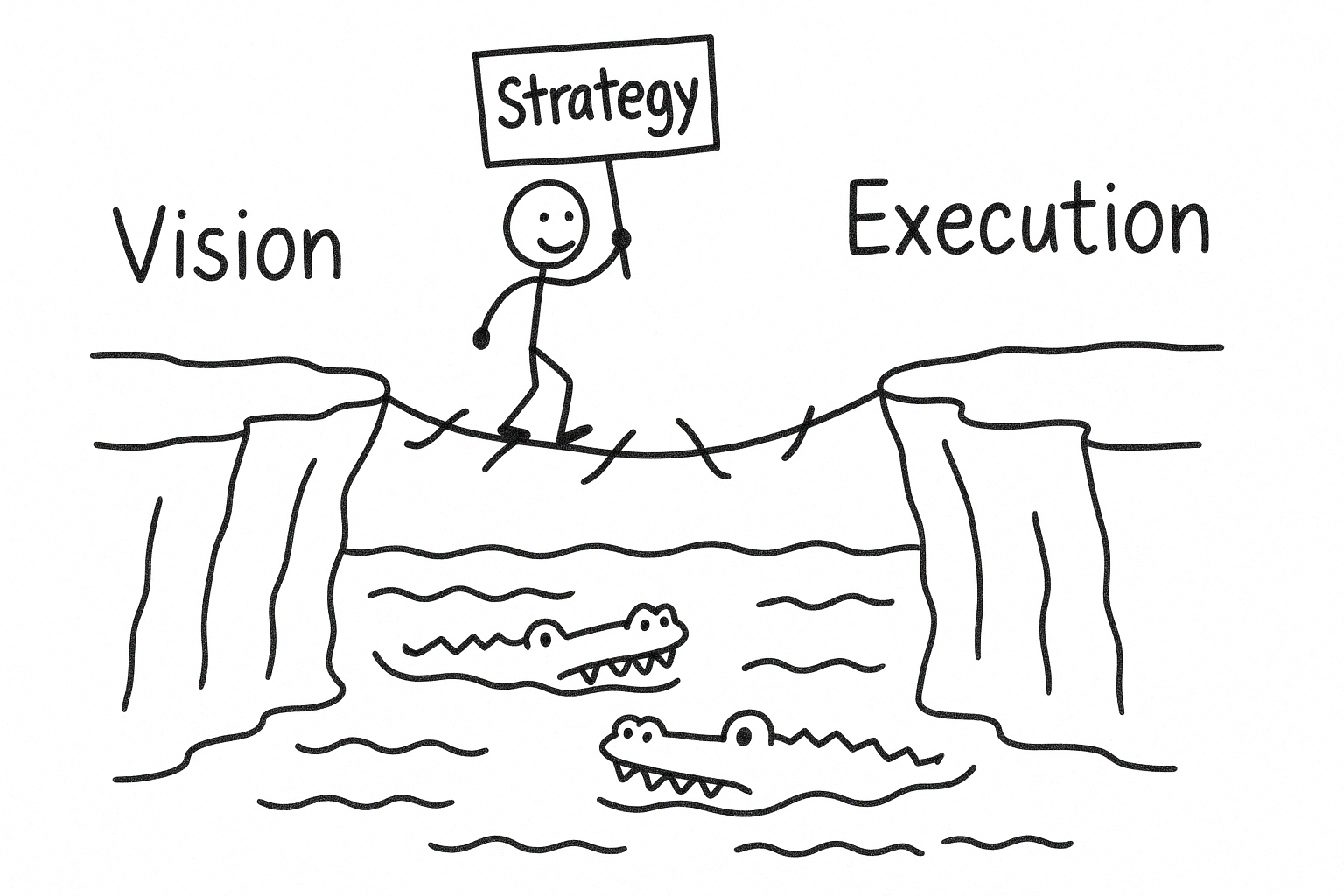
Progressive teams stop debating whether security belongs on the roadmap. They design roadmaps where security is already inside the user journey, the platform, and the operating model.
Srajan Gupta captures the heart of the issue through the lens of security companies: security products are judged under pressure, not during polished demos, and traditional product thinking often fails when the stakes are highest. (srajangupta.substack.com) That observation translates cleanly outside “security products.” Your SaaS, your mobile app, your internal platform, and your API marketplace are also judged on their worst day: a breach, an outage, a bad permission model, or a compromised dependency.
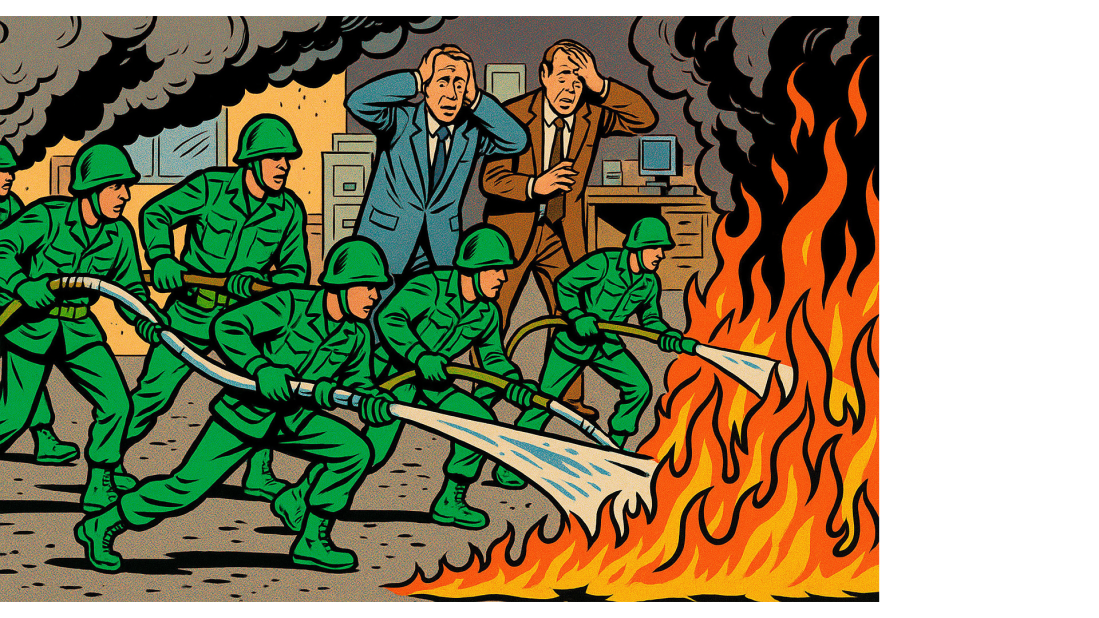
When that day hits, nobody cares that your Q3 roadmap was feature-rich.
Why security keeps losing the roadmap fight
Security loses because most organizations treat it like a backlog category instead of a product property. In planning, features get narratives and champions. Security gets tickets and guilt.
That structural mismatch creates the usual failure mode: security is framed as “paying down debt,” and debt is framed as “optional until it hurts.” Then it hurts, loudly, and you pay in panic, churn, and deal friction.
There is a better framing: security is not a set of tasks you sprinkle in. It is a set of constraints and promises your product makes to users.
AWS has been telling the industry this for years, in plain language. The security pillar of the Well-Architected Framework is not a checklist you run after you build the workload. It is guidance for design, delivery, and maintenance. (AWS Documentation) That is product language, not just engineering language.
The same theme shows up in government and standards bodies: NIST’s Secure Software Development Framework (SSDF) is explicitly about integrating secure practices into your SDLC, because most SDLC models do not address security in enough detail by default. (NIST Computer Security Resource Center) In other words, if you do not deliberately wire security into the way you plan and build, it will not happen consistently.
And the market has moved from “best effort” to “secure by design.” CISA’s Secure by Design work pushes the idea that software makers should prioritize customer security as a core business requirement, not an add-on feature. (CISA)
This is the shift: security is now part of product legitimacy.
The fastest way to go “upstream” is to put security into the journey, not the sprint
When teams talk about “shifting left,” they often mean scanning earlier. That is necessary, but it is not sufficient.
Upstream security means you model risk at the same time you model value.
Security needs to show up in the same artifacts where product decisions are made: discovery notes, PRDs, wireframes, acceptance criteria, launch checklists, and go-to-market narratives. If the only place security appears is a Jira epic called “Hardening,” you have already lost.
Microsoft’s Security Development Lifecycle (SDL) is a canonical example of codifying security across phases such as requirements, design, implementation, verification, and release. (Microsoft) The big idea is not that Microsoft has more security engineers. The big idea is that the system forces teams to make security decisions early and repeatedly, not just at the end.
Here is what “security in the journey” actually looks like in modern products:
It shows up when the user first signs up and you decide whether “passwordless” is a convenience feature or a security control that changes your fraud model. It shows up when you design roles and permissions and realize that most breaches are not “hackers,” they are over-privileged accounts and confusing authorization paths. It shows up when you design audit logs and decide whether customers can prove what happened, not just guess. It shows up when you build integrations and realize your API is now part of your customer’s attack surface.
Those are product decisions. They shape usability, conversion, retention, and revenue.
Stop treating security as a tradeoff against speed. Make it a force multiplier.
The best security investment is the one that reduces cognitive load for teams and customers.
GitHub’s Dependabot security updates are a great example of this philosophy: instead of asking every team to manually track vulnerable dependencies, the platform can automatically surface alerts and create pull requests to remediate. (GitHub Docs) This is security as workflow design. It reduces toil and time-to-fix without turning every sprint into a negotiation.
Supply chain security is another domain where “security as product” is winning. SLSA (Supply-chain Levels for Software Artifacts) is framed as incrementally adoptable levels that help prevent tampering and improve integrity across the chain. (SLSA) The power here is not the framework itself. The power is the product thinking behind it: define maturity levels, make progress measurable, and give teams a path that does not require perfection on day one.
This is how you escape the tech debt trap. You build paved roads.
Security becomes a platform capability: automated scanning, dependency hygiene, secure defaults, policy-as-code, hardened templates, and straightforward patterns that teams can adopt without heroics. When you do this well, product teams ship faster because they stop reinventing security decisions for every feature.
Product management’s job is to make security legible
If you want security to be prioritized, you need to express it in the language the roadmap already rewards: user impact, business outcomes, and measurable risk reduction.
That does not mean fearmongering. It means clarity.
Security work often suffers because it is described at the wrong altitude. “Improve encryption” is not a product statement. “Protect sensitive documents at rest and in transit across download, share, and integration flows” is a product statement.
Progressive product leaders translate security into customer value and operational readiness. They treat a secure experience as part of the feature itself, not as a shadow backlog.
Frameworks like OWASP SAMM exist precisely to help organizations build a risk-driven, measurable security program across the lifecycle. (OWASP) You do not need to adopt every model wholesale, but you do need the discipline they represent: security maturity should be intentional and visible.
AI makes the “security is product” argument unavoidable
AI is accelerating shipping velocity, which is great until it accelerates vulnerability throughput too.
More importantly, AI changes your threat model. You are no longer only protecting data stores and endpoints. You are protecting prompts, tools, and agent workflows. You are protecting against misuse, not just bugs.
NIST has started extending secure development practices specifically for AI model development, which is a signal that security leaders are no longer treating AI as “just another feature.” (NIST Computer Security Resource Center) The organizations that win here will not bolt on governance after an incident. They will design AI capabilities with explicit guardrails, logging, and abuse cases from day one, and they will make those guardrails part of the user experience.
If your AI roadmap is all magic and no threat modeling, you are building a future incident response exercise.
What progressive teams do differently
They do not “prioritize security more.” They remove the conditions that cause security to be deprioritized.
They align product and engineering on a few non-negotiables:
- They define secure defaults as part of the product contract, and they treat deviations as explicit product decisions, not implementation details.
- They include abuse cases and threat modeling in discovery, so the “how could this be misused?” conversation happens before code exists.
- They bake security acceptance criteria into Definition of Done, so security is not something you remember, it is something you ship.
- They invest in platform capabilities that make secure behavior the path of least resistance, following the same automation logic that tools like Dependabot represent. (GitHub Docs)
- They talk about security in customer language, supported by recognized frameworks like SSDF, SDL, and Secure by Design, because trust has become part of how products are bought. (NIST Computer Security Resource Center)
Notice what is missing: the weekly fight about whether a security epic “steals” from feature delivery. That fight disappears when security is not a competing backlog. It is the way you build features.
The real competitive advantage is trust that compounds
In many markets, feature differentiation is fleeting. Trust is sticky. Teams that treat security as a product property win in three compounding ways.
They reduce existential risk because they are not gambling on luck. They ship faster because secure patterns and automation eliminate repeated decisions. And they sell faster because customers increasingly demand proof, not promises, and “secure by design” is becoming table stakes. (CISA)
If you want a modern roadmap philosophy, adopt this one: security is not what you do after you ship. Security is what makes shipping sustainable.
And once you internalize that, the question stops being “when do we schedule security?” The question becomes “how do we design the product so security is simply how it works?”
 bencoding