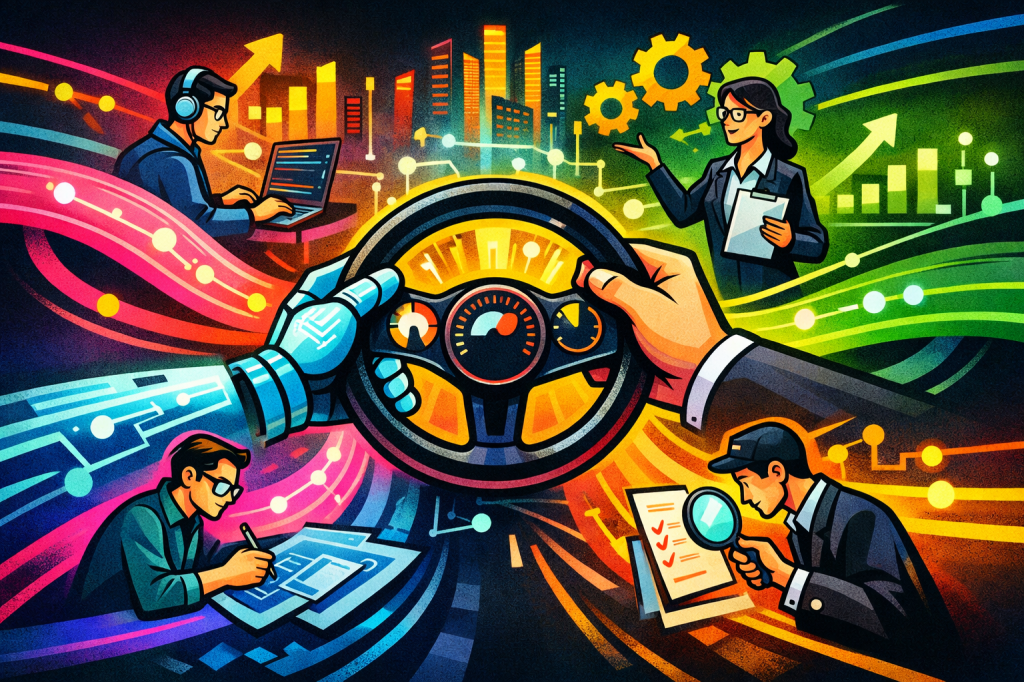
McKinsey is right to make the call plainly: “Agentic engineering becomes the next capability to master.” That line from The AI Transformation Manifesto matters because it shifts the conversation away from novelty and toward execution. The next advantage will not come from giving teams access to another model or another chat window. It will come from building the organizational muscle to design workflows where AI can hold context, use tools, operate inside guardrails, and help move work from intent to outcome. (McKinsey & Company)
That is a bigger leap than most executive teams are admitting. Copilots improved individual productivity, but agentic engineering changes the shape of delivery itself. McKinsey’s broader argument is that enduring advantage comes from capabilities, not one-off tools, and that the winners are the companies that apply technology to real business problems at speed and at scale. That is why this topic belongs in the boardroom, not just in engineering Slack channels. (McKinsey & Company)
Software development is where this shift is becoming impossible to ignore. GitHub’s controlled study found that developers using Copilot completed a coding task 55 percent faster, while Google Cloud’s 2025 DORA research found AI adoption among software development professionals reached 90 percent, spanning not only developers but also product managers, with a median of two hours of daily use. The point is not that code is suddenly free. The point is that the center of gravity is moving upward, away from typing syntax and toward architecture, problem framing, review, orchestration, and judgment. (The GitHub Blog)
This is where the McKinsey thesis gets more interesting. The most important line in the manifesto may not be the one about agents. It may be this one: “Every tech and AI transformation is a people transformation.” That is the sentence too many leaders skip past. Agentic engineering does not simply make engineers faster. It forces companies to rethink who owns workflows, who defines the rules, who approves exceptions, and who is accountable for outcomes when humans and AI are working as a single operating system. (McKinsey & Company)
In that sense, AI productivity is becoming the work of everyone. McKinsey has said separately that every employee will need to learn how to work with AI rather than around it, and that leading CIOs now need to help “every employee become a technologist” while empowering human-agent teams to deliver at scale. That is exactly the right framing. Product managers will need to write tighter specs and clearer success conditions. Designers will need to think about how humans supervise, override, and recover. Operations leaders will need to redesign workflows, not just automate old ones. Executives will need to know enough about systems, data, and constraints to challenge weak AI road maps before money disappears into theater. (McKinsey & Company)
The best evidence is already coming from companies that are treating AI as a production capability rather than a demo. Duolingo’s engineering team described how it paired OpenRewrite with AI to accelerate JVM service upgrades, then systematized that work into a reusable workflow, reporting that the approach sped the process up by weeks. In a separate post, Duolingo showed how it is scaling agentic workflows beyond a coding assistant, giving engineers and non-engineers alike a no-code way to automate tasks quickly. That is what real adoption looks like. It is not one heroic team with fancy prompts. It is an organization learning how to package judgment into repeatable flows. (Duolingo Blog)
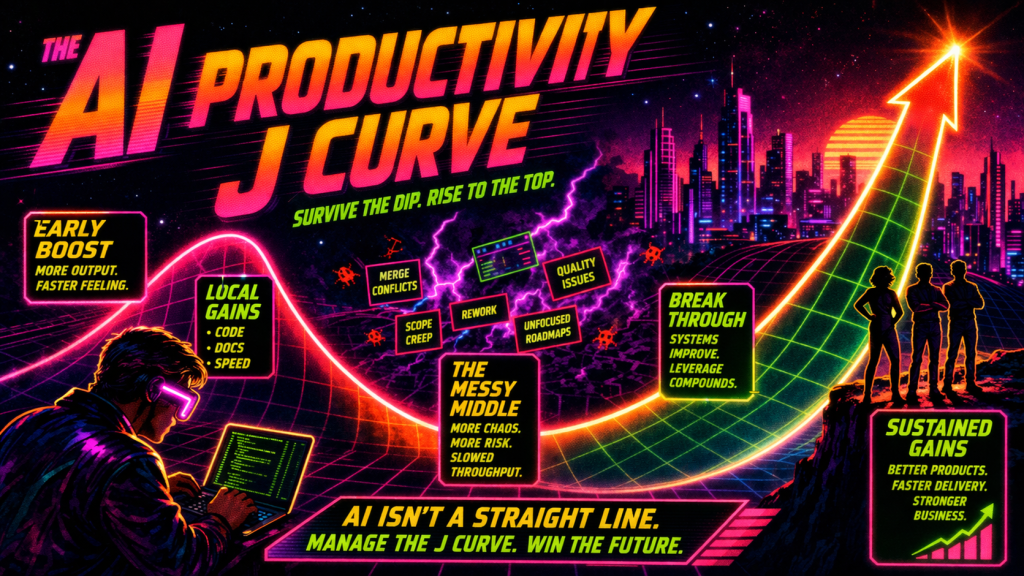
There is also a warning buried inside the excitement. Google’s DORA research says AI acts as an amplifier, not a cure. McKinsey makes a similar point from the enterprise side, arguing that companies need strong data foundations, workflow redesign, operating-model change, and disciplined adoption if they want agentic AI to scale beyond experimentation. In other words, agents will not rescue a weak product model, messy architecture, or confused decision rights. They will expose them faster. (Google Cloud)
That is why the leaders who stand out over the next few years will not be the ones who merely talk fluently about AI. The ones who matter will know how to rewire product, engineering, and business operations around it. Executive recruiters should pay attention to that difference because the market is starting to reward leaders who can combine software craftsmanship, product judgment, team design, and AI execution into one coherent management capability. McKinsey is right about the direction of travel. Agentic engineering is not a niche technical skill. It is becoming the new test of whether a technology leader knows how to build modern companies. (McKinsey & Company)




 bencoding