
A great demo is a dopamine hit with a budget.
It is the moment when a messy idea turns into something you can click, react to, and show your board with confidence. And in 2026, with copilots, agents, and “vibe-coded” prototypes, the demo is getting easier to manufacture than ever.
That is the trap. Because the demo did not prove you can ship the system. It proved you can illustrate the system.
The numbers are ugly, and they point to execution, not innovation. MIT work, amplified by Fortune, suggests 95% of GenAI pilots never deliver measurable P&L impact (Fortune). S&P Global shows abandonment before production jumping from 17% to 42% (S&P Global Market Intelligence).
This is not an “AI is overhyped” story. It is an “organizations are under-architected” story.
The prototype is reconnaissance, not a down payment
Demo-grade software is designed to be persuasive. It lives on the happy path. It assumes cooperative users. It runs on curated data. It survives because you are there, in the loop, ready to reset it when reality shows up.
Ship-grade software is designed to be dependable. It lives in edge cases. It assumes adversarial behavior. It runs on messy data from five systems you do not control. It survives because it was built to fail safely, recover predictably, and explain itself under pressure.
When you blur these two worlds, you do not “move fast.” You simply move risk into production.
Volkswagen learned this the expensive way with CARIAD. Building an ambitious software transformation is not inherently wrong, but the operational losses mounted into the billions over multiple years, and the gap between intent and execution became a drag on delivery across the portfolio. (InsideEVs) A concept that looks plausible in prototype form can turn into an organizational sinkhole when it meets scale, integration complexity, and real-world reliability expectations.
That is what “demo-grade vs ship-grade” really means. It is not a code quality debate. It is a leadership decision about what you are actually committing to operate.
What changes between demo and ship is everything that counts
When leaders say “it already works,” they usually mean “the UI produced output.” Engineers hear something different: “we have confirmed the shape of the problem.”
Production changes the definition of “works.”
It means uptime targets, incident response, and observability that makes failures diagnosable, not mysterious. It means threat models, least privilege, secrets management, audit trails, and compliance evidence. It means data contracts, lineage, retention policies, and disaster recovery. It means cost controls and rate limits because a real system gets used in ways your demo never anticipated.
If that feels abstract, the industry has handed us very concrete invoices.
- McDonald’s faced a very human lesson in production-grade security when researchers reportedly accessed the admin side of its AI hiring experience using laughably weak credentials, exposing data tied to tens of millions of applicants. The flaw was not exotic. It was basic operational hygiene that demo teams often postpone. (WIRED)
- Waymo issued a recall affecting about 1,200 vehicles after low-speed collisions with gates, chains, and similar roadway objects. The model looked impressive until the world supplied objects the test environment did not. (Reuters) (TechCrunch)
- Air Canada was held responsible when its chatbot provided incorrect information about bereavement fares, and a tribunal required compensation. The lesson was not “chatbots are bad.” The lesson was governance: if an automated system speaks on behalf of your company, you own the consequences. (The Guardian) (American Bar Association)
- Cigna faced legal scrutiny over allegations tied to its PxDx process for claim denials, with reporting noting extremely short “review” times and large volumes. In production, automation is never just automation. It becomes policy. It becomes harm. It becomes liability. (ProPublica) (Healthcare Dive)
- Arup was defrauded after an employee joined a video call that appeared to include senior leaders, but was reportedly composed of deepfake participants. This is what happens when enterprises treat identity signals (voice, video, “familiar faces”) as trustworthy inputs without verification. (The Guardian)
These are not edge stories. They are the shape of production reality.
AI makes demo-grade easier, and ship-grade harder
There is a paradox playing out in most modern engineering orgs.
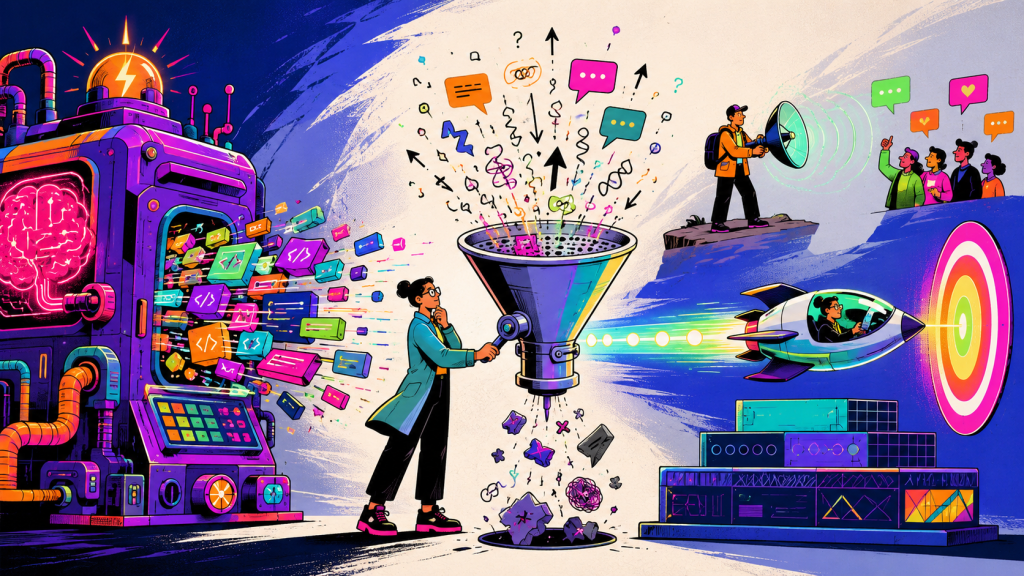
AI tooling is collapsing the time from idea to prototype. That is real leverage. But it is also accelerating the creation of unexamined complexity.
GitClear analyzed large-scale code change data and documented a sharp rise in duplicated code blocks, including an “8-fold increase” in certain duplication patterns during 2024, a proxy for debt compounding faster than teams realize. (GitClear) (GitClear) Google Cloud highlighted in the 2024 DORA research that increased AI adoption correlated with reduced delivery stability, including an estimated 7.2% reduction in stability as AI adoption increased. (Google Cloud)
This is why the “we can ship faster now” narrative is incomplete.
You can produce more code faster. You can produce more features faster. You can produce more surface area for incidents faster.
And as Kin Lane put it, he has not seen technical debt created this quickly in his career. (LeadDev)
If your operating model rewards demos, your organization will become exceptional at demos. If your operating model rewards outcomes, reliability, and the ability to operate systems under stress, you will build something worth shipping.
Most companies are currently rewarding the wrong thing.
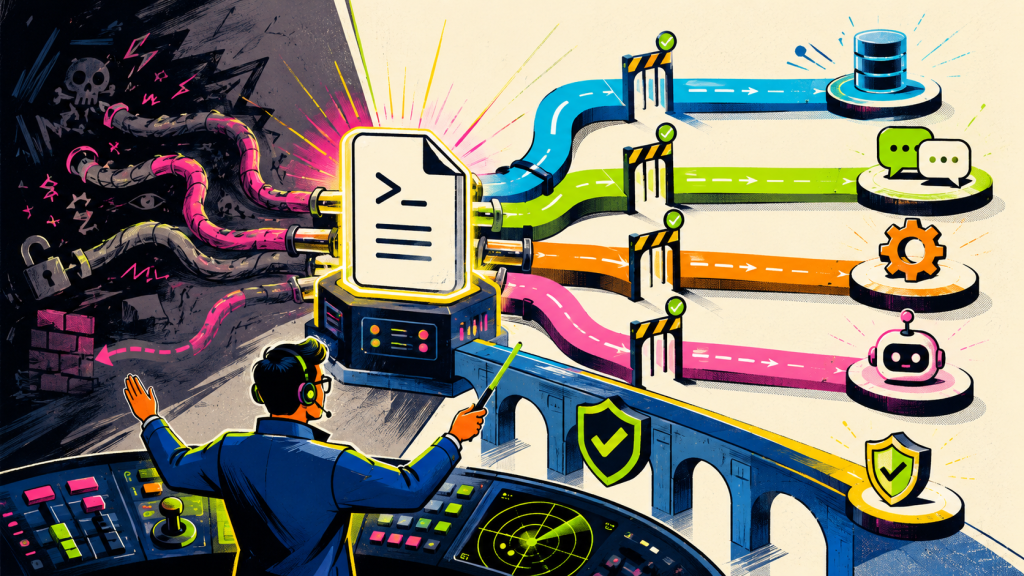
Treat AI like a runtime, not a feature
A typical demo architecture looks like this: prompt → model → response.
It demos beautifully. It collapses the moment the output becomes stateful: sending a customer message, approving a transaction, denying a claim, changing an entitlement, writing to a system of record.
That is why I like the framing from Hazem Ali. When AI can act, you are not “adding AI.” You are operating something closer to a semi-autonomous runtime that needs boundaries, policy gates, traceability, and designed failure modes. (LinkedIn)
In other words: the model is not your product. The architecture around the model is your product.
What ship-grade leaders do differently
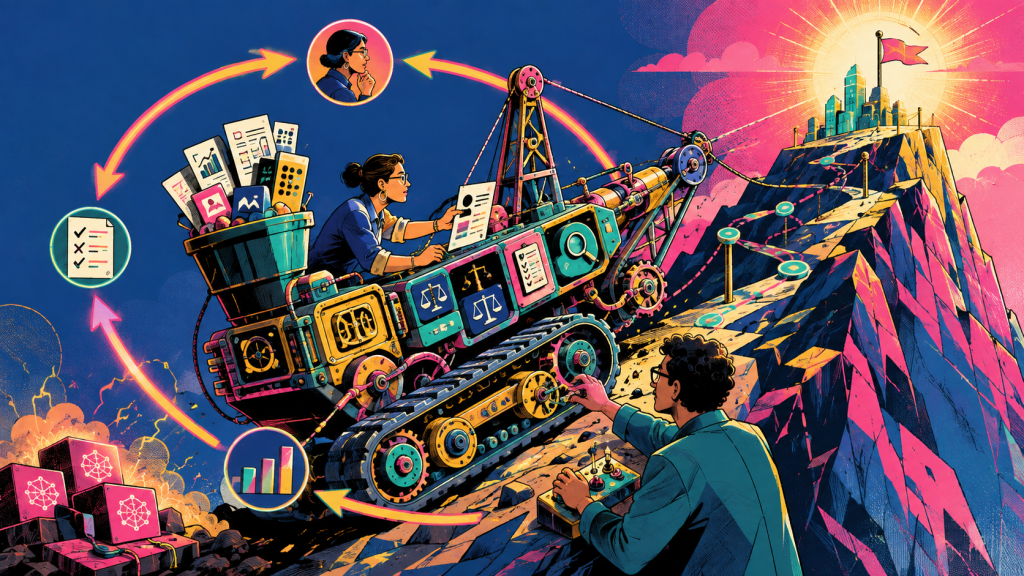
The 5% who get real impact are not the teams with the flashiest demos. They are the teams that treat the demo as a probe, then build production deliberately.
MIT’s “GenAI Divide” reporting also points out a pattern many execs ignore: purchased solutions integrated into existing systems show materially higher success rates than bespoke internal builds, because most organizations underestimate the production work hidden behind the demo. (Fortune)
This is not an argument to “buy everything.” It is an argument to stop lying to yourself about what you are signing up to operate.
Here is the practical shift I recommend: after every impressive demo, require an explicit “ship-grade plan” before the organization treats the initiative as a product commitment. That plan should read less like a feature roadmap and more like an operating manual.
Supporting material that tends to separate winners from the graveyard:
- Reliability contract: Clear SLOs, graceful degradation behavior, rollback strategy, and incident ownership.
- Security posture: Threat model, least privilege, secrets handling, audit logs, and a real process for vulnerability response.
- Data reality: Data contracts, lineage, quality checks, retention, privacy boundaries, and what happens when upstream data breaks.
- AI controls: Evaluation harness, hallucination and uncertainty handling, tool permissions, approval flows for sensitive actions, and traceability.
- Cost discipline: Unit economics, rate limits, caching, and cost alarms that trigger before finance does.
- Operational readiness: Monitoring, alerting, runbooks, and on-call coverage that reflects how critical the workflow truly is.
None of this is glamorous. That is the point. Ship-grade work rarely photographs well.
The real cost is not failure, it is debt
When you push demo-grade thinking into production, you do not just risk an incident. You take on compounding debt.
McKinsey & Company has reported that CIOs estimate tech debt at roughly 20–40% of the value of their technology estate, and that for large organizations this translates into hundreds of millions in drag. (McKinsey & Company)
That debt shows up as slower delivery, brittle systems, more time spent firefighting, and a culture that quietly learns to avoid ambitious change. The organization still “moves.” It just stops moving forward.
Make the gap visible, then fund it
Most executives are not anti-quality. They are anti-ambiguity.
If you want ship-grade outcomes, you have to make ship-grade requirements legible to non-engineers. You have to show that the demo validated direction, but it did not validate readiness. You have to explicitly budget for production hardening, not sneak it in as “engineering cleanup.”
This is where the best CTOs earn their keep. Not by building better demos, but by protecting the organization from confusing persuasion with preparedness.
Because the market is getting crowded with companies that can demo.
The winners will be the ones who can operate.





 bencoding