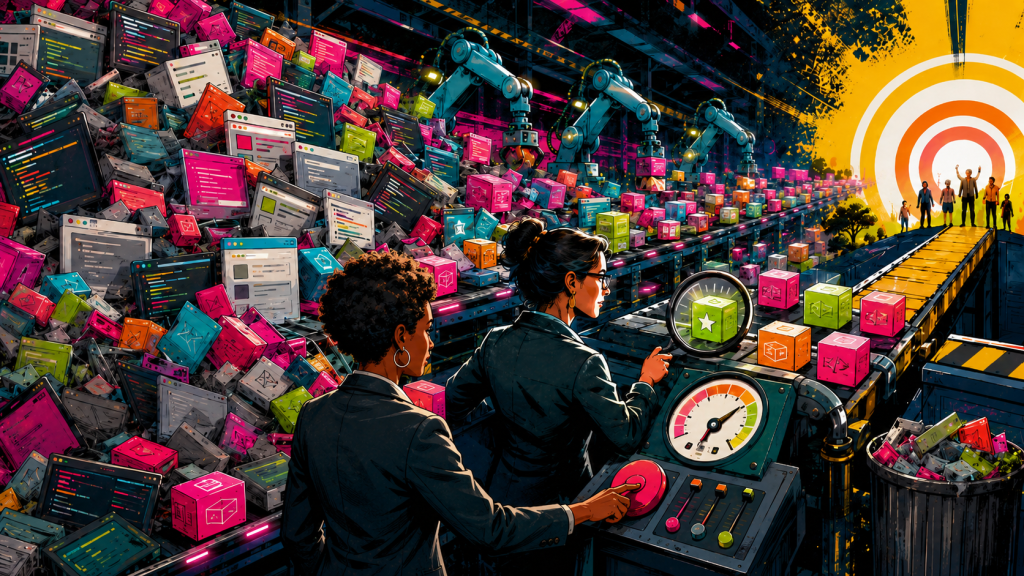
Enterprise software is entering an uncomfortable transition. For twenty years, the product experience was designed around the assumption that a human would open a browser, navigate a workflow, interpret the screen, and click the next button. That assumption is breaking. Humans will still use products, but they will increasingly share those products with agents that do not want navigation, decoration, dashboards, or clever menu structures. They want intent, context, permissions, tools, and reliable execution.
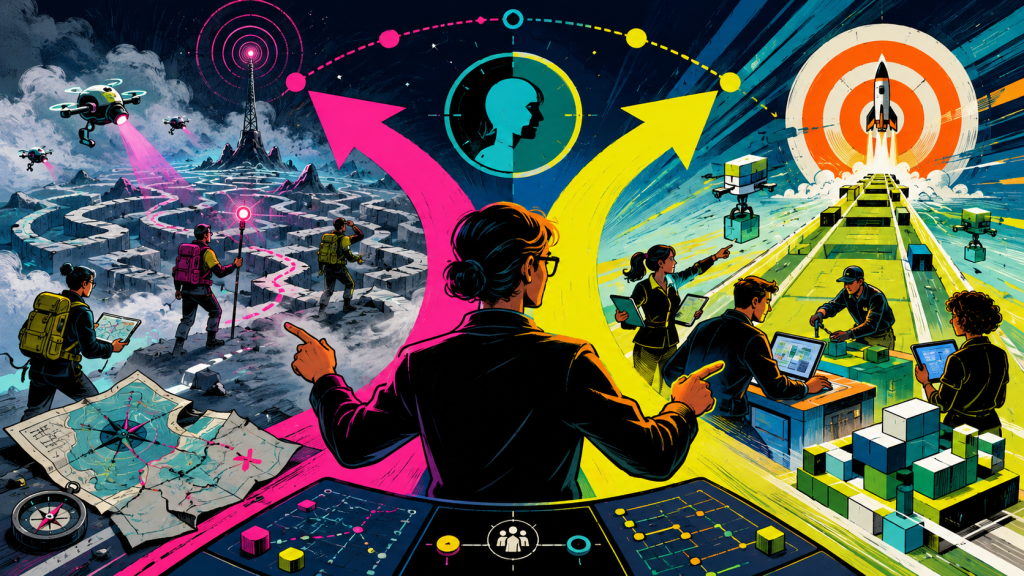
This does not mean every product becomes a prompt box. That is the lazy version of the future. The more likely future is a split interface model where humans browse, agents execute, and the product becomes a governed contract between the two.
Salesforce has made the cleanest public move in this direction. Its Headless 360 announcement says the quiet part out loud: “Everything on Salesforce is now an API, MCP tool, or CLI command,” and agents can use those capabilities without opening a browser. Salesforce frames this as a rebuild of the platform for agents, where business logic, workflows, governance, and data are exposed outside the traditional UI. (Salesforce)
That is not a cosmetic product shift. It is a power shift. If Salesforce becomes the system underneath agentic execution, the Salesforce screen becomes only one surface among many. Slack, voice, WhatsApp, a coding agent, or a customer’s own orchestration layer can become the front door. The real product becomes the programmable business layer.
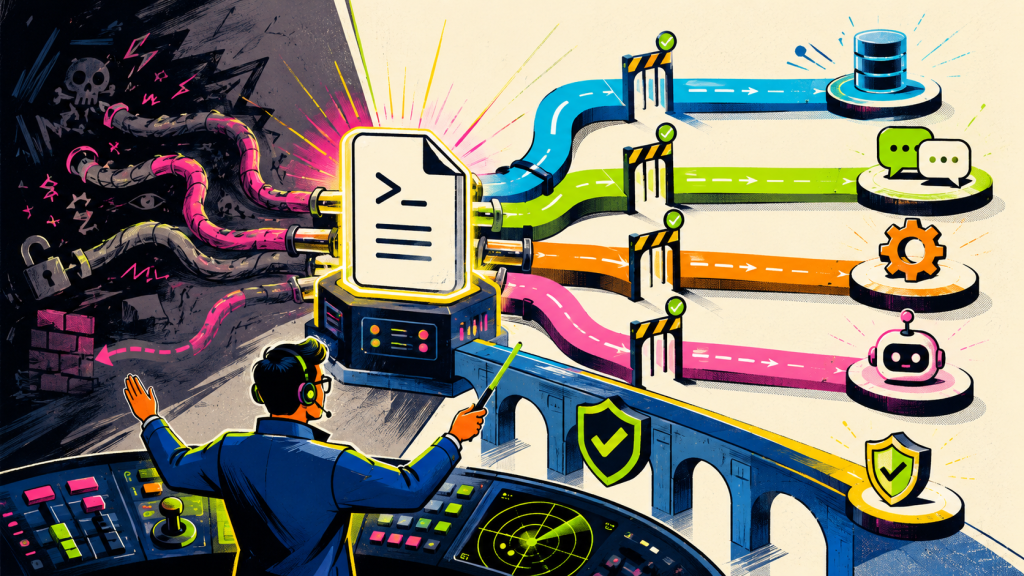
ServiceNow is heading toward a related but more controlled model. Its Action Fabric opens ServiceNow’s “system of action” to external agents through MCP, allowing agents such as Claude, Copilot, or homegrown enterprise agents to trigger governed workflows headlessly. ServiceNow’s own example is simple and revealing: the same password reset playbook that works in the UI can now be triggered directly from Claude. (ServiceNow Newsroom)
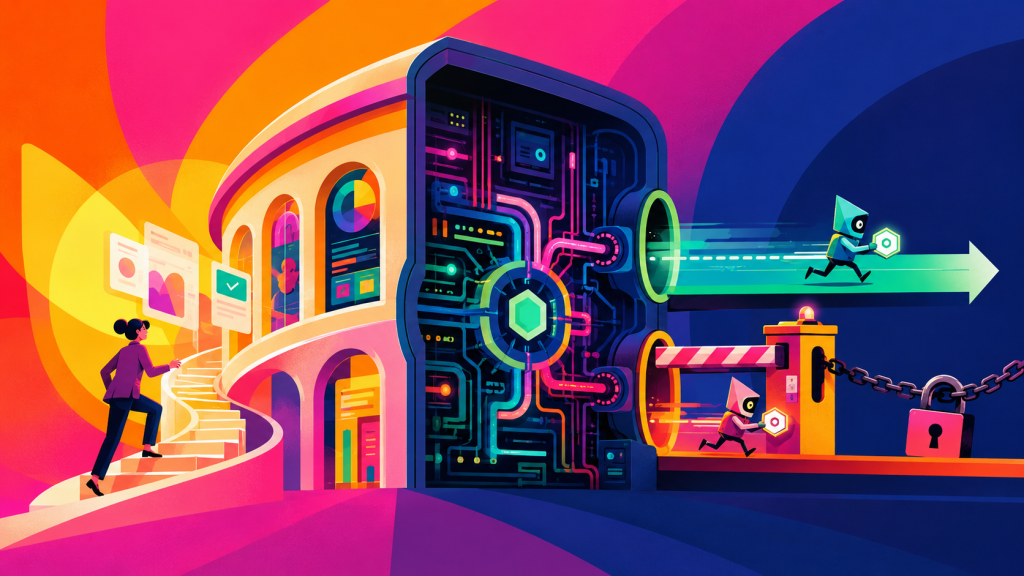
The strategic tension is that ServiceNow is not just opening the door. It is placing itself at the door. Reporting from PYMNTS, citing The Information, says ServiceNow plans to meter and charge customers when external AI agents access data and complete actions through Action Fabric. That is commercially rational, but it also reframes the platform as a toll bridge between the customer’s own agents and the customer’s own operational data. (PYMNTS.com)
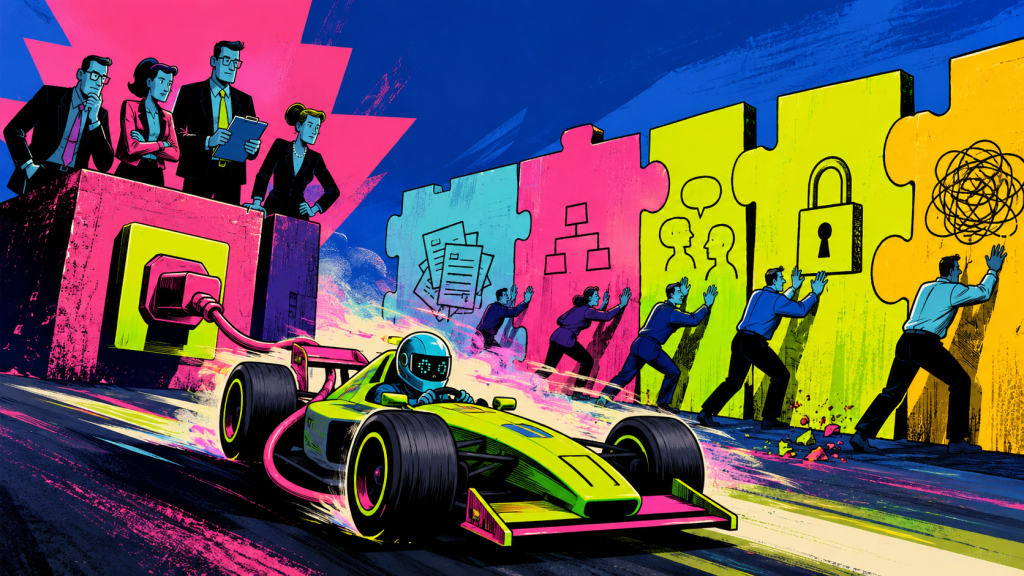
SAP has taken the harder line. Its updated API policy restricts API use for semi-autonomous or generative AI systems that plan, select, or execute sequences of API calls unless they operate through SAP-endorsed architectures, data services, or pathways. SAP’s FAQ argues this is about stability and security, noting that a single prompt can generate thousands of API calls against transactional endpoints that were designed for bounded, defined-purpose usage.
SAP has a legitimate architectural point. Agent loops can be dangerous, expensive, and unpredictable. Yet the product implication is equally clear: the agent era will create a new category of platform control, where vendors decide whether third-party agents are treated as first-class users, taxable users, risky users, or unauthorized users.
For product and technology leaders, this is the real question: are we designing products for people who use software, or for people who delegate software use to agents?
Browse-based UI is not going away. It is too useful for discovery, review, trust, exception handling, and emotional confidence. People still want to see the case history, inspect the invoice, compare the recommendation, and understand why the system made a decision. The mistake is assuming browse remains the primary execution model.
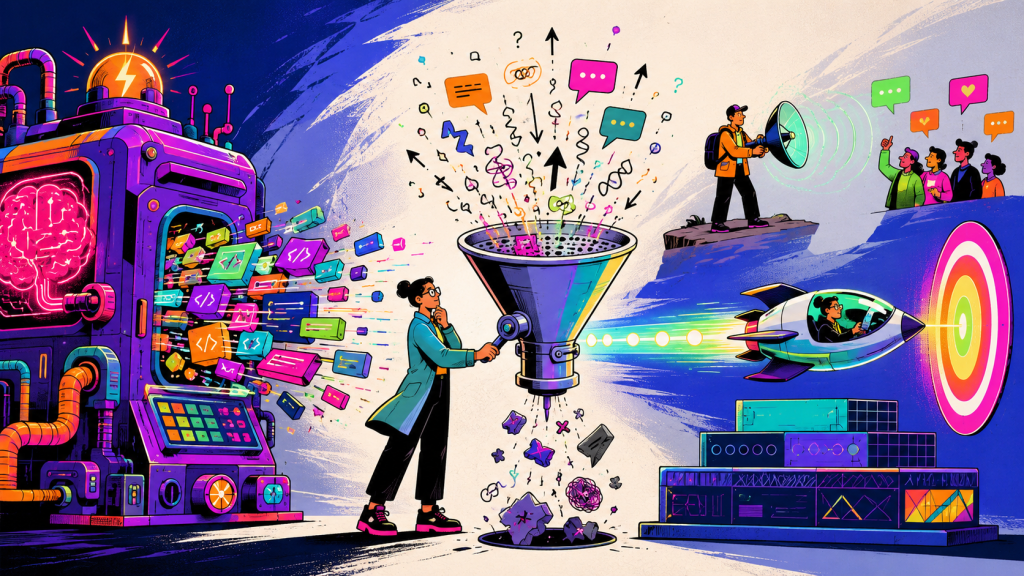
Intent-based UI will absorb more of the work. A user will say, “renew this customer with the same commercial terms except for the new support package,” or “prepare the immigration filing based on the latest employee documents and flag missing evidence.” The product should not respond with a navigation path. It should respond with a plan, the required approvals, the data it will use, the actions it is allowed to take, and the points where a human must decide.
The strongest evidence comes from the research pattern, not just vendor announcements. A 2025 revision of the “Beyond Browsing” paper found that API-based agents outperformed web-browsing agents on realistic web tasks, while hybrid agents using both browsing and APIs performed best. The lesson is practical: agents should not be forced to click through human interfaces when clean APIs exist, but they still need visual and contextual interfaces when ambiguity, review, or incomplete integration exists. (arXiv)
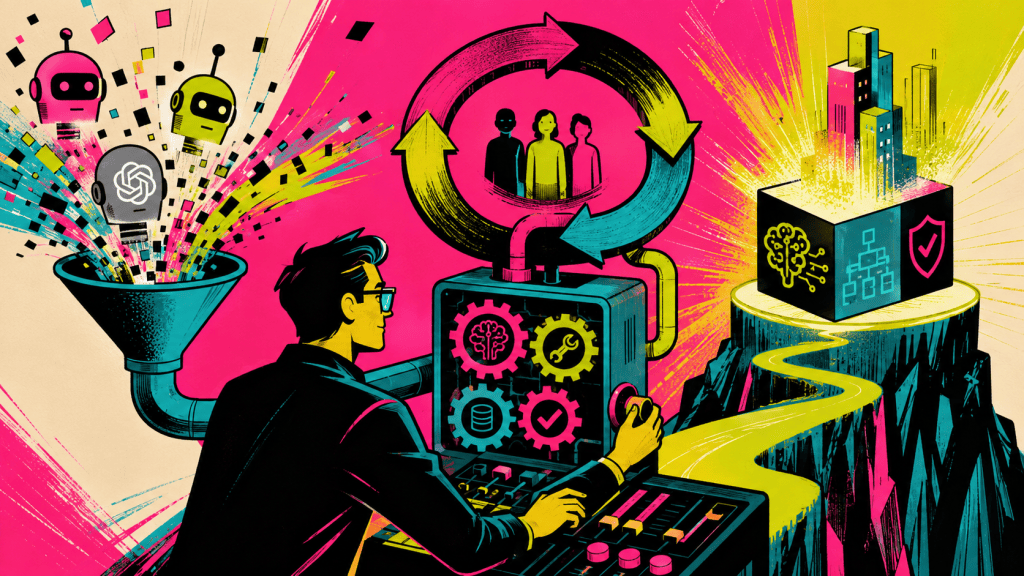
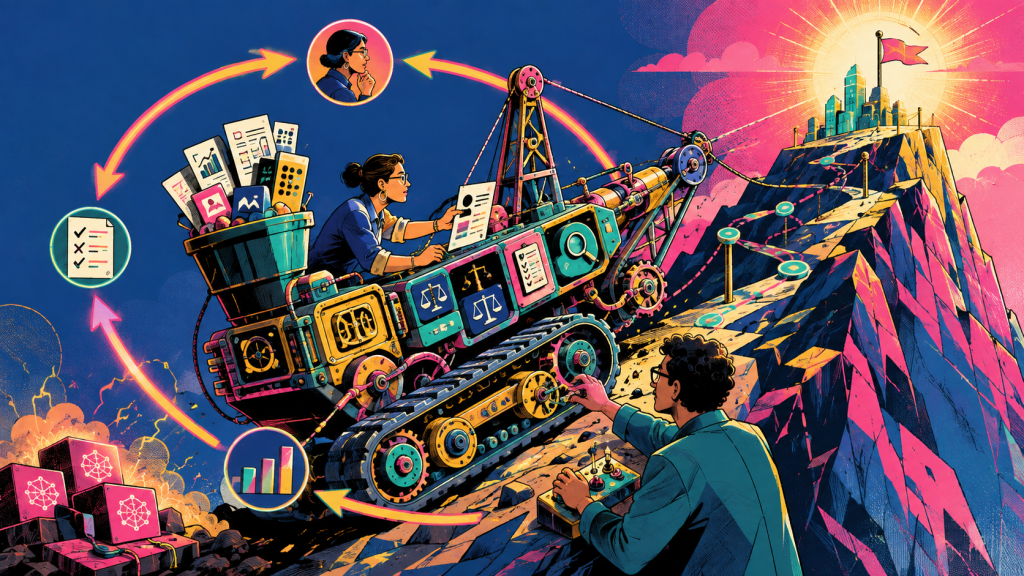
That leads to the next product architecture. Modern products will need three interaction surfaces, not one. They need a human surface for browse, review, and collaboration. They need an intent surface where users express goals, constraints, and preferences. They need a headless action surface where agents can retrieve context, call tools, execute workflows, and produce auditable outcomes.
This is why “chat as the new UI” is too small an idea. Chat is a useful input method, but it is not a product architecture. A prompt is not a permission model. A prompt is not an audit trail. A prompt is not a workflow engine. A prompt is not a commercial contract between platforms.
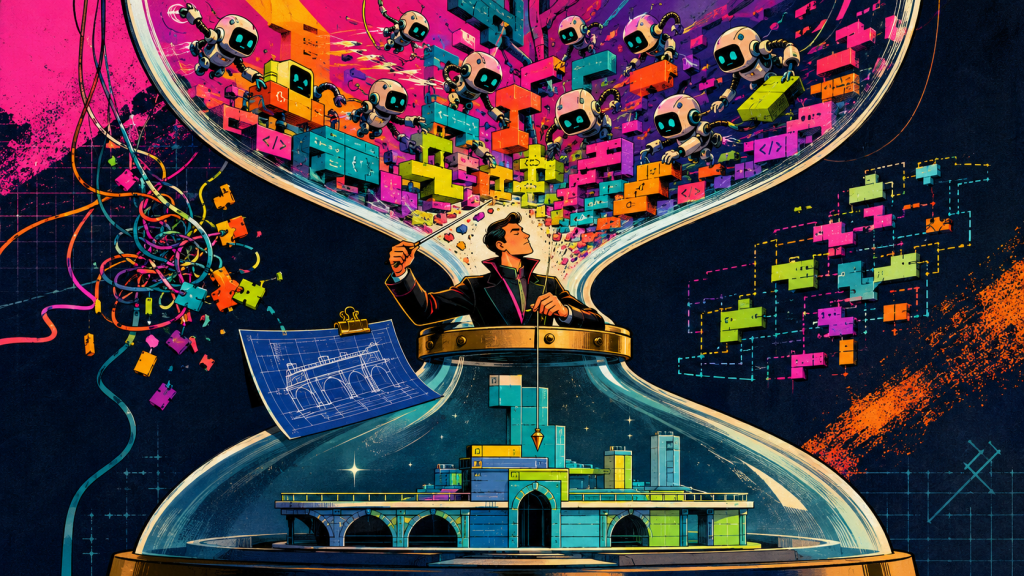
The agent-ready product will be defined by deeper primitives: identity, entitlements, state, tool contracts, rate limits, event logs, reversible actions, escalation paths, and human checkpoints. In other words, the future product experience looks less like a beautiful screen and more like a well-governed operating protocol with a beautiful screen attached.
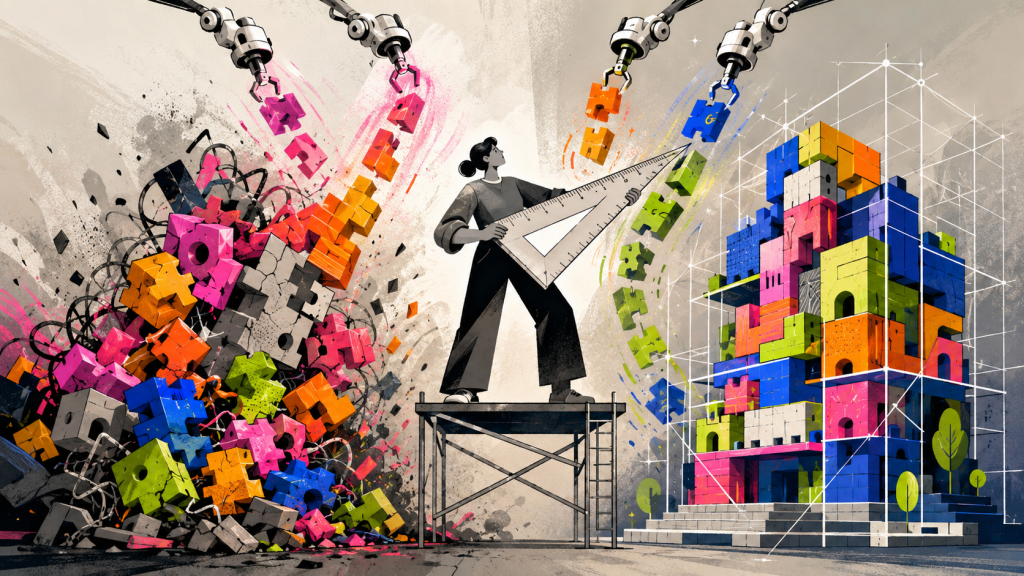
This also changes how executive recruiters should evaluate technology leaders. The next generation of technology leaders will not be judged only on whether they shipped AI features. They will be judged on whether they understood the interaction model shift underneath those features. A leader who simply adds a chatbot to a legacy workflow is modernizing the paint. A leader who exposes the product as governed actions, intent models, and agent-safe APIs is modernizing the business.
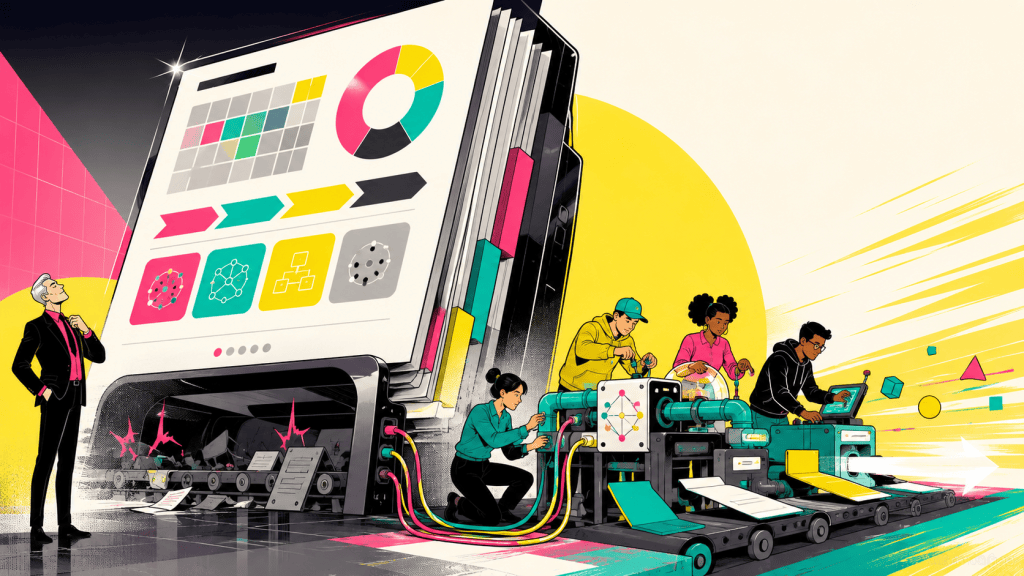
The market is already moving in that direction. OpenAI’s Operator showed that agents can use existing browser interfaces for tasks like filling out forms and ordering goods. Anthropic’s computer-use capability showed Claude interacting with screens, cursors, buttons, and text fields, while early adopters such as Asana, Canva, DoorDash, Replit, and The Browser Company explored multi-step workflows. These are bridge technologies. They prove agents can use human software, but they also expose why agents should not have to. (OpenAI)
The more durable destination is not agents pretending to be humans. It is products exposing work in a form agents can safely perform. A recent study of more than 177,000 MCP tools found that action tools rose from 27 percent to 65 percent of usage over a 16-month period, which signals that agents are moving from reading and reasoning into changing external systems. (arXiv)
That is where the battle will be. Reading data is interesting. Taking action is valuable. Taking action safely is the product frontier.
The winners will not be the companies that eliminate the UI. They will be the companies that stop confusing the UI with the product. The product is the business capability. The UI is one way to access it. Agents are another.
The best product teams will design for a world where a user can browse when they need confidence, prompt when they know the outcome, and delegate when the system has enough context to act. The worst product teams will bolt a chat window onto a workflow designed for 2008 and call it transformation.
Everything will not become a prompt. Everything will become addressable by intent. That is the distinction that matters.
The future of product experience is not browse versus prompt. It is browse for understanding, intent for direction, and headless execution for work. Products that make that shift will become platforms for agentic work. Products that resist it will become screens that agents are forced to scrape, click, and eventually route around.