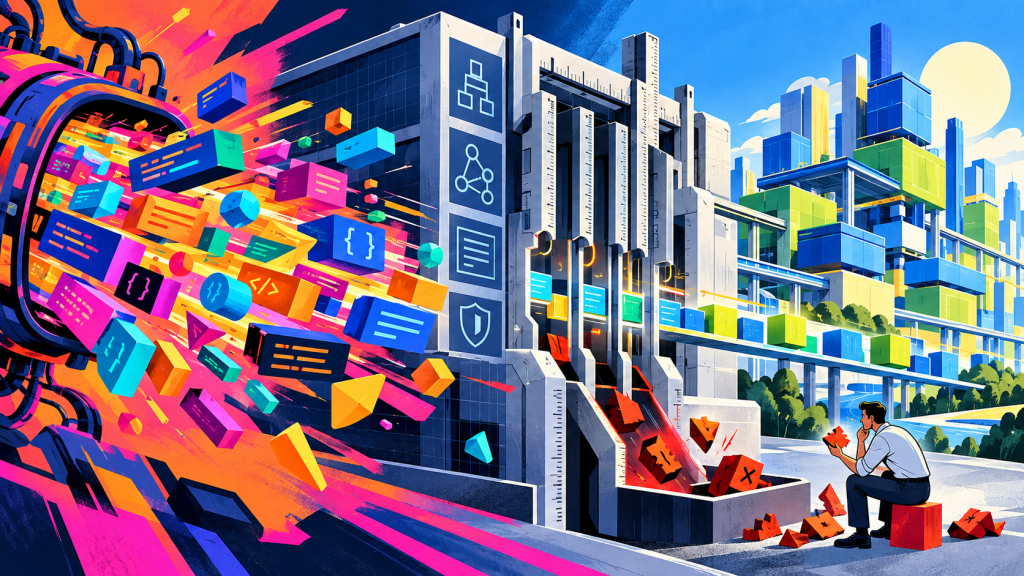
The most useful warning in the recent Thomson Reuters piece is not that AI is moving too fast. It is that companies can win the tooling race and still lose the talent race. The article argues that unchecked AI use can erode human connection, cognitive skill, learning, and purpose at work, which is exactly the part of the AI conversation most executive teams still underweight. We are spending heavily on models, copilots, agents, and workflow automation, but the scarce resource is becoming people who know when to trust AI, when to challenge it, and how to reshape work around it without hollowing out the craft. (Thomson Reuters)
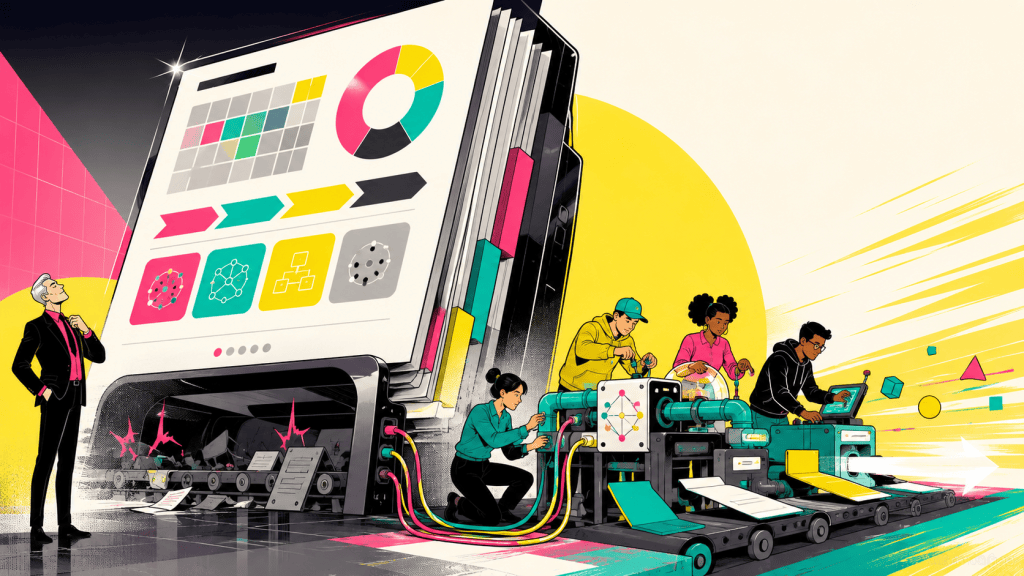
This is where many AI transformation plans are still too shallow. They treat AI adoption as a tooling rollout, then wonder why the productivity curve flattens after the first wave of excitement. BCG’s 2025 AI at Work research found that frontline AI usage has stalled at 51%, while leaders and managers use GenAI far more often. It also found that adoption improves when people receive proper training, leadership support, and the right tools, not just another license in the enterprise software catalog. (BCG Global)
The next wave of high-performing talent will not be defined by who can write the cleverest prompt. That phase is already becoming table stakes. The better signal is whether someone can turn AI into a repeatable operating advantage: better decisions, faster learning cycles, stronger customer insight, cleaner engineering execution, and more disciplined product discovery. Microsoft’s Work Trend Index describes “Frontier Firms” as organizations moving toward human-agent teams, with leaders expecting agents to become integrated into AI strategy and new roles emerging around AI training, data, security, agent specialization, ROI analysis, and AI strategy. (Microsoft)
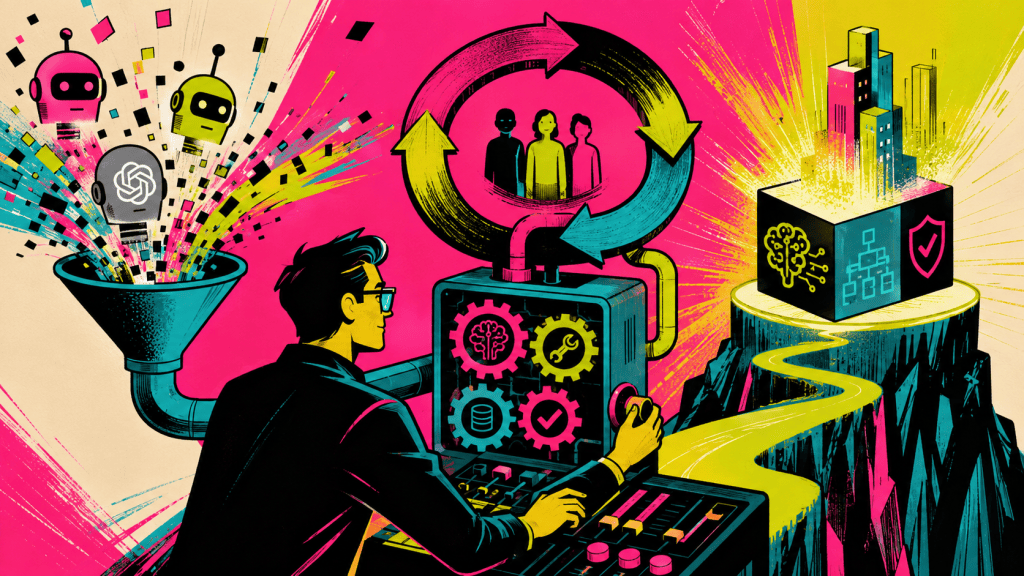
The most productive AI talent has three traits that recruiters and executives should start screening for immediately. First, they have domain judgment. They know the work deeply enough to see when AI is producing a polished wrong answer. Second, they have systems thinking. They do not use AI as a sidecar; they redesign the workflow, data, controls, and feedback loops around the outcome. Third, they have learning discipline. They can improve how a team uses AI over time, instead of treating every output as a one-off miracle.
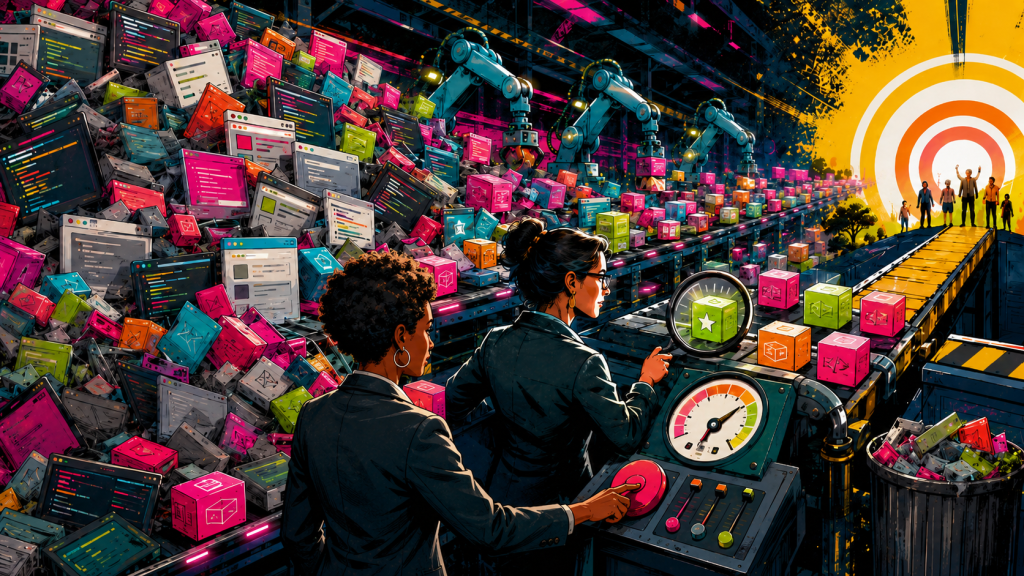
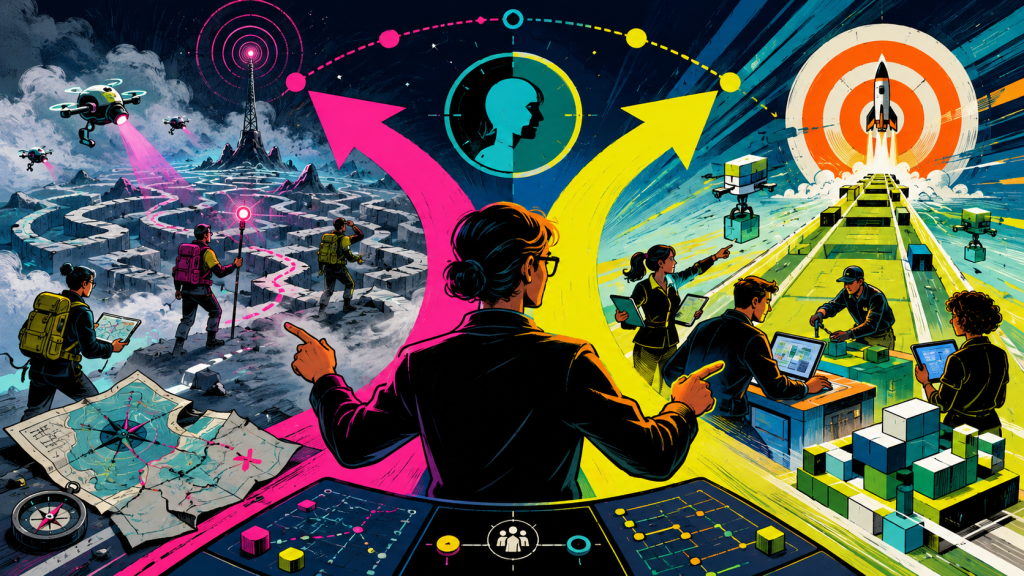
That last point matters because the research is increasingly clear that AI can both create and destroy value depending on how it is used. The Harvard Business School and BCG “jagged frontier” study showed that consultants using GPT-4 completed more tasks, worked faster, and improved quality on tasks inside AI’s frontier, but performed worse on a complex task outside that frontier. The lesson for leadership is uncomfortable but important: AI fluency without judgment is not leverage, it is risk wearing a productivity costume. (Harvard Business School)
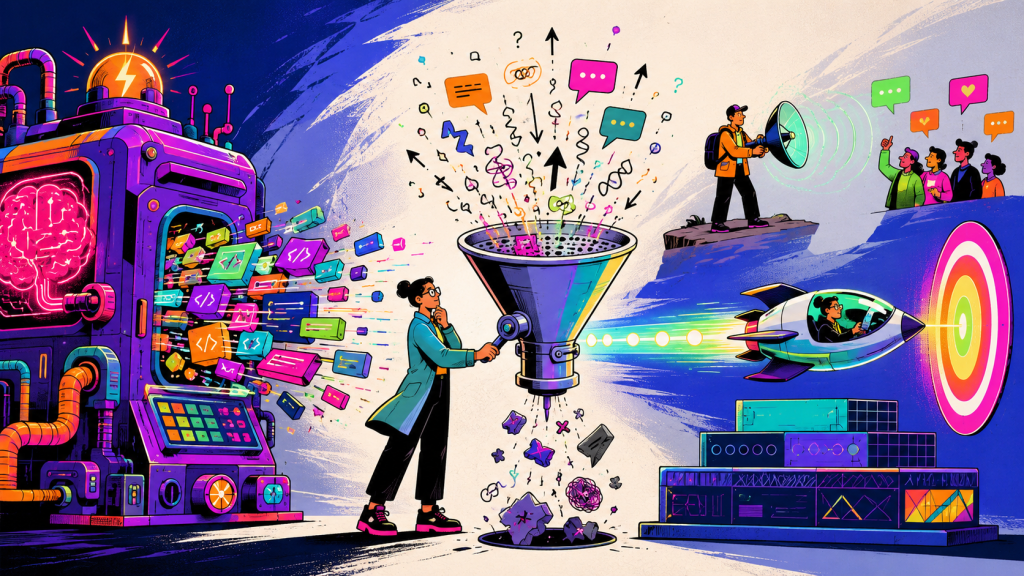
This is why the Thomson Reuters framing around cognitive skill and human connection deserves attention. The issue is not whether people should use AI less. The issue is whether organizations are designing AI use in a way that makes people sharper, not more passive. When employees delegate too much thinking to AI, they may move faster in the short term while losing the very expertise that allows them to evaluate, improve, and own the work. (Thomson Reuters)
For technology and product executives, the talent roadmap has to change. Hiring for “AI experience” is too vague. Training people on prompt libraries is too thin. The new bar is AI-enabled craftsmanship, where engineers, product managers, designers, analysts, and operators understand how to combine human taste, technical rigor, customer empathy, and model capability into a better way of building.
The World Economic Forum’s 2025 Future of Jobs work reinforces this shift. Employers expect 39% of key skills to change by 2030, with AI and big data rising fastest, but the same report also highlights creative thinking, resilience, curiosity, lifelong learning, leadership, talent management, and analytical thinking as increasingly important. In other words, the future workforce is not just more technical. It is more adaptive, more discerning, and more capable of learning in motion. (World Economic Forum)
The more interesting labor market signal is that AI seems to increase the premium on complementary human skills. A 2025 study of 12 million job vacancies found that AI-focused roles are nearly twice as likely to require resilience, agility, or analytical thinking compared with non-AI roles, and that complementary effects were meaningfully larger than substitution effects. Another study of GenAI job postings found that roles asking for tools such as ChatGPT and Copilot were associated with higher cognitive skill demand. (arXiv)
That should change how executive recruiters assess AI-era leaders. The strongest technology and product leaders will not simply say they “rolled out Copilot” or “implemented GenAI.” They will be able to explain which workflows changed, which decision rights moved, which controls were introduced, which skills were upgraded, and how the organization measured whether AI improved outcomes rather than merely accelerated activity.
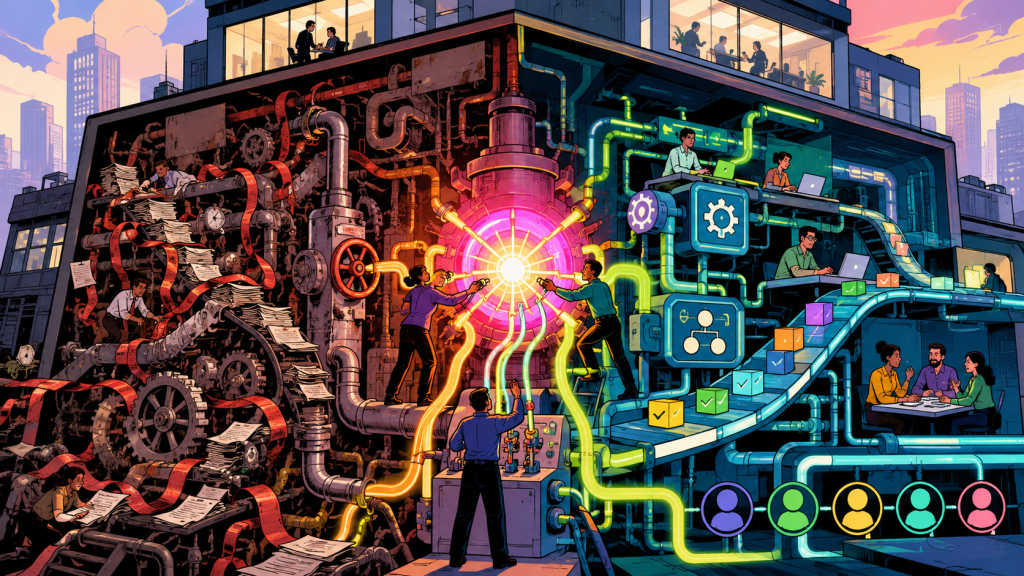
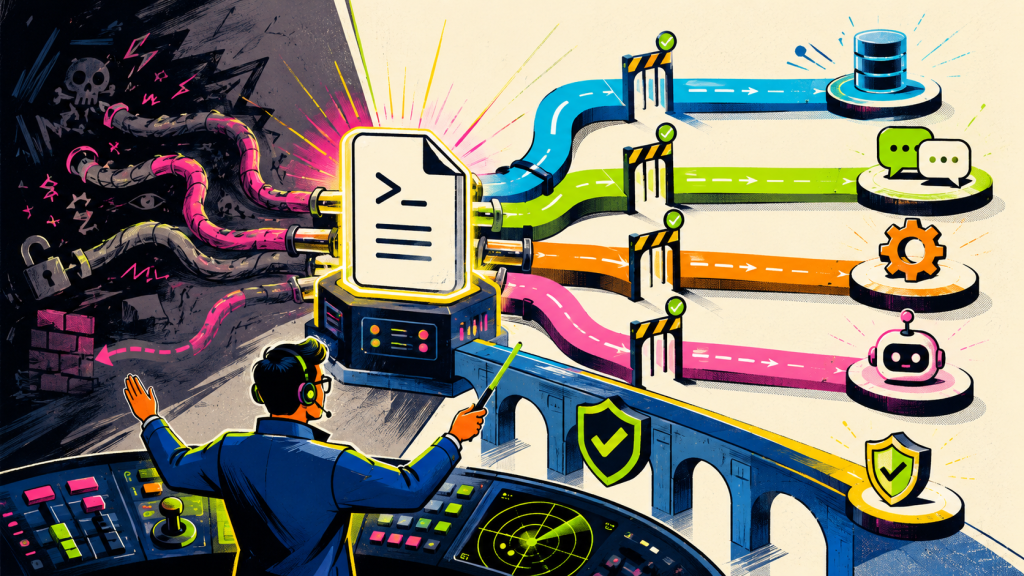
The same standard should apply inside companies. AI training should not be a lunch-and-learn followed by a usage dashboard. It should look more like an operating model transition. Teams need role-based skill paths, workflow-specific playbooks, quality gates, review rituals, and safe places to practice. They need to learn how to decompose work, assign the right parts to AI, preserve human judgment at critical points, and build feedback loops so the system improves.
IBM’s 2026 CEO study puts a sharp point on this. In its survey, 83% of CEOs said AI success depends more on people’s adoption than technology, and respondents expected 29% of employees to need reskilling for different roles and 53% to need upskilling in their current roles between 2026 and 2028. The companies that redesigned technology, finance, HR, operations, and cross-functional collaboration were four times more likely to deliver on business objectives. (IBM Newsroom)
The mistake would be to turn this into another fear-based conversation about AI replacing people. That is the least useful version of the debate. The better question is whether organizations are building the talent system required to capture the upside of AI without degrading the judgment, connection, and craft that make the upside sustainable.
The companies that win will not be the ones with the most AI tools. They will be the ones with the most AI-capable culture. They will know which work should be automated, which work should be augmented, and which work must remain deeply human because trust, accountability, creativity, and meaning are still core parts of the product.
That is the real talent brief for the next several years. Recruit people who can learn faster than the tools change. Train people to use AI without surrendering judgment. Promote leaders who can redesign work, not just buy software. The next competitive advantage will belong to organizations that treat AI transformation as a people transformation first, with technology as the accelerant rather than the strategy.