At the beginning of 2026, it was reasonable to predict that this would be the year organizations moved beyond AI experimentation and began transforming how they operated. More than halfway through the year, that prediction is becoming observable reality.
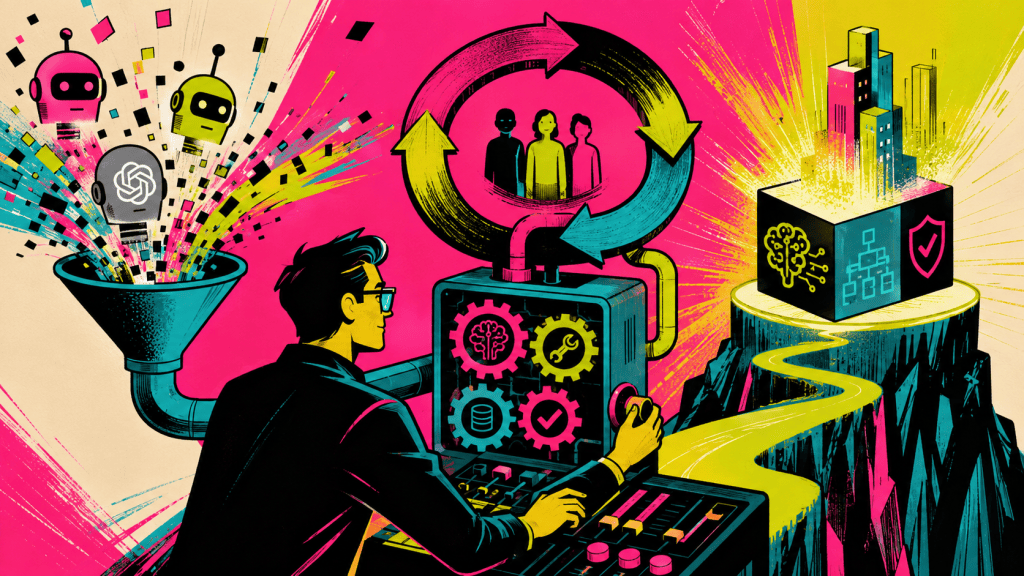
The pattern is now clear. The most consequential AI work is moving away from isolated customer-facing features and into the internal machinery of the enterprise. Companies are redesigning how decisions are made, how software is built, how knowledge moves, how teams are structured, and how work is governed.
For the past several years, the loudest AI conversations focused on what companies could build for customers. Every strategy session seemed to end with the same ambition: add a copilot, launch a chatbot, create an agent, or place a more intelligent interface over an existing product.
Those investments still matter, but the center of gravity has shifted. Organizations are discovering that they cannot create truly intelligent products while continuing to operate through industrial-era structures, fragmented data, manual handoffs, and management systems designed for a slower world.
The next wave of transformation is already happening inside the company.
The internal operating system has become the constraint
Most organizations do not have an AI technology problem. They have an organizational architecture problem.
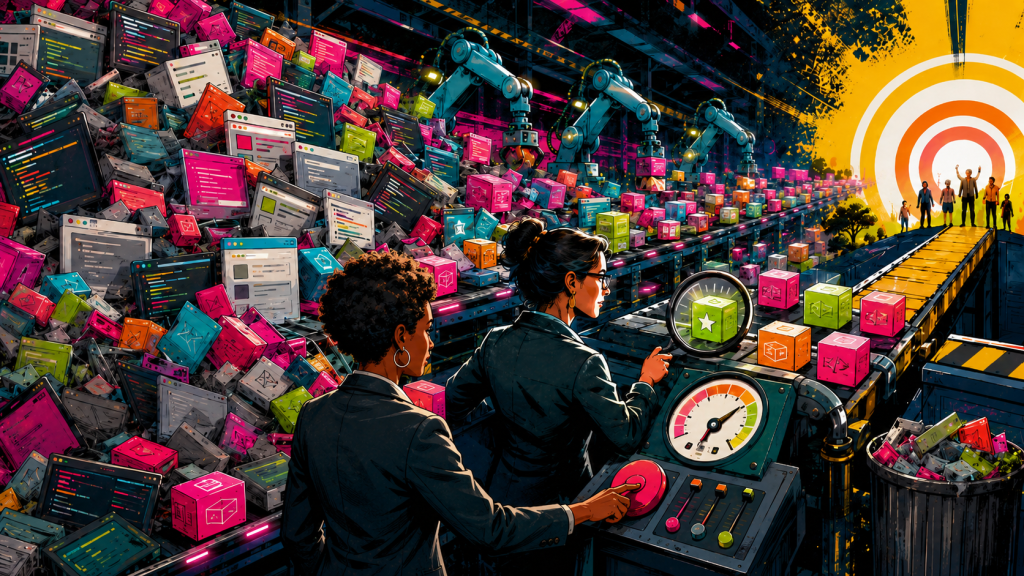
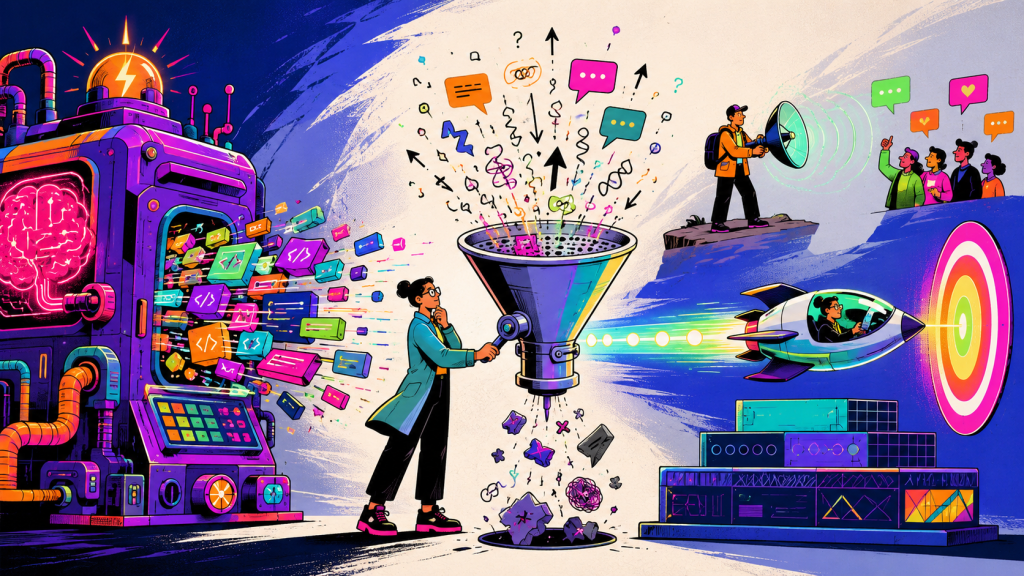
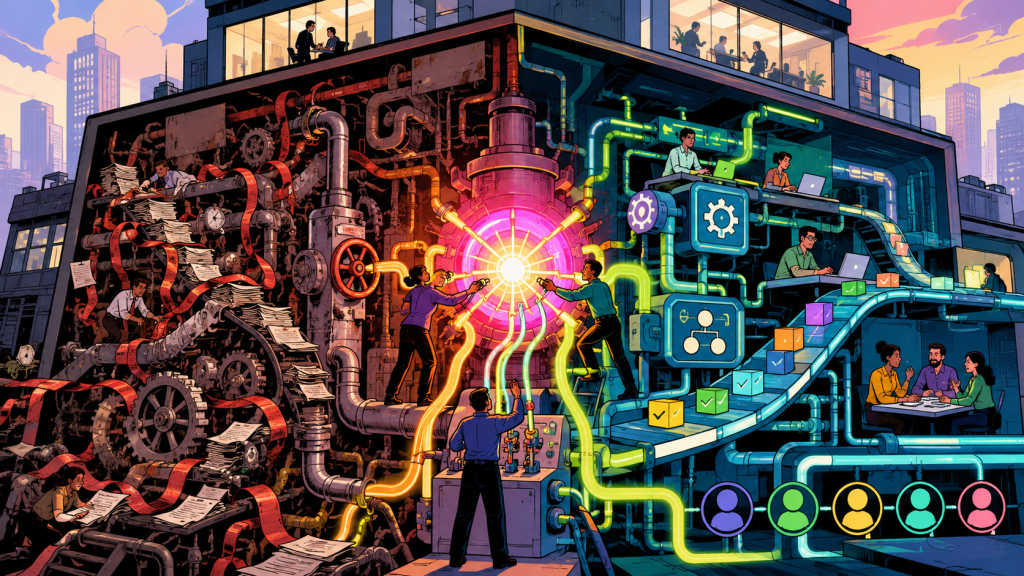
Employees can now generate analysis, code, content, prototypes, and recommendations faster than the company can review, approve, integrate, or act upon them. AI has increased the speed of individual contribution, but the surrounding machinery of work has remained largely unchanged.
The result is not transformation. It is faster output colliding with the same queues, committees, silos, and decision bottlenecks.
Microsoft’s 2026 Work Trend Index reinforces this point. Its research found that organizational factors such as culture, manager support, and talent practices account for more than twice the reported AI impact of individual behavior. People are often prepared to work differently, but the systems around them are not. Microsoft Work Trend Index
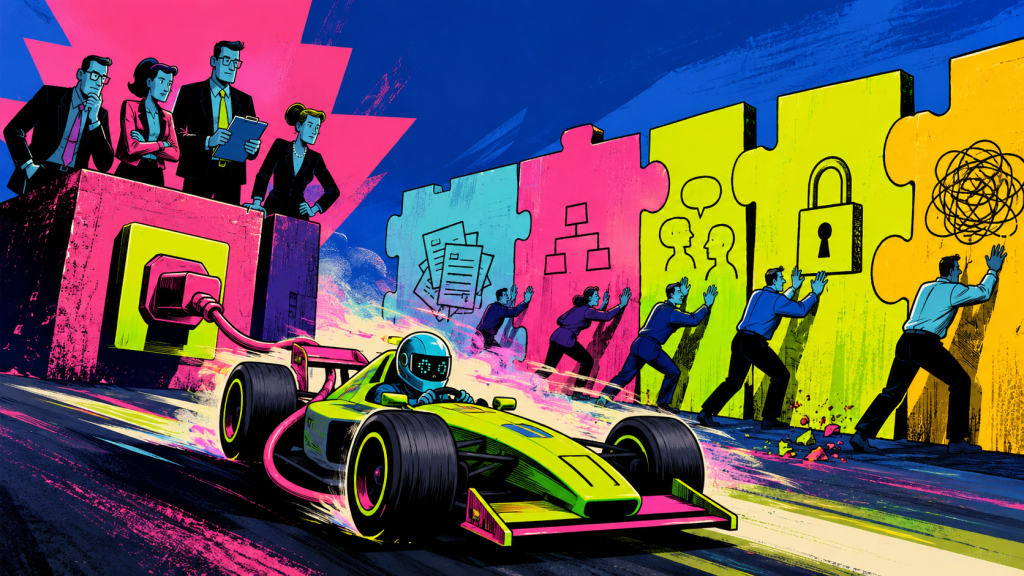
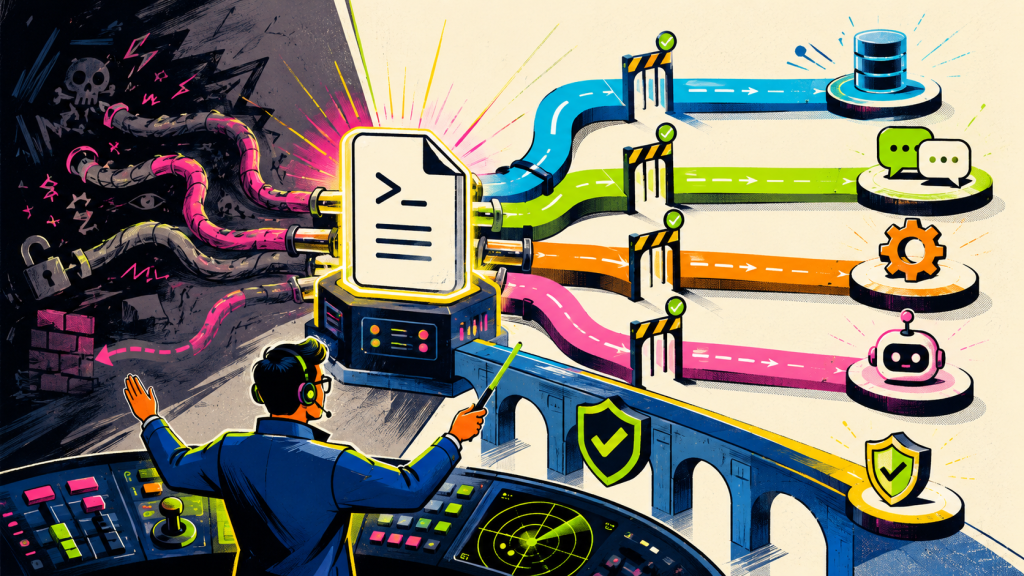
That finding matches what I see in technology organizations. Giving an engineer an AI coding tool without redesigning architecture, testing, security, deployment, and code review simply moves the bottleneck.
A 2026 longitudinal study of an AI-forward software organization found that development throughput eventually doubled, but reviewer workloads also doubled. Automated review had to overtake human review to absorb the increased volume. AI’s Impact on Software Development
This is one of the most important lessons of the year. AI does not remove the need for an operating model. It exposes where the existing one can no longer keep up.
The pilot era is ending
By now, most large organizations have run enough pilots to know that AI can perform useful work. They have seen it summarize documents, generate code, support customers, analyze data, draft communications, and automate parts of complex workflows.
The question is no longer whether AI works. The question is whether the organization is prepared to reorganize around what AI makes possible.
Deloitte’s 2026 enterprise research found that 34 percent of surveyed organizations are using AI to create new offerings or reinvent core processes and business models. Another 30 percent are redesigning selected processes, while 37 percent remain at the surface, using AI without materially changing how work happens. Deloitte State of AI in the Enterprise
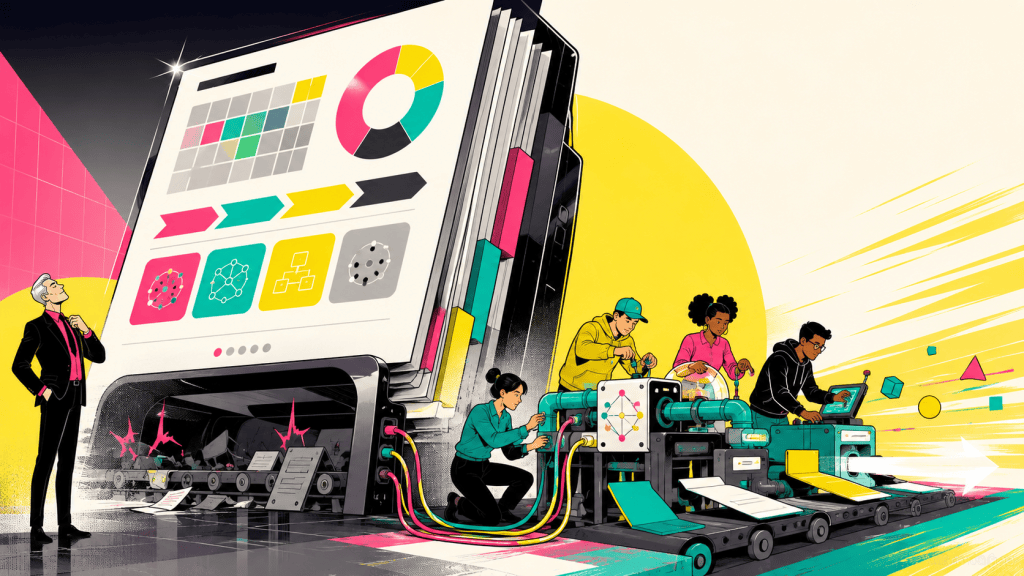
That final group should be concerned. Adding AI to an unchanged process often produces marginal efficiency, but it rarely creates durable advantage. The meaningful gains appear when leaders are willing to redesign the process itself.
JPMorganChase provides a useful signal of what deeper integration looks like. More than 90 percent of its engineers use AI coding assistants, while over 65,000 employees in its Corporate and Investment Bank actively use its internal LLM Suite.
More importantly, the company describes its strategy as rewiring the business. That includes embedding AI into processes, modernizing data architecture, and measuring business outcomes rather than simply distributing another productivity tool. JPMorganChase Annual Report
Its 2026 company update explained that employees are moving beyond brainstorming and summarization to using internal APIs that integrate generative AI into business applications and daily workflows. That progression matters because chat is primarily an adoption mechanism. Workflow integration is transformation.
Culture is becoming part of the technology stack
The organizations moving fastest are treating AI behavior as part of how the company operates, not as an optional training program.
Shopify made “reflexive AI usage” a baseline expectation and supported that expectation with universal adoption of AI code editors, access to leading models, internal experimentation environments, and a culture that rewards employees for sharing what they learn. Its internal prototype platform generated more than 5,000 experimental sites within months. Shopify on AI Experimentation
Moderna took a similarly deliberate approach in a highly regulated environment. It combined executive sponsorship, role-specific education, internal champions, local office hours, and structured change management.
The company reported more than 80 percent employee adoption of its original internal AI assistant, followed by hundreds of employee-created GPTs after deploying ChatGPT Enterprise. Moderna’s AI Adoption
These examples are not primarily stories about software licenses. They are stories about leadership systems.
Executives modeled the behavior. Employees were given room to experiment. Knowledge was shared horizontally. New expectations were reinforced through access, incentives, training, and visible sponsorship.
By the second half of 2026, the distinction is becoming easier to see. Some organizations have purchased AI tools. Others are building cultures in which AI-assisted work becomes normal, measurable, and continuously improved.
Transformation often feels slower before it feels faster
There is an uncomfortable reality that many leadership teams still underestimate. Genuine AI transformation can initially reduce productivity.
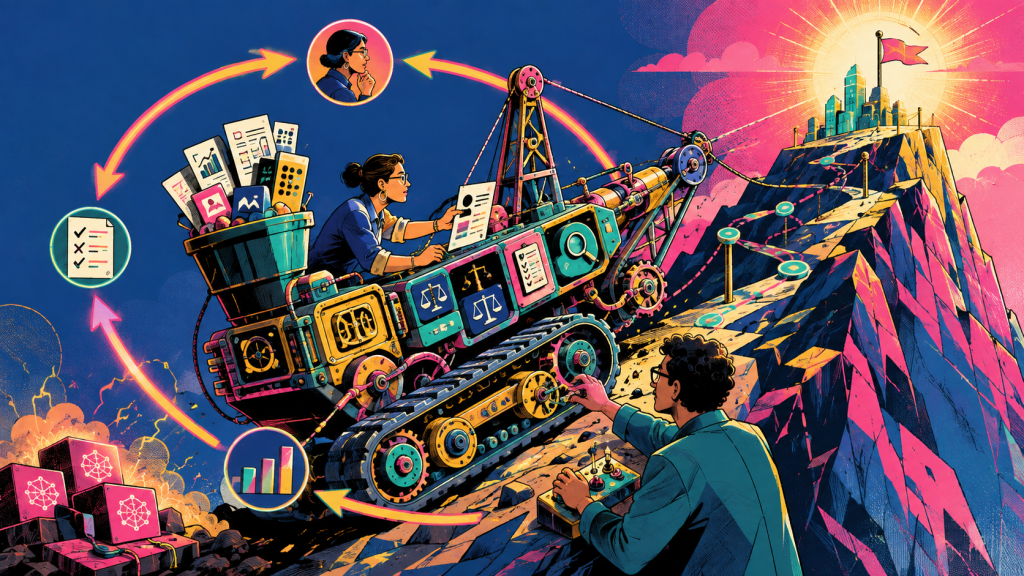
MIT research into industrial AI adoption found a J-curve effect, with performance declining before stronger gains emerged. Companies must absorb implementation costs, redesign processes, build skills, connect systems, and change how decisions are made before the benefits appear at scale. MIT Sloan on the AI Productivity Paradox
This is why superficial efficiency programs are dangerous. When leaders demand immediate savings from every AI initiative, teams optimize visible tasks while avoiding the deeper work required to transform the organization.
That deeper work includes simplifying architecture, cleaning critical data, removing redundant approvals, redefining roles, restructuring funding, and measuring outcomes across functions.
PwC’s 2026 operations research found that 89 percent of leaders believe their technology investments have not fully delivered expected results, even though 85 percent consider themselves ahead of competitors. Only 4 percent reported the combination of embedded AI, scalable agents, horizontal operations, and fully realized technology value. PwC Digital Trends in Operations Survey
More than halfway through the year, that gap between confidence and capability has become one of the defining management challenges of 2026. Many companies believe they are transforming because they have activity, tools, and pilots. Far fewer have changed the underlying system through which work gets done.
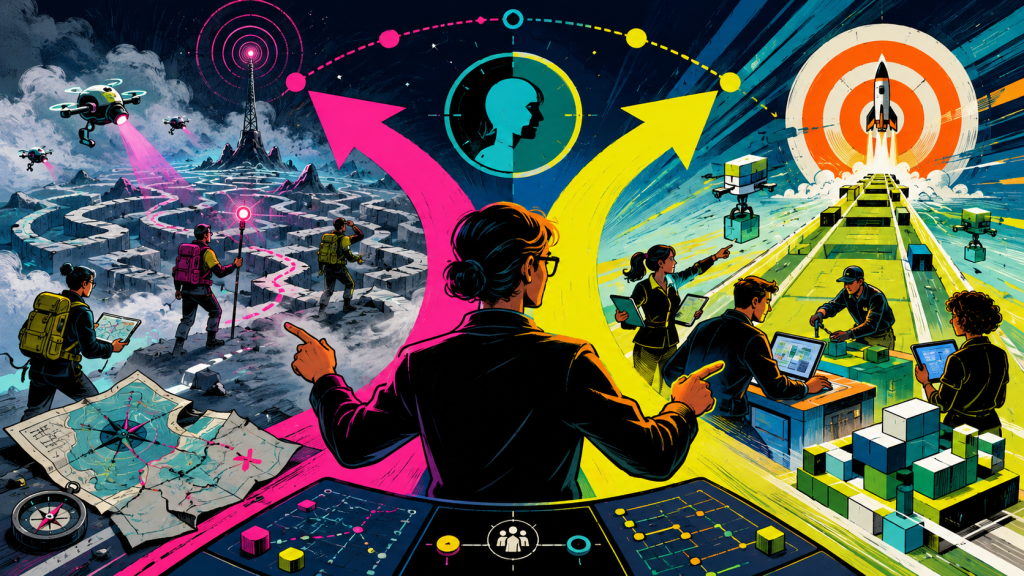
The leadership mandate has changed
I no longer believe CTOs and CPOs can treat AI as a separate innovation portfolio. It must become part of how strategy is formed, products are discovered, software is built, operations are managed, and talent is developed.
The most valuable technology leaders will not be those who launch the greatest number of pilots. They will be the leaders who connect product ambition with engineering discipline, organizational design, data architecture, financial accountability, and the human realities of change.
They will also be willing to challenge assumptions that have survived mainly because changing them was previously too difficult.
Does every decision still require the same meeting? Should teams remain organized around systems when customers experience journeys? Is headcount still the best proxy for capacity? Should annual planning survive unchanged when intelligent systems can continuously sense, recommend, and adapt?
Amazon has already stated that extensive AI adoption will change the mix of jobs, reduce some forms of corporate work, and create demand for different capabilities. Its leadership is explicitly asking employees to learn, experiment, and find ways for smaller teams to achieve more. Amazon CEO Andy Jassy on Generative AI
Other organizations may choose different language, but they will face the same underlying questions. As 2026 progresses, those questions are moving from conference stages into operating plans, investment committees, organization structures, and performance expectations.
The trend is no longer emerging. It is established.
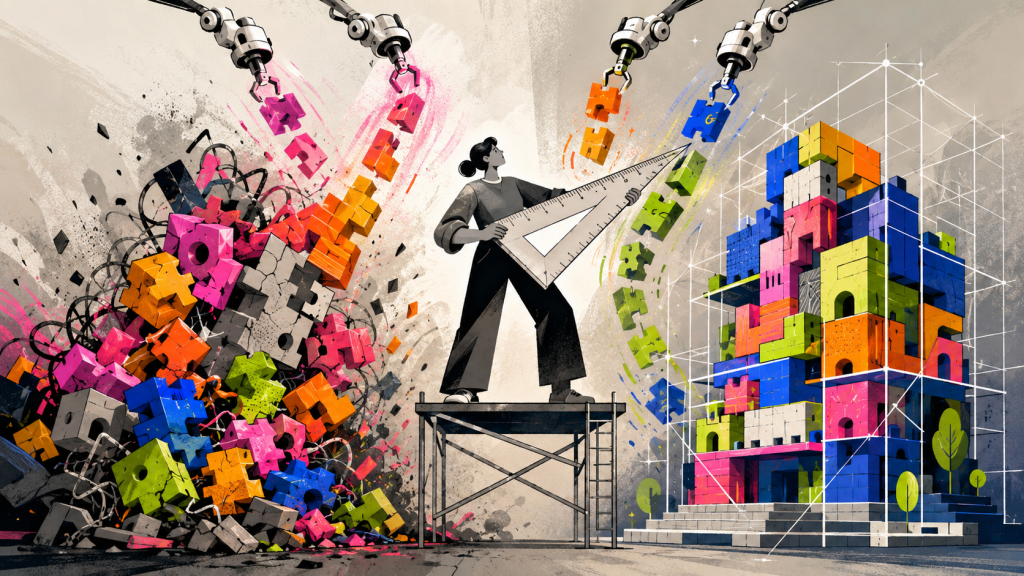
The companies that succeed will not simply add AI to the business they already have. They will use AI as the forcing function to build the organization they should have had all along.