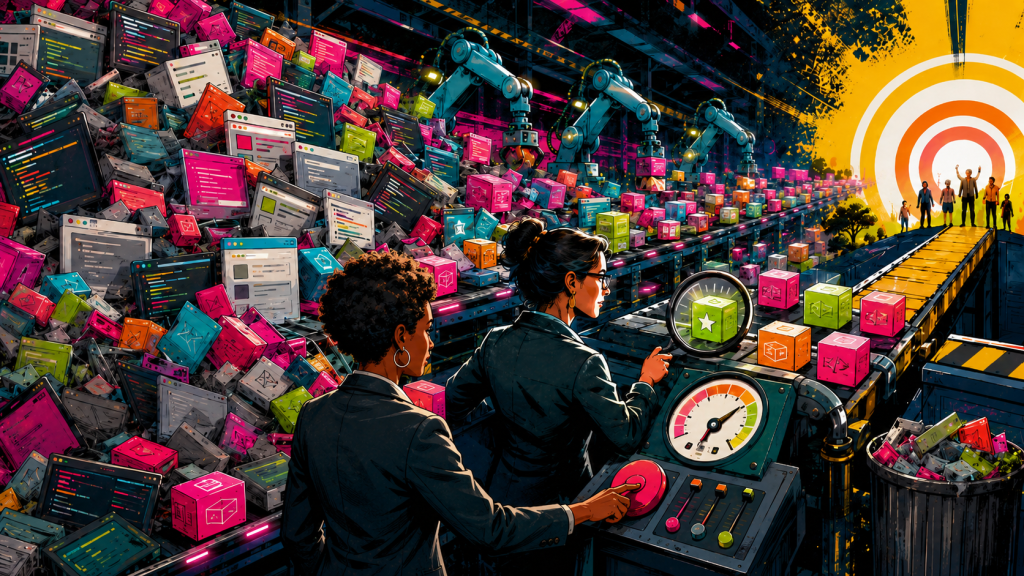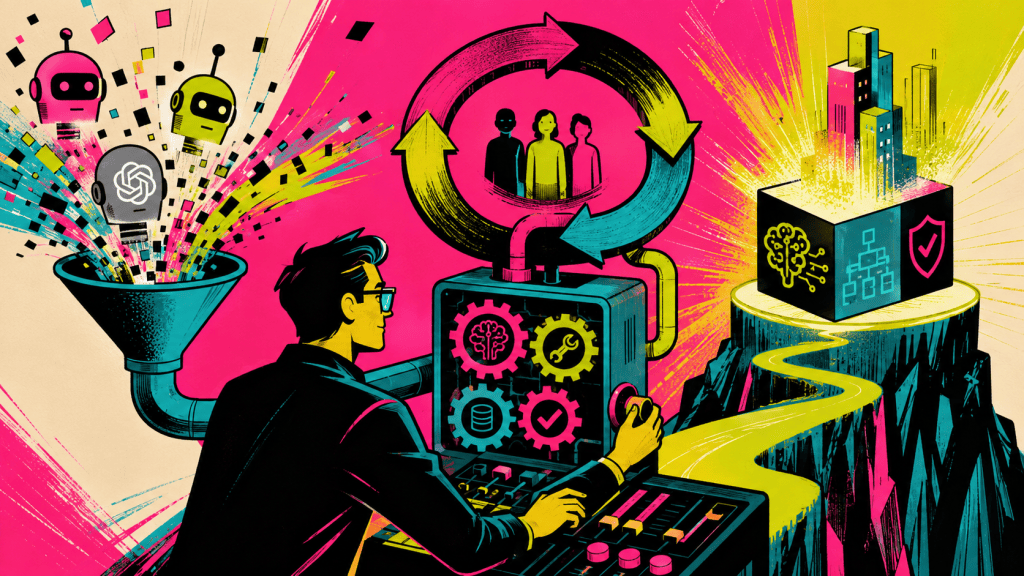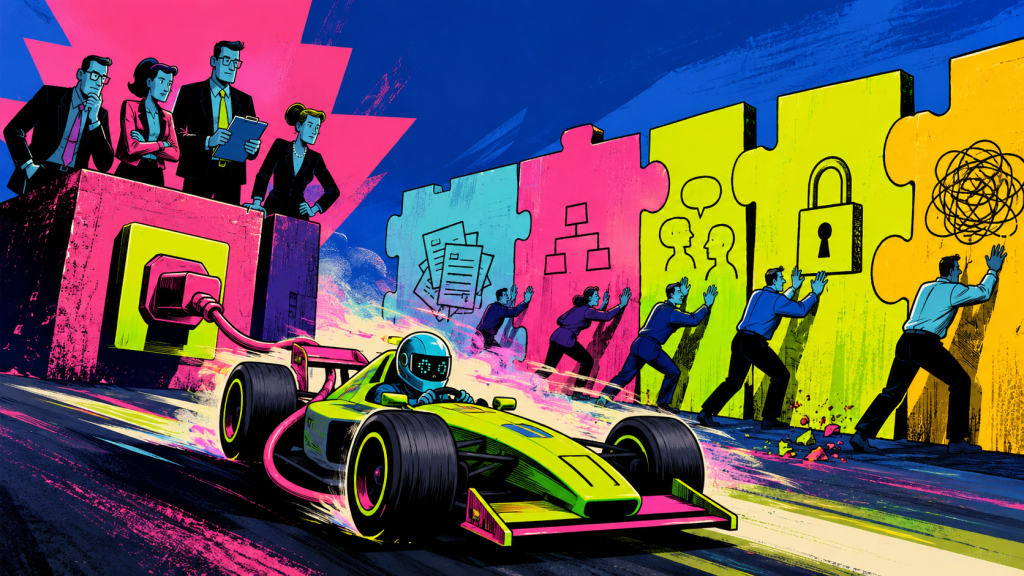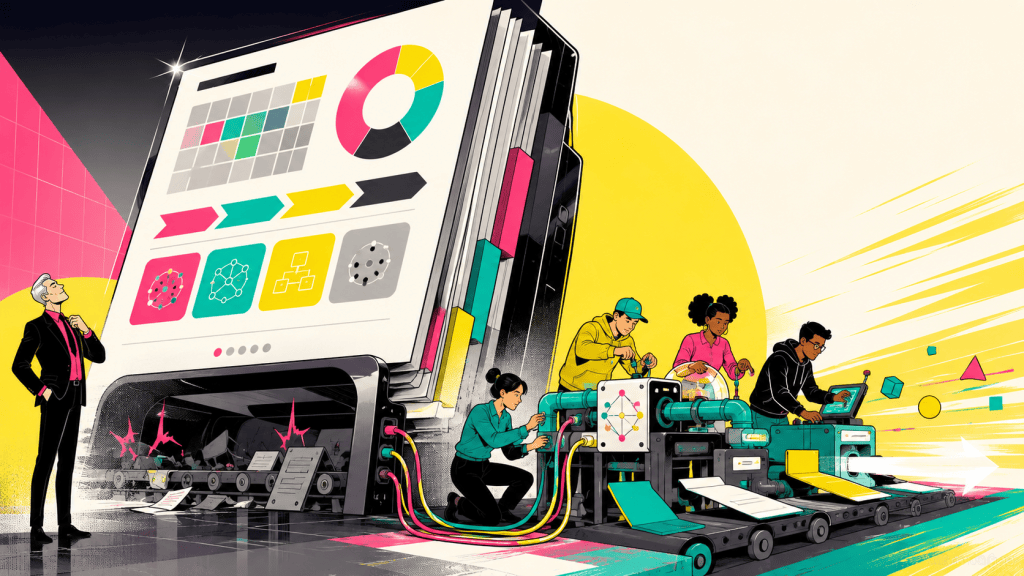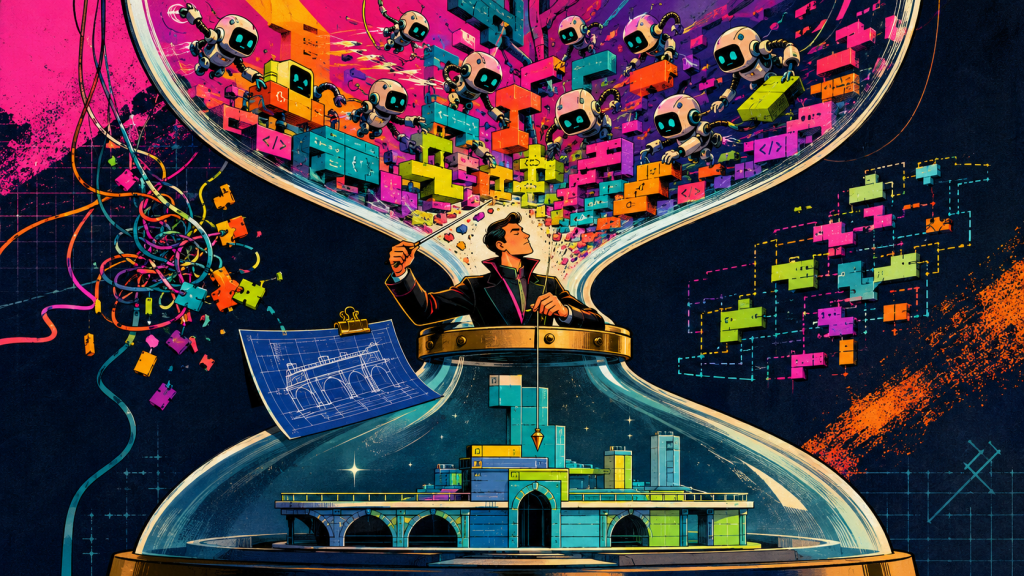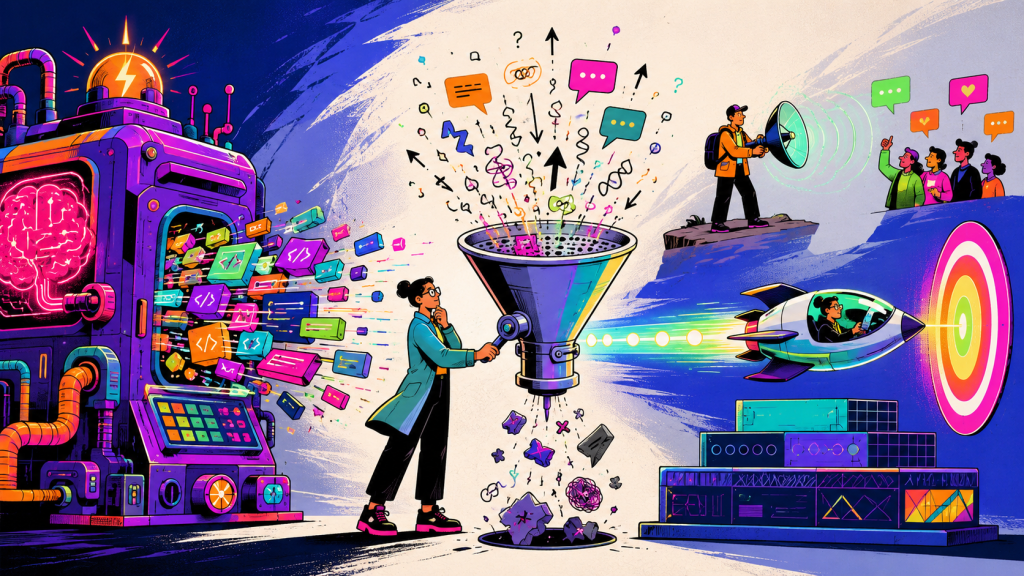
The most dangerous misunderstanding in technology leadership right now is the belief that AI-first development makes product-market fit easier. It does not. It makes the cost of being wrong cheaper, the volume of wrong work higher, and the illusion of progress more convincing. That is why First Round Review’s classic piece on how Superhuman built an engine to find product-market fit feels even more relevant in the age of coding agents, forward-deployed engineers, and AI-native product teams.
The popular reading of the Superhuman story is that Rahul Vohra found a clever survey mechanism. Ask users how disappointed they would be if the product disappeared, measure the percentage who say they would be very disappointed, and use that score to guide the roadmap. That interpretation is useful, but incomplete.
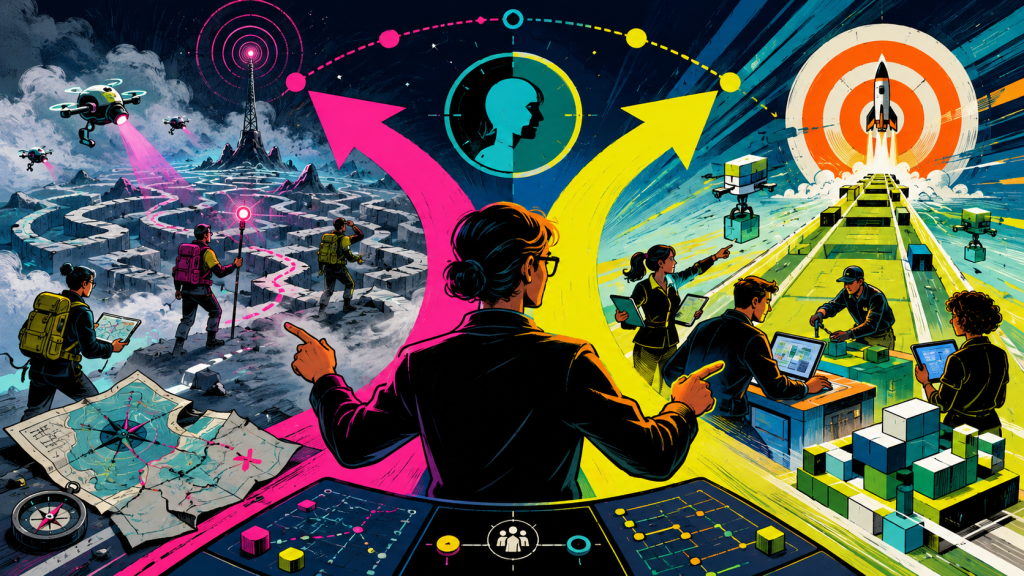
The deeper lesson is that Superhuman did not build a survey. It built a learning system with taste, sequencing, and discipline. It separated signal from noise. It identified the users whose pain was intense enough to matter. It ignored the wrong feedback from the wrong people. Then it used that insight to make hard product decisions rather than democratic roadmap decisions.
That distinction matters enormously in an AI-first organization. When building becomes cheaper, leaders need better judgment, not bigger backlogs. The bottleneck shifts from engineering capacity to product taste.
The AI-first trap: confusing speed with direction
AI-first development changes the physics of software creation. A small team can now produce prototypes, tests, documentation, workflow logic, integrations, and production code at a pace that would have looked unrealistic a few years ago. This is not a marginal improvement. It is a structural change in how products are built.
But faster code generation does not tell you what should exist. It only reduces the friction between an idea and an artifact. That sounds attractive until you realize most organizations already have too many ideas, too many stakeholder requests, too many half-loved features, and too much software that exists because someone influential wanted it once.
This is where the Superhuman engine becomes a leadership model for the AI era. The real question is not whether AI can help you ship faster. The question is whether you have a strong enough customer signal to deserve that speed.
A weak product organization with AI becomes a feature factory with better tooling. A strong product organization with AI becomes a compounding learning machine. The difference is not the model, the IDE, or the agent framework. The difference is whether leadership knows which customers matter, which problems deserve obsession, and which requests should be ignored.
Forward-deployed engineering is powerful, but only with a filter
Forward-deployed engineering is having a moment because it feels like the perfect operating model for AI-native product development. Put technical people closer to customers. Let them build in the flow of real operational pain. Collapse the distance between discovery and delivery. Stop letting customer insight die in a CRM note, a sales call recap, or a product council deck.
There is a strong case for this model, especially in enterprise software. Palantir proved that deep customer immersion can expose operational complexity that traditional product discovery rarely captures. More recent FDE thinking makes the same argument in modern startup language: the engineer who hears the customer problem directly can prototype, test, and adapt before a traditional organization has finished translating the request.
That is the case for forward-deployed engineering. The case against it is just as important.
Without a product-market fit filter, FDEs can become highly skilled builders of bespoke complexity. They can win the customer in front of them while quietly damaging the platform behind them. They can mistake urgency for repeatability. They can create heroic local solutions that never become scalable product primitives.
This is where Superhuman gives the FDE model its missing governor. Do not deploy engineers merely to build what customers ask for. Deploy them to discover which customer pain is intense, repeated, and connected to the company’s core product promise. An FDE model should not be a concierge engineering team. It should be a product-market fit sensor.
The best forward-deployed engineers in the AI era will not be the ones who say yes the fastest. They will be the ones who can sit inside a messy customer environment, recognize the reusable pattern underneath the local request, and convert it into something the product should become.
The overlooked Superhuman lesson: ignore more feedback
The most executive part of the Superhuman story is not that the team listened to users. It is that the team decided whose feedback did not matter.
That is uncomfortable for many product cultures. Most companies talk about being customer-centric as if all customer input deserves equal weight. It does not. Some users are outside the market. Some are attracted to the wrong benefit. Some will ask you to become a worse version of another product. Some will consume disproportionate attention and still churn.
Superhuman’s discipline was to focus on users who loved the core benefit and users who were close to loving it. In its case, speed was the center of gravity. The roadmap then became a balance between doubling down on speed, shortcuts, automation, and design details, while also addressing the missing capabilities that prevented adjacent users from becoming fanatics.
That is an uncomfortable but powerful roadmap philosophy. Half the work should deepen the thing that makes the product special. Half the work should remove the friction that prevents the right users from fully adopting it. In an AI-first development model, that ratio becomes even more important because the organization can now build both sides faster.
Most leadership teams do the opposite. They use AI to clear more tickets. They celebrate prototype volume. They measure adoption of coding tools. They ask whether engineers are using copilots, agents, and automated test generation. Those are fine operating questions, but they are not strategic questions.
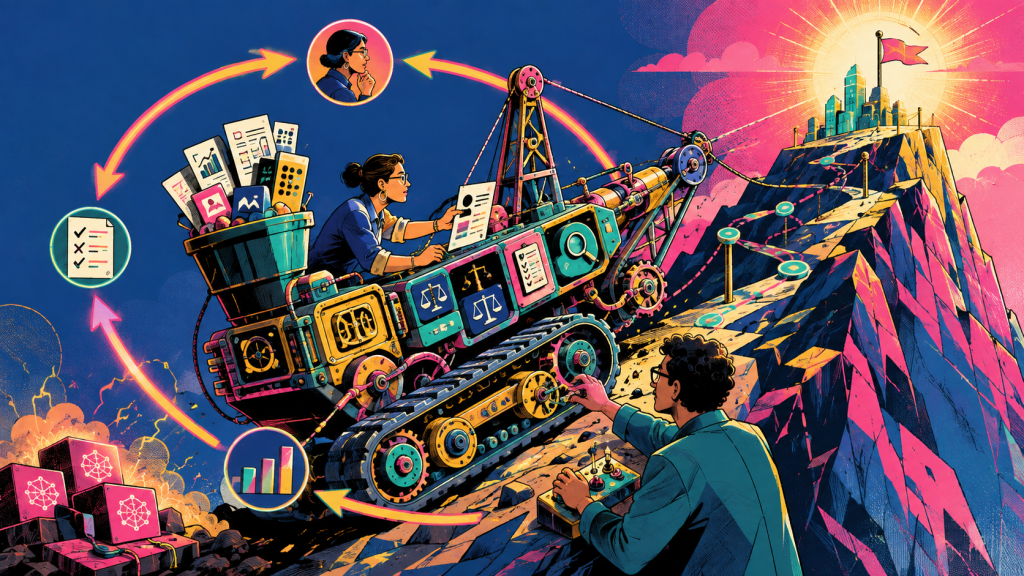
The strategic question is whether AI is increasing the density of product learning per engineering cycle. If the answer is no, the company is not becoming AI-first. It is becoming faster at producing inventory.
The new product executive is a loop designer
For executive recruiters, this shift changes what a great CTO or CPO looks like. The next generation of product engineering leaders will not be defined by whether they came up through product, engineering, design, or consulting. They will be defined by whether they can design high-quality learning loops across those functions.
The old profile optimized for scale: manage teams, run roadmaps, control delivery, reduce risk, and communicate upward. Those skills still matter, especially in large enterprises. But they are no longer sufficient.
The new profile is sharper. A modern product engineering executive must be able to identify the high-expectation customer, build mechanisms for continuous customer signal, translate that signal into agent-readable specifications, enforce architectural discipline, and prevent AI-generated entropy from flooding the codebase. They must be comfortable with engineers in front of customers and product managers deep in the mechanics of delivery. They must have enough technical fluency to understand what agents can accelerate and enough product taste to know what should never be built.
This is why the CTO and CPO boundary is getting more interesting. AI is compressing the distance between product intent and working software. Forward-deployed engineering is compressing the distance between customer pain and technical response. The executive leader sitting above this system must be able to manage both compression effects without losing coherence.
That is not a traditional delivery leadership job. It is closer to being the architect of a product-learning machine.
The unique advantage is not AI-first development. It is AI-first discernment.
The companies that win with AI will not simply be the ones that write more code with fewer people. That advantage will be temporary. Tools diffuse, workflows normalize, and competitors catch up.
The more durable advantage will belong to companies that combine AI-first development with disciplined customer selection, forward-deployed learning, and strong product taste. They will know which users to study. They will know which feedback to ignore. They will know when a customer-specific request is actually a platform primitive in disguise. They will know when an AI-generated solution is impressive but strategically irrelevant.
Superhuman’s PMF engine was built before the current wave of coding agents, but it anticipated the leadership challenge we now face. It treated product-market fit as an operating system, not a milestone. It created a way for the whole company to understand who mattered, what they loved, what held them back, and how the roadmap should respond.
That is the lesson for AI-first product organizations. Do not start with the agent. Start with the customer whose disappointment would matter. Then use AI to close the loop faster, with more precision, and with more discipline than your competitors.
Building faster is not the strategy. Learning faster is the strategy. AI only helps if the organization knows what it is trying to learn.