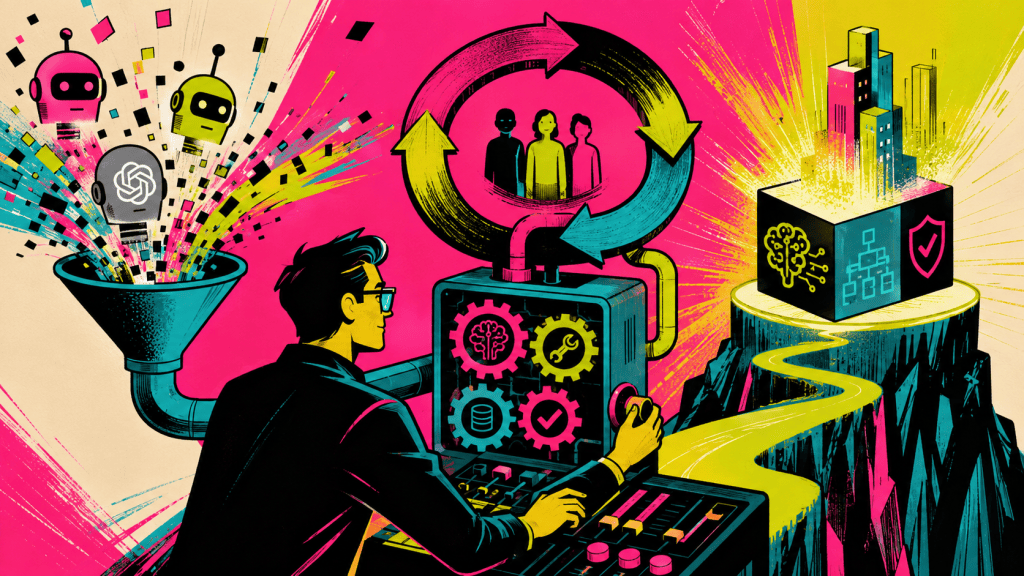
Technology leaders are spending far too much time debating which model will win.
Claude or GPT. OpenAI or Anthropic. Frontier model or open weights. One benchmark moves by three points and suddenly someone wants to revisit the enterprise architecture.
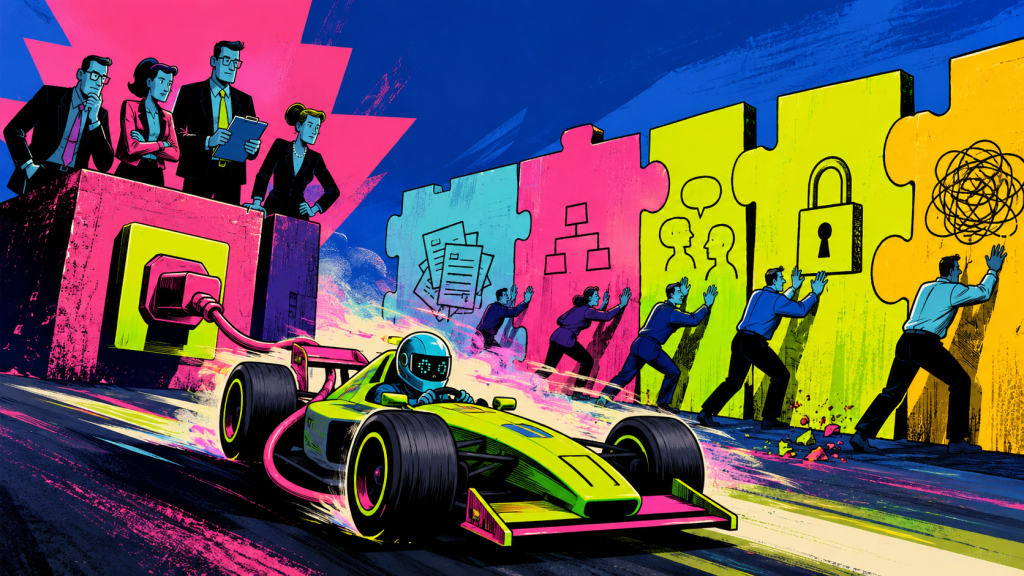
That debate is not useless, but it is becoming strategically secondary. The uncomfortable truth is that Claude and Codex are extraordinary, and they are also available to your competitors. If your AI strategy begins and ends with access to a frontier model, you do not have differentiation. You have a supplier relationship.
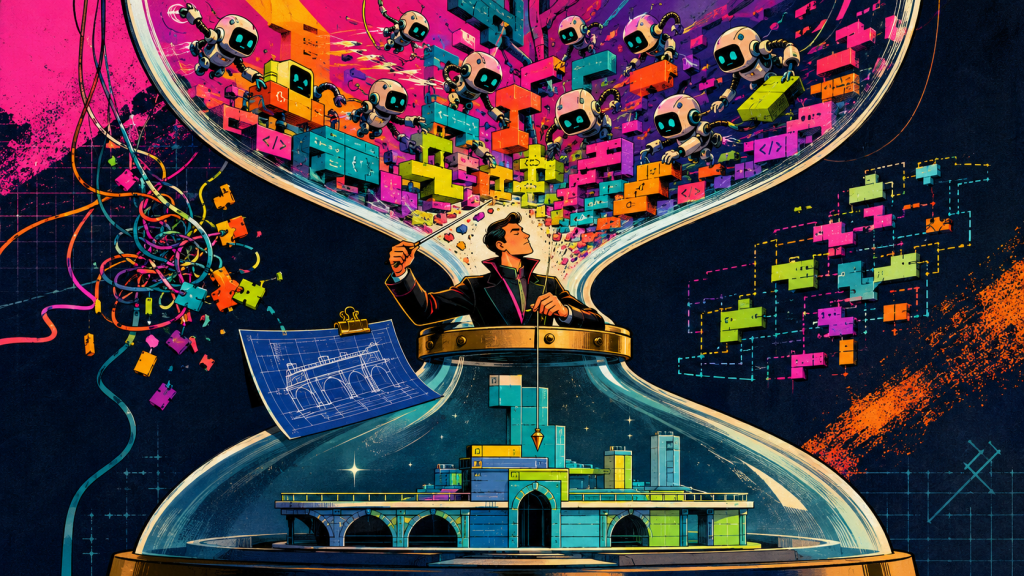
The companies that create lasting advantage will build something much harder to copy: a business-specific harness that surrounds increasingly interchangeable models with proprietary context, tools, skills, workflows, permissions, evaluations and learning loops.
The evidence is starting to point in the same direction.
The economic value is moving up the stack toward applications, while the durable technical advantage is moving into the harness around the model.
The model layer is getting better, cheaper and harder to differentiate on
Start with the economics. Stanford’s 2025 AI Index found that the inference cost of achieving GPT-3.5-level performance fell more than 280-fold between November 2022 and October 2024. Over roughly the same period, the performance gap between leading closed and open-weight models narrowed from 8 percent to 1.7 percent on some benchmarks.
That should change how technology leaders think about architectural advantage.
When a capability becomes dramatically cheaper and multiple suppliers converge toward comparable performance, access to that capability becomes a weaker source of differentiation. Models will continue to matter enormously, but the strategic question shifts from which intelligence can I rent? to what proprietary system am I building around it?
The spending data tells a similar story. Menlo Ventures’ 2025 State of Generative AI in the Enterprise estimated total enterprise generative AI spending at $37 billion, with $19 billion flowing to the application layer, more than half of total spend. Vertical AI applications reached $3.5 billion, nearly triple the previous year, while departmental AI reached $7.3 billion. Menlo also found AI application startups earning nearly two dollars for every dollar earned by incumbents in that layer.
Menlo is a venture investor, not an independent economic authority, so I would not treat the exact numbers as gospel. I would treat the direction as significant. Enterprises are increasingly paying for AI that is embedded in a workflow, understands a domain and produces an outcome, not merely for raw access to intelligence.
That is the first major shift: value is moving from the model toward the application.
Performance is moving toward the harness
The second shift may be even more important. In February 2026, LangChain published a benchmark experiment that should be required reading for AI engineering leaders. Its coding agent moved from 52.8 to 66.5 on Terminal Bench 2.0, going from outside the top 30 to the top five. The underlying model remained fixed at GPT-5.2-Codex. The 13.7-point improvement came from changing the harness through better system instructions, tools, middleware, tracing and self-verification.
Think about the implication. A team produced a material performance improvement without buying a smarter model.
That is not an argument that models no longer matter. It is evidence that a substantial amount of usable intelligence is created by the system surrounding the model. Tool design matters. Context selection matters. Memory matters. Verification matters. Execution flow matters. The ability to inspect traces and systematically correct failure modes matters.
OpenAI is reaching the same conclusion internally. Its February 2026 article on harness engineering describes an experiment building and shipping an internal product with no manually written code. The interesting lesson was not simply that Codex could generate software. OpenAI made repository knowledge a system of record, increased the environment’s legibility to agents and encoded architectural rules and engineering taste into the system around the model.
When the company building Codex is investing in the harness around Codex, technology leaders should notice.
The harness is where your company becomes visible to the model
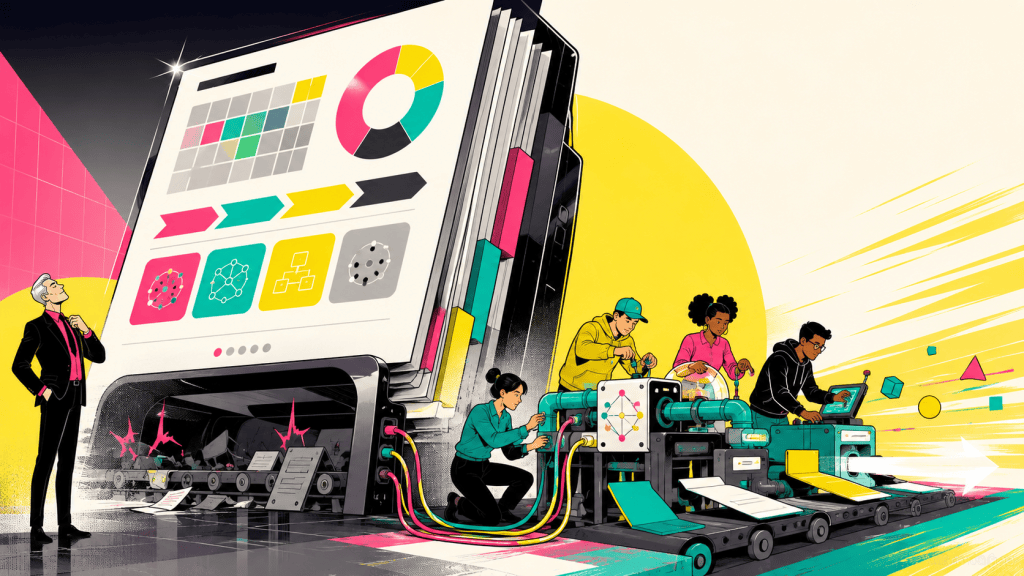
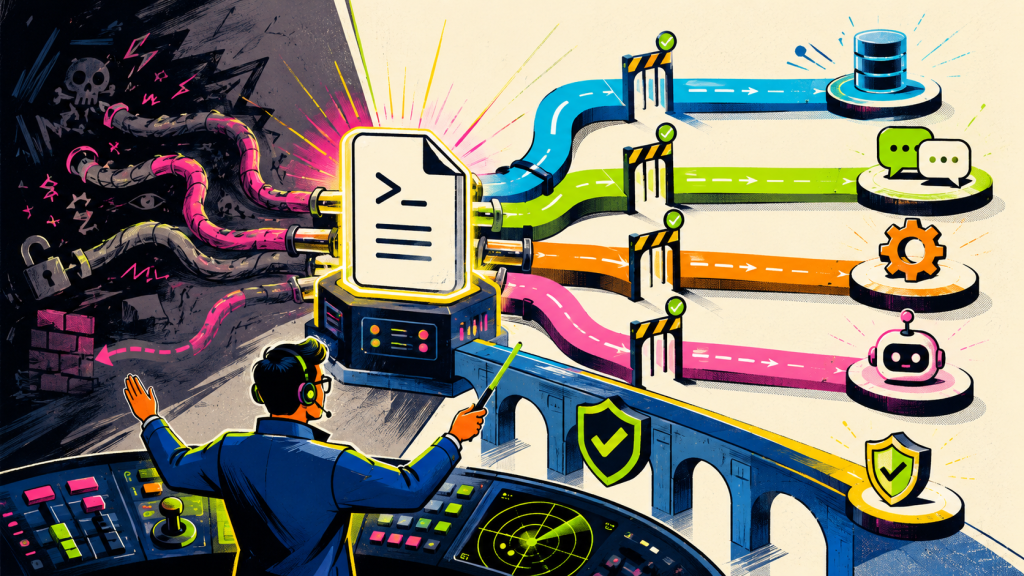
A business-specific harness is not another name for an agent framework. It is the operating environment that determines what a model can see, what it can do, how it knows whether it succeeded, when it should escalate and what the organization learns from every interaction.
For a serious enterprise, that means encoding the things that actually make the business different. It is how an underwriter evaluates an unusual risk, how a tax professional resolves conflicting evidence, how an engineer diagnoses a production incident, how a product leader weighs a client request against platform strategy and how an organization knows when a technically correct answer is commercially wrong.
Anthropic’s direction with Agent Skills makes the point directly. Anthropic argues that powerful general-purpose models still need procedural knowledge and organizational context, then provides a mechanism for packaging instructions, scripts and resources into reusable capabilities. In December 2025, it pushed that concept toward a cross-platform open standard.
The frontier model provides general intelligence. Your skills, tools, context and controls teach that intelligence how your company works.
Microsoft has now said the quiet part out loud
Microsoft’s recent direction makes the argument even harder to ignore.
On June 15, 2026, Microsoft highlighted Satya Nadella’s argument that every company needs to compound the loop between its human capital and token capital. Nadella’s own formulation goes further: organizations should own the learning loop that encodes institutional knowledge rather than allowing all intelligence to accumulate in a small number of frontier platforms.
Microsoft then translated that philosophy into architecture. In its June 2 article, “AI alone won’t change your business. The system running it will,” Microsoft described reinforcement-learning environments where models can learn from actual business outcomes, processes and standards. Its stated direction is that proprietary context, post-trained models and the resulting learning remain inside the customer’s environment and under the customer’s control.
Then, on July 2, Microsoft committed $2.5 billion and 6,000 industry and engineering experts to its new Frontier Company initiative. The language is strikingly aligned with this thesis: businesses need an intelligence platform where proprietary data, expertise, workflows and decision-making processes compound over time, using a choice of models rather than becoming locked into one. Microsoft explicitly describes a continuous improvement loop and says customer intelligence should not be used to commoditize what differentiates that customer.
This is not a niche architecture debate anymore. One of the largest model and cloud platforms in the world is arguing that enterprises should own their context, their learning and the intelligence that compounds from both.
The flywheel is more important than the first agent
The biggest mistake I see in enterprise AI is an obsession with the initial experience. Teams build an impressive agent, connect several tools, launch a pilot and celebrate adoption.
Then nothing compounds.
A user corrects the answer, but the correction disappears into a chat transcript. An expert overrides a recommendation, but nobody captures why. An agent chooses the wrong tool, but the trajectory is not analyzed. A workflow succeeds, but the system cannot distinguish genuine success from a user simply giving up.
That is not a learning system. It is AI theatre with telemetry.
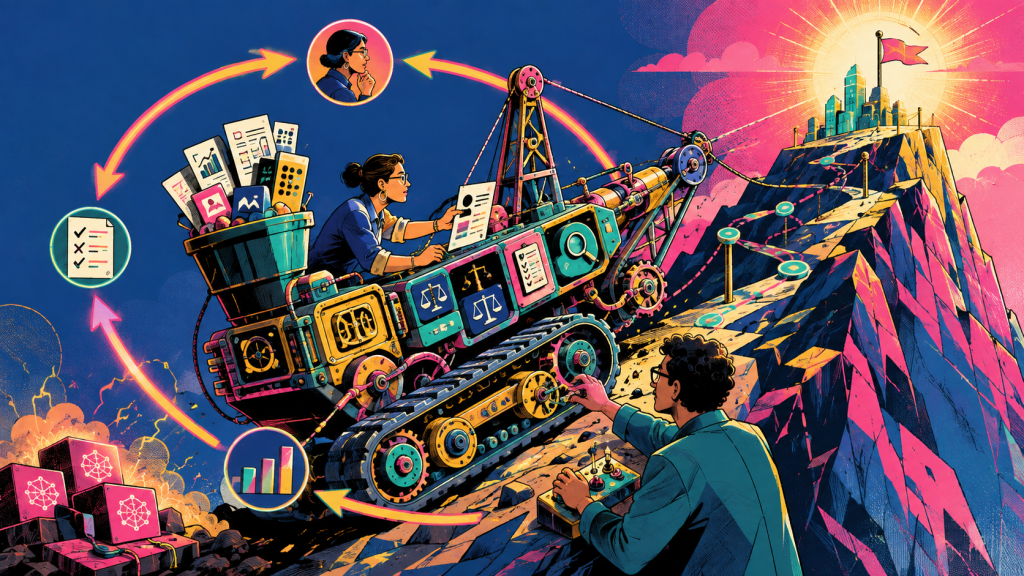
OpenAI and Thrive Holdings provide a much better example in their May 2026 work on self-improving tax agents. Working with practitioners across more than 30 accounting firms, they built a loop where practitioner corrections reveal failures, product traces convert those failures into evaluations and the resulting evaluations become explicit improvement targets.
That pattern matters far beyond tax. An expert correction is not merely an error to fix. It is proprietary evidence about how your business exercises judgment.
A strong harness should capture the context presented, tools considered, actions taken, evidence retrieved, human interventions and eventual business outcome. Those traces should improve evaluations, context policies, skills, tool contracts, deterministic checks and, where justified, post-training or reinforcement learning.
Importantly, not every organization needs to update model weights after every interaction. Sometimes the right improvement is a better retrieval policy. Sometimes it is a revised skill, a narrower tool, a deterministic validator or a stronger escalation rule. The strategic requirement is simpler: production experience must change the system.
This is already happening in high-value domains
Bayer’s PRINCE system offers another real-world signal. The pharmaceutical company built an agentic research system for preclinical information, and the published case study describes its engineering explicitly through the lenses of context engineering and harness engineering. Context determines how information moves between specialized research, reflection and writing stages. The harness provides orchestration, tool boundaries, persistent state, retries, fallbacks, validation, observability and human review.
Again, the advantage is not that Bayer has access to an LLM. Many pharmaceutical companies can buy access to the same model families.
The advantage is that the application increasingly reflects how Bayer’s scientists work with Bayer’s information inside Bayer’s operating constraints. That is a far more durable asset than a model selection decision.
This changes the job
I would stop asking teams, “Which model are we standardizing on?” or “How many tokens are you using?”.
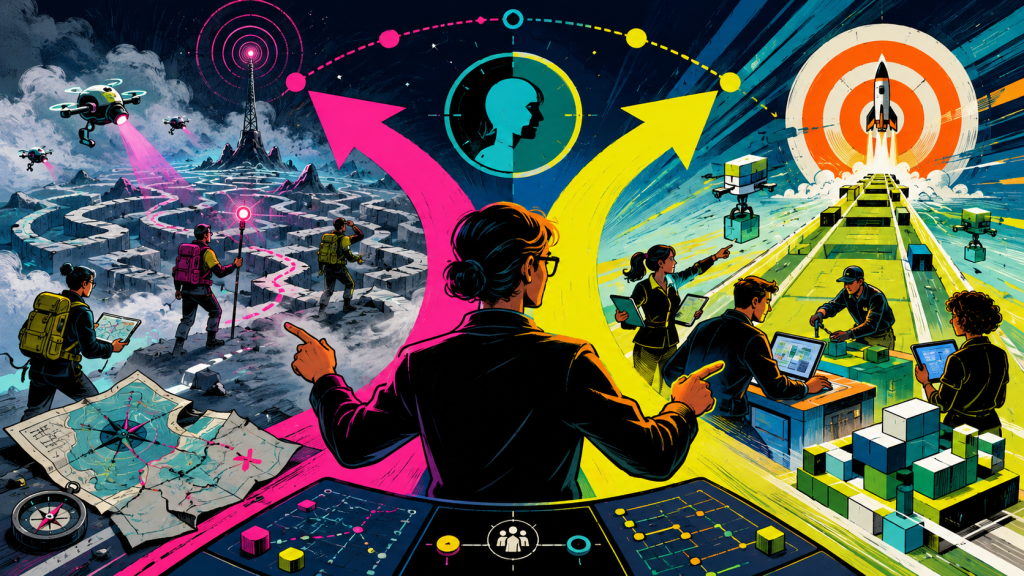
I would start asking what proprietary context we are making legible to agents, which business decisions have been encoded as reusable skills, which tools expose genuine capabilities rather than thin API wrappers and whether expert corrections are becoming structured improvement signals.
I would ask whether we can replay failed trajectories, whether our evaluations reflect business outcomes and whether we can change models without losing the intelligence accumulated around them.
Those are not purely AI questions. They sit at the intersection of product management, engineering management, enterprise architecture and software craftsmanship. That is exactly why I believe the harness will become one of the defining executive concerns of the next phase of enterprise AI.
The winning architecture will not be the one with the cleverest prompt or the most expensive model subscription. It will be the one where every interaction makes the business-specific system slightly better, where human expertise becomes executable without becoming generic and where the company’s context compounds rather than leaking away.
Claude will improve. Codex will improve. Open-weight models will continue to close the gap, and new models will leapfrog today’s leaders.
Your competitors will be able to rent those improvements on the same day you can. What they should not be able to rent is your company’s accumulated judgment, the learning loop built from your people or the harness that turns both into advantage.
Own the context. Own the learning. Own the advantage.
 bencoding