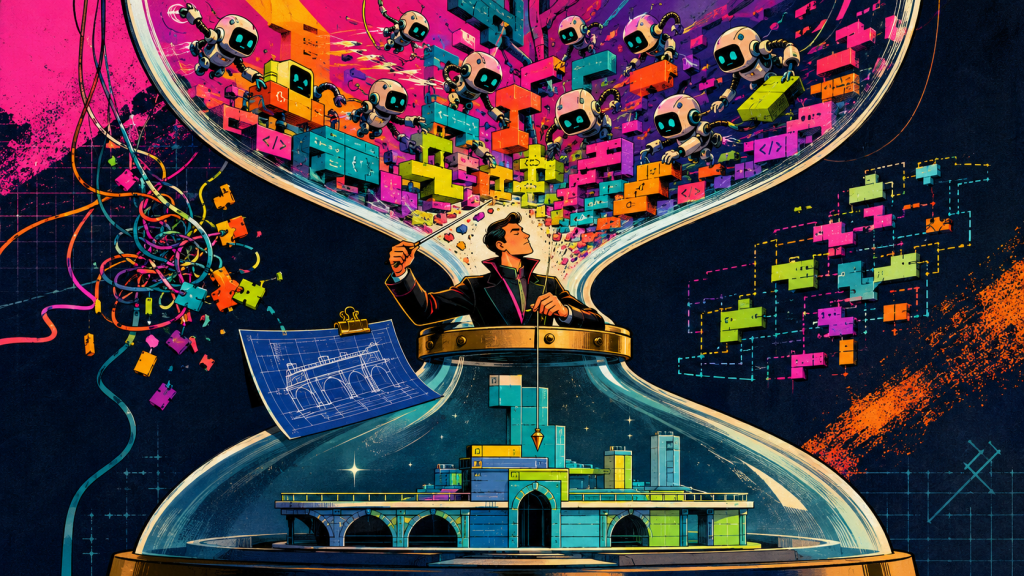
Fifty-one years after Frederick Brooks published The Mythical Man-Month, the software industry is again convincing itself that it has finally escaped the laws of software delivery. This time the promised escape is not offshore scale, agile transformation, microservices, low-code platforms, or DevOps. It is agents.
The temptation is understandable. GitHub now describes a coding agent that can be assigned an issue, plan the work, open a pull request, write code, run tests, and iterate based on review comments. Anthropic describes Claude Code as an agentic coding system that can read a codebase, make changes across files, run tests, and deliver committed code. Google and Microsoft have both reported meaningful portions of new code being AI-generated or AI-assisted, although the industry still lacks a consistent definition of what that measurement means.
That sounds like a structural break. It sounds like Brooks’s Law should finally be retired. If the problem was adding people, and agents are not people, perhaps we can add hundreds of tireless contributors without the coordination tax.
That is the wrong conclusion. Agents do not repeal The Mythical Man-Month. They make its core lesson more urgent: software delivery is limited less by typing speed than by coordination, judgment, architecture, and trust.
Brooks’s Law changes form, not force
The famous Brooks line is usually summarized as “adding manpower to a late software project makes it later.” Martin Fowler recently revisited the book and pointed back to the underlying reason: communication paths grow as teams grow, and without deliberate design the work falls apart. That principle survives the agentic era almost untouched.
The updated version is sharper: adding ungoverned agents to a late software project makes it later, noisier, and harder to trust.
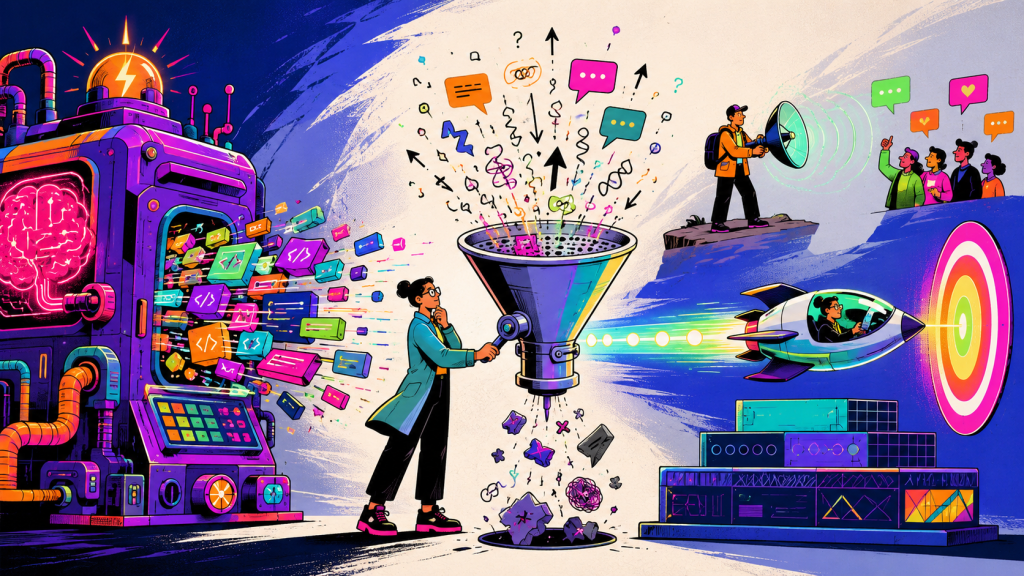
Agents reduce the cost of producing work. They do not reduce the cost of deciding whether that work is correct, coherent, secure, maintainable, or aligned with the product strategy. In many teams, AI has already made the production side cheaper while making the review side more expensive. The bottleneck moves from writing code to curating intent.
This is why the early evidence looks contradictory. GitHub’s controlled Copilot study found developers completed a specific JavaScript task 55 percent faster with Copilot. Yet METR’s 2025 randomized study of experienced open-source developers working in familiar repositories found that AI tools made them 19 percent slower. Google’s 2024 DORA research found that AI adoption improved individual productivity, flow, and job satisfaction, while also negatively affecting software delivery stability and throughput.
These findings are not actually in conflict. They describe different layers of the system. AI can make a task faster while making the delivery system less stable. It can help an individual feel more productive while increasing the burden on architecture, review, testing, and release discipline.
The new mythical unit is the agent-month
The original “man-month” was a warning against treating human effort as interchangeable capacity. The agent-month is the same mistake with a better interface.
Executives will be tempted to ask how many agents a team can run, how much code they can produce, and how much headcount can be avoided. Those are the wrong first questions. The better questions are how much trusted change the system can absorb, how much context the agents can safely use, and how much human review capacity exists before quality collapses.
A senior engineer can look at a pull request and understand the code, the tradeoff, the risk, the political history of the system, and the ugly reason the “obvious” fix was avoided three years ago. An agent may discover the code, but it does not yet own the organizational memory. It can traverse the repository. It cannot fully inherit the scars.
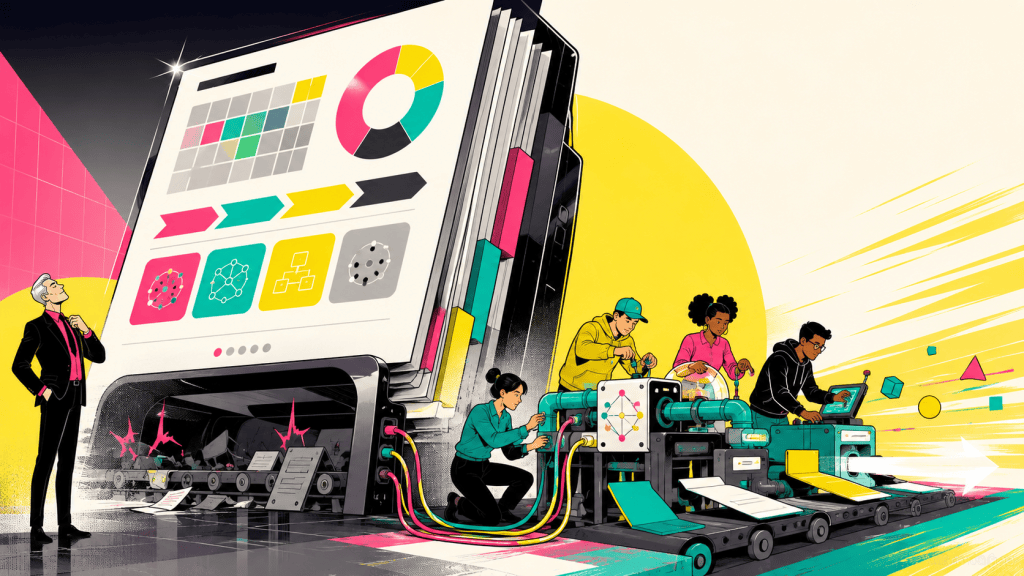
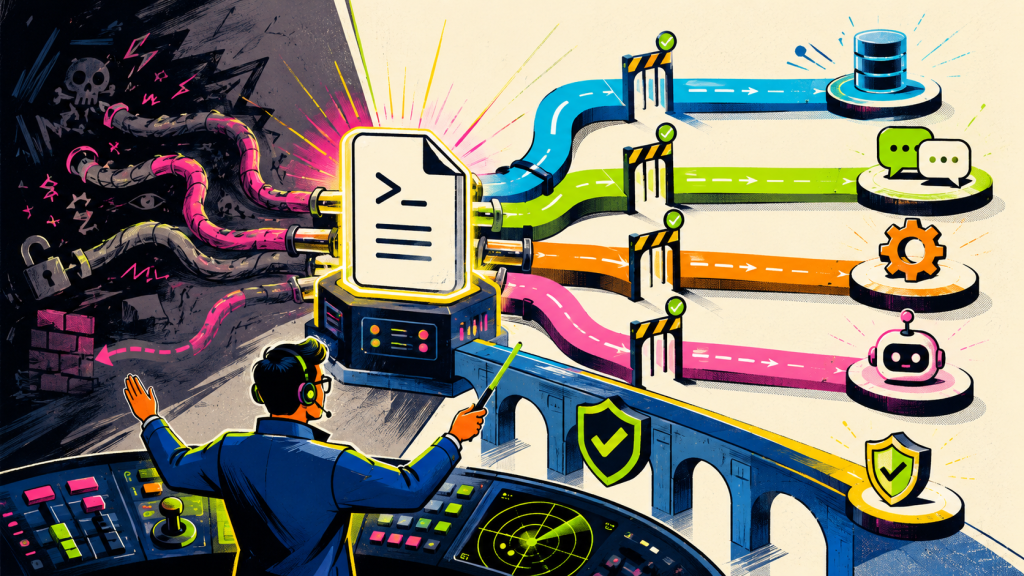
That is why strong teams will not use agents as anonymous extra hands. They will use them as constrained collaborators inside a deliberately designed workflow. Agents will handle boilerplate, tests, migrations, documentation, scaffolding, and local refactors. Humans will own architecture, product judgment, escalation, security posture, and the final decision to ship.
Conceptual integrity becomes the executive problem
Brooks argued that conceptual integrity is the most important consideration in system design. This may be the most relevant idea in the book for the AI era.
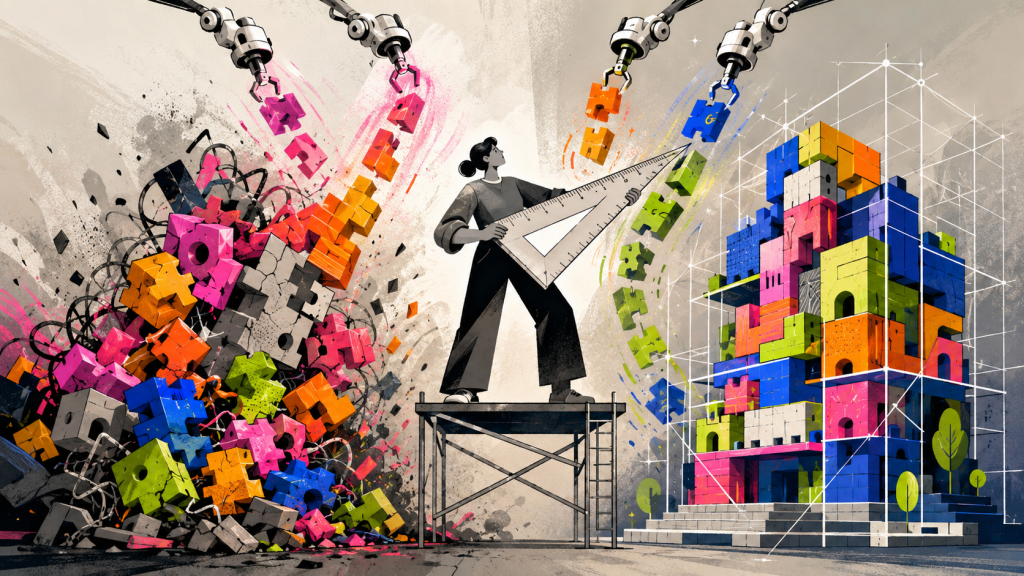
Agents are very good at local plausibility. They can generate something that looks right, compiles, passes a narrow test, and resembles the surrounding code. That is useful, but it is not the same as building a product with a coherent theory of the user, a coherent architecture, and a coherent operating model.
This is where the agenda changes. The executive job is no longer simply to fund tooling and ask teams to use it. The executive job is to define the product architecture, engineering standards, review model, and platform constraints that allow thousands of AI-assisted decisions to still add up to one product.
Without that, agentic delivery becomes the second-system effect at machine speed. Every team gets more productive at adding locally attractive ideas. The enterprise gets less effective at creating a simple, durable, integrated customer experience.
This is also why executive recruiters should be careful when evaluating technology leaders in the AI era. The impressive leader is not the one who can say their teams generate the most code with AI. The impressive leader is the one who can explain how AI changes throughput without weakening architecture, security, talent density, or product taste.
No silver bullet was never anti-technology
Brooks’s “No Silver Bullet” argument is often misread as pessimism. It was not a rejection of better tools. It was a warning that no single breakthrough would remove the essential difficulty of software: complexity, changeability, invisibility, and the need to translate human intent into precise systems.
AI attacks accidental complexity with real force. It reduces blank-page friction. It can explain unfamiliar code. It can generate tests, summarize logs, convert patterns, and draft implementation paths. In some domains, it can turn days of mechanical work into hours.
But AI also creates new accidental complexity. Stanford researchers found that participants using an AI code assistant wrote less secure code and were more likely to believe their insecure code was secure. GitClear’s code-quality research found declining refactoring activity and rising copied or cloned code as AI-assisted development increased. Those are not reasons to reject AI. They are reasons to manage it like a production capability rather than a novelty.
The silver bullet has not arrived. What has arrived is a power tool. Power tools reward skilled operators and punish casual ones.
The new saying for the agentic workforce
Many of the sayings attributed to The Mythical Man-Month still hold, but they need to be translated for the agentic workforce.
Brooks’s Law becomes: adding ungoverned agents to a late project increases review debt faster than delivery capacity.
Conceptual integrity becomes: the more AI contributes, the more explicitly humans must own product taste and architectural coherence.
No silver bullet becomes: AI removes friction from implementation, not responsibility from leadership.
Plan to throw one away becomes: prototype aggressively, but never confuse a convincing demo with a durable product.
The surgical team becomes: small groups of exceptional humans, amplified by agents, will outperform large groups of average humans buried under AI-generated noise.
That last point may be the most uncomfortable implication. AI does not make mediocre engineering organizations great. It amplifies the operating system already in place. Teams with clear architecture, strong product direction, automated tests, disciplined review, and stable priorities will compound. Teams with fragmented ownership, weak standards, unclear roadmaps, and heroic release practices will generate more output and more entropy.
The lesson for all of us
The next era of product engineering will not be defined by whether a company uses AI. That question is already obsolete. It will be defined by whether the company can convert AI-assisted activity into trusted product progress.
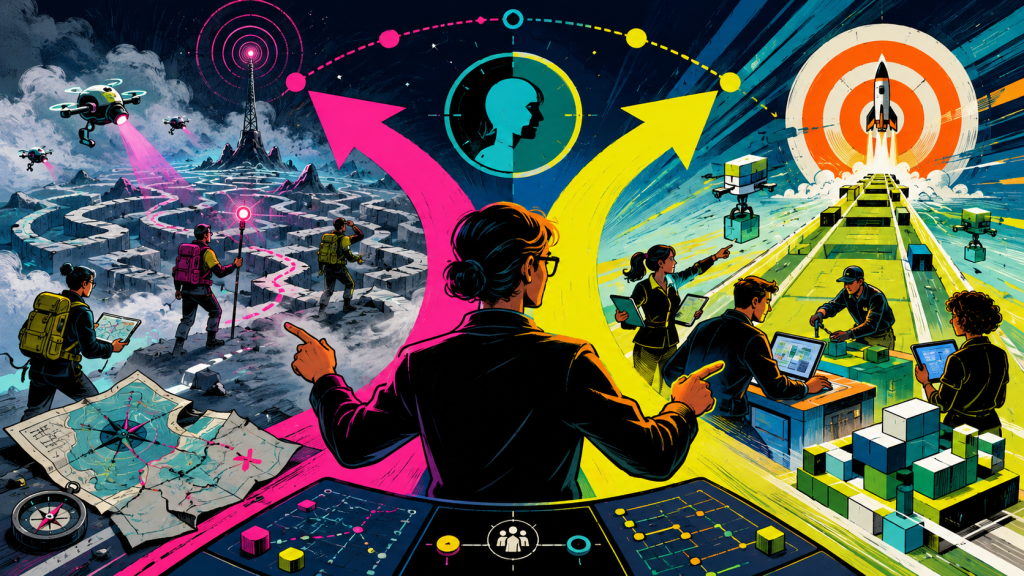
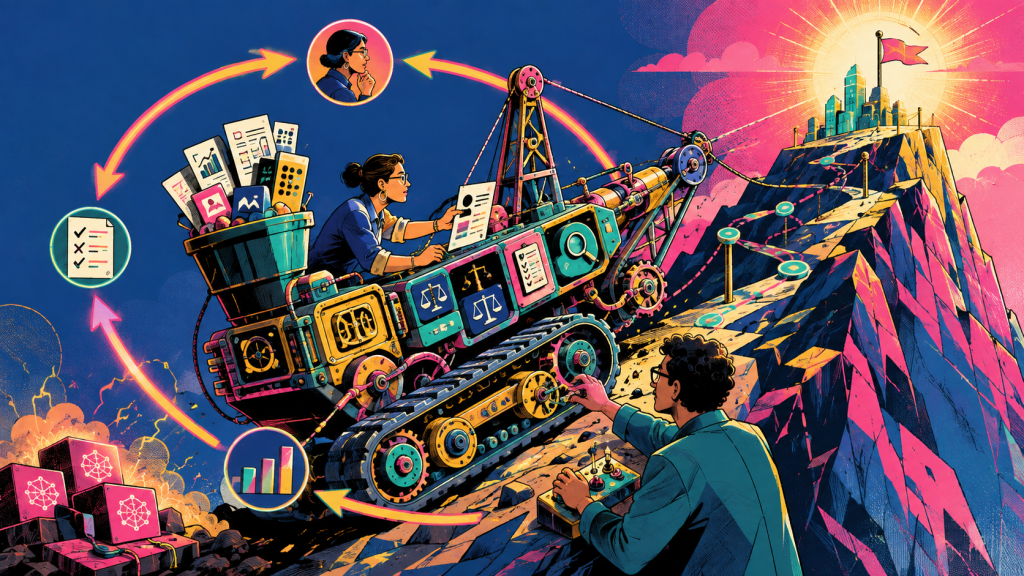
That requires a different leadership model. Leaders need to manage less like capacity planners and more like system designers. They need to design how work enters the system, how intent is specified, how agents are constrained, how output is reviewed, how architectural drift is detected, and how learning moves back into the platform.
The leaders who win will not worship velocity. They will build organizations where velocity survives contact with quality. They will understand that code generation is becoming abundant, but judgment remains scarce.
Brooks’s book has lasted because it was never really about 1970s programming. It was about the human and organizational physics underneath software. Agents change the surface area of that physics. They do not remove gravity.
The Mythical Man-Month is not less relevant at 51. It is becoming the operating manual for the agentic enterprise.

 bencoding