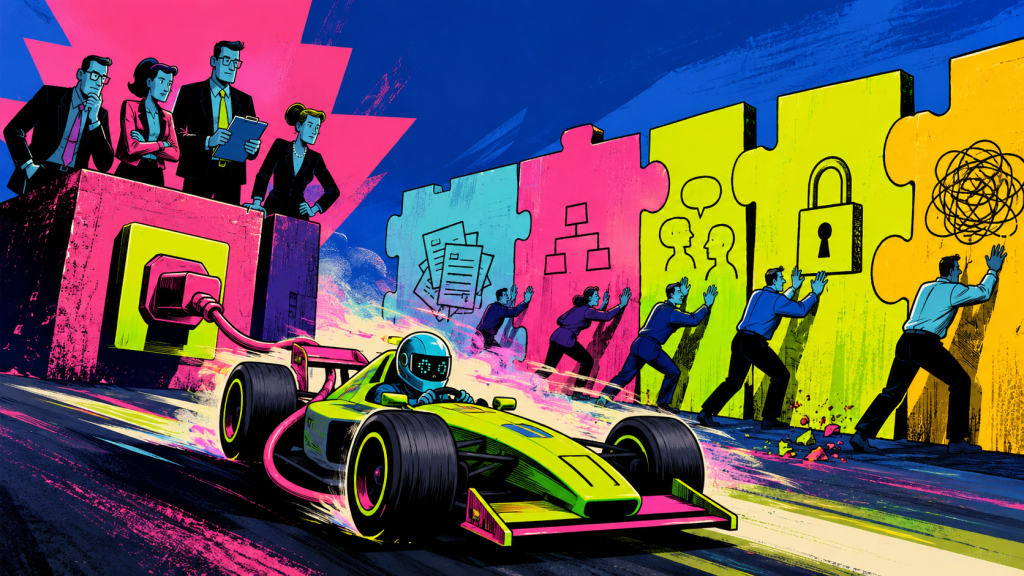
McKinsey’s headcount fell by more than 10 percent over an 18-month period, the largest contraction Fortune reported in the firm’s history. Yet one consulting product appears remarkably recession-proofmap. Fortune’s reporting on McKinsey provides the backdrop, but the more interesting question is what companies are still willing to buy while the consulting industry itself is being reshaped. ave seen four AI strategy decks in the last month. Different firms, different fonts, almost exactly the same artifact.
There is a maturity matrix. There are three or four named pilots. There is a “value at stake” number that somehow lands on a clean multiple of revenue. There is a phased roadmap stretching 12 to 18 months into the future, usually ending in a box labeled “AI at scale.”
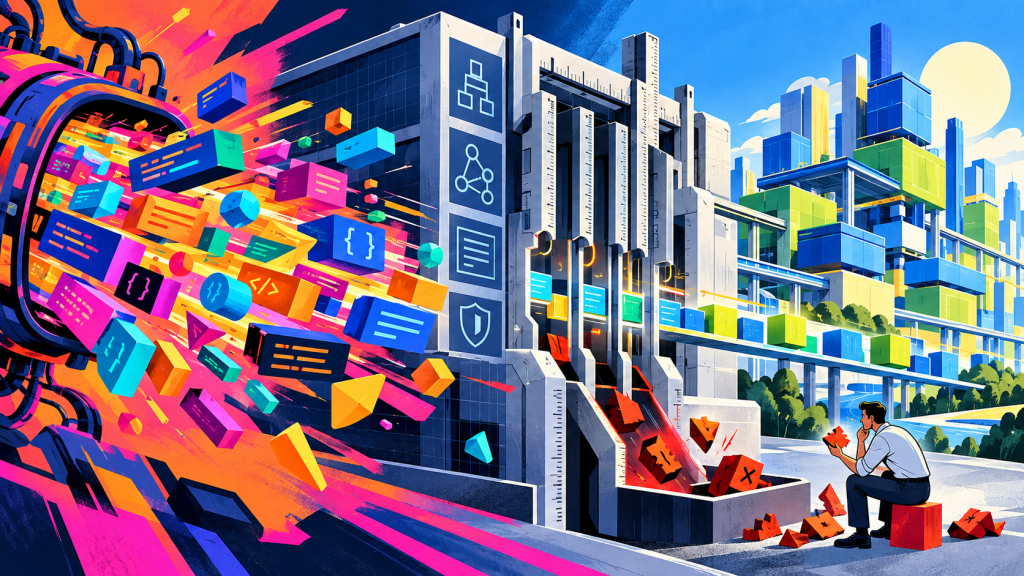
What is usually missing is more revealing than what is included. There is no working system, no production workflow, no team operating differently, no employee retrained around a new process, and no customer experiencing a materially better outcome.
Strip away the deck and look for the build. There often isn’t one.
AI strategy has become a very expensive way to postpone learning
This is not an argument that strategy is useless. It is an argument that AI strategy created before implementation evidence is mostly informed speculation wearing executive formatting.
Even the consulting market is starting to say the quiet part out loud. In April, Patrick Bushe published a piece calling AI strategy consulting “one of the most popular and most misused services in 2026”. His more important observation is that strategy often makes more sense after an organization has shipped two or three initiatives and learned what actually works. t should not be controversial. Yet much of the industry still behaves as if AI were an ERP program where the correct answer can be discovered through interviews, decomposed into workstreams, and scheduled across six quarters.
AI does not work that way. Model behavior changes, costs move, user behavior surprises you, trust breaks in unexpected places, and the bottleneck you thought was “document generation” turns out to be an approval queue owned by somebody three levels away.
You learn those things by building.
The irony is that McKinsey’s own research has already made the case
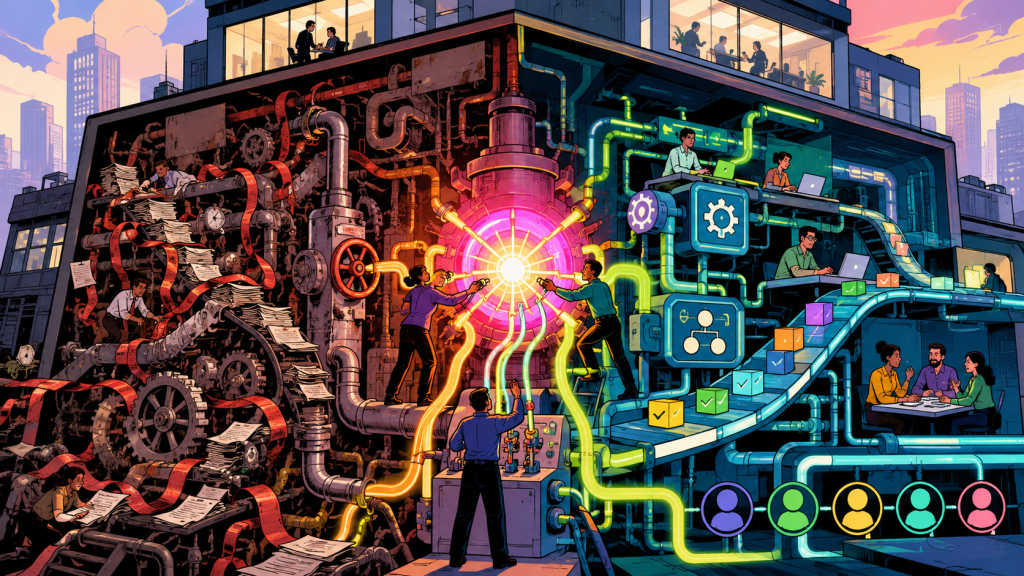
In its 2025 global AI survey, McKinsey found that workflow redesign had the biggest effect among 25 tested organizational attributes on whether companies saw EBIT impact from generative AI. Only 21 percent of respondents using generative AI said their organizations had fundamentally redesigned at least some workflows. d that again. The strongest signal was not the maturity model, the steering committee, the enterprise license, or the number of pilots. It was changing how work actually happens.
McKinsey’s later 2025 research sharpened the point. AI high performers were nearly three times as likely as others to report fundamental workflow redesign, 55 percent versus 20 percent. In April 2026, McKinsey went further, reporting that almost nine in ten companies had deployed AI in at least one function by the end of 2025 while 94 percent of respondents still reported no “significant” value from those investments. consulting industry does not have an AI strategy problem. It has an execution artifact problem.
Cisco learned this the hard way
One of the best AI transformation stories I have seen recently is not a pristine success case. It is a failure followed by a workflow redesign.
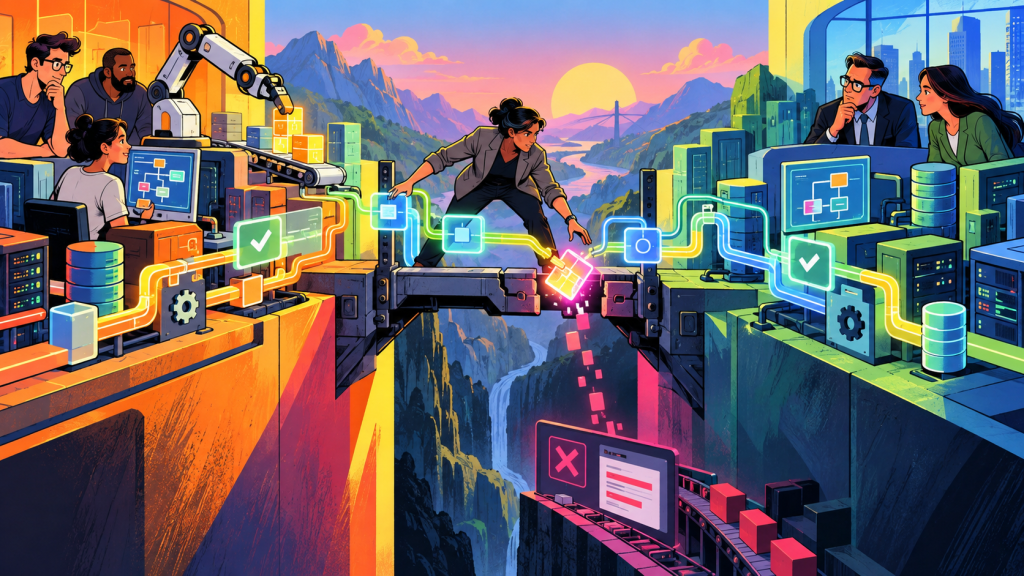
Cisco initially used generative AI to summarize customer support cases when one engineer handed work to another. The intervention made the handoff faster, but the underlying workflow was still wrong. Cisco Chief Customer Experience Officer Liz Centoni told Business Insider that the result simply “annoyed our customers faster.” Cisco changed the question. Instead of asking how AI could improve the handoff, it asked why the handoff existed.
The company redesigned the workflow around intelligent routing. According to Centoni, nearly 88 percent of roughly 1.5 million annual support cases are now routed to the right engineer the first time. That is what AI transformation looks like: not adding intelligence to a bad step, but questioning whether the step should survive. The full Cisco case is worth reading. The build produces the strategy
The same pattern is visible elsewhere. In an OpenAI-published case study, so read it with the appropriate vendor lens, LSEG reports reducing some product release cycles from three to six months to roughly two weeks and moving from customer request to production deployment in about four weeks. The important part is not the model choice. It is that the operating system for turning knowledge into products changed. ore technical example comes from a 2026 automotive case study involving a production API workflow at Volvo Group. Researchers reported reducing per-API development time from roughly five hours to under seven minutes while preserving a measured 93.7% F1 score, saving an estimated 979 engineering hours. That is not “developer productivity” as an abstract ambition. It is a specific workflow, decomposed, instrumented, rebuilt, and measured. The paper is here. re is also a warning for executives who think buying tools equals transformation. A randomized controlled trial by METR found that experienced open-source developers working in mature repositories actually took 19% longer with early-2025 AI tools, despite believing afterward that AI had made them 20 percent faster. That study should be required reading in every executive AI steering committee because it exposes how easily enthusiasm can masquerade as productivity. Stop buying roadmaps to places nobody has visited
The right unit of AI strategy is not the use case. It is the workflow.
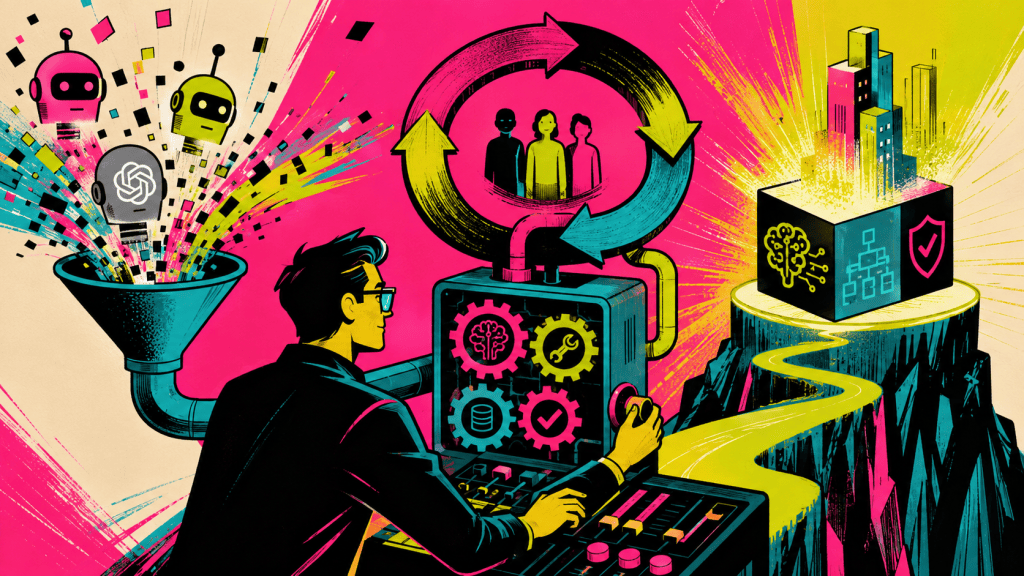
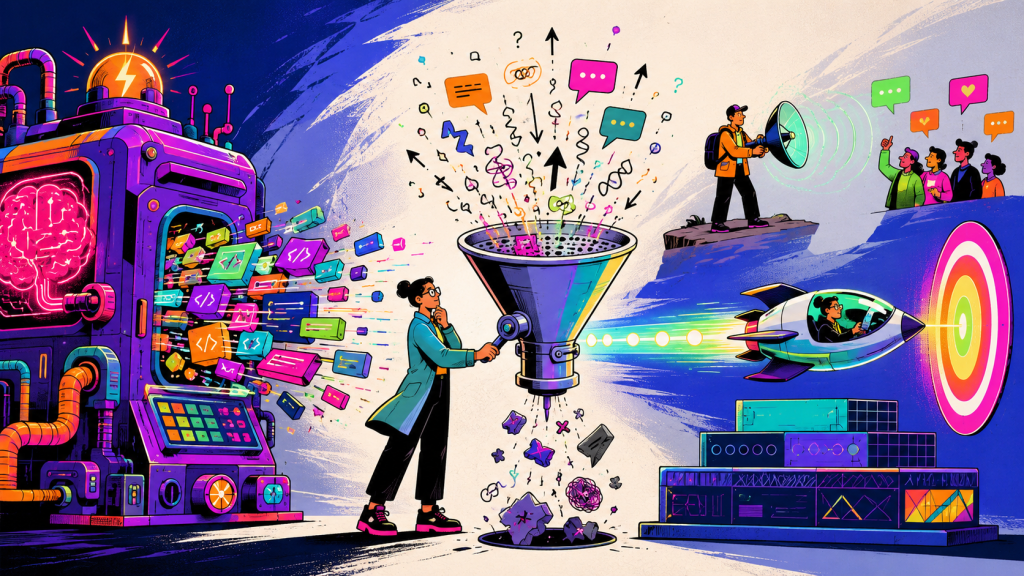
Put a product leader, an engineer, a domain expert, and someone who actually performs the work in a room. Baseline the current process. Build against real constraints. Put it in front of real users. Measure cycle time, quality, cost, failure modes, and what human work disappears or changes.
Then retrain the team. Change decision rights. Remove obsolete steps. Instrument the system. Run it long enough to discover where the economics and trust actually break.
Only then should you write the roadmap.
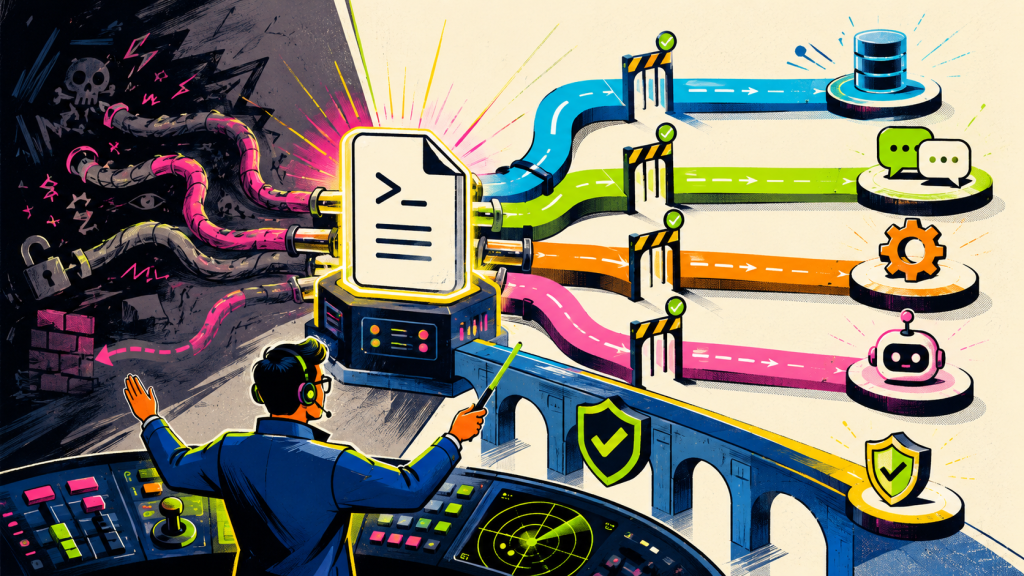
This is where I part company with the idea that every enterprise needs an AI strategy engagement before it starts. Large organizations absolutely need governance, architecture, investment discipline, and a coherent view of where AI creates advantage. But strategy without shipped evidence is theater, and governance without operational learning quickly becomes policy written for systems that do not yet exist.
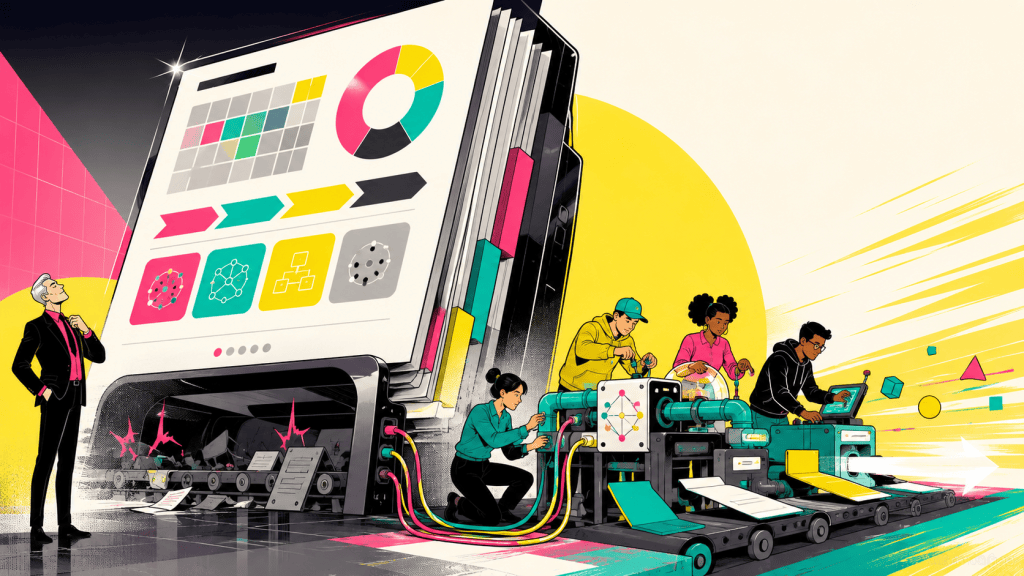
The deck should be the compression of what you learned by changing the business. It should not be a substitute for changing the business.
For product leaders, that is becoming an important leadership test. The job is not to sponsor more AI activity or commission a more sophisticated prediction of the future. The job is to turn ambiguity into a working system, prove where value exists, and then build the organizational machinery to repeat it.
If the deck comes first, the engagement may be little more than a corporate wellness check. Everyone leaves reassured that the company is “on an AI journey,” while the actual work continues exactly as it did before.
And if the only artifact is a deck, you bought a deck.