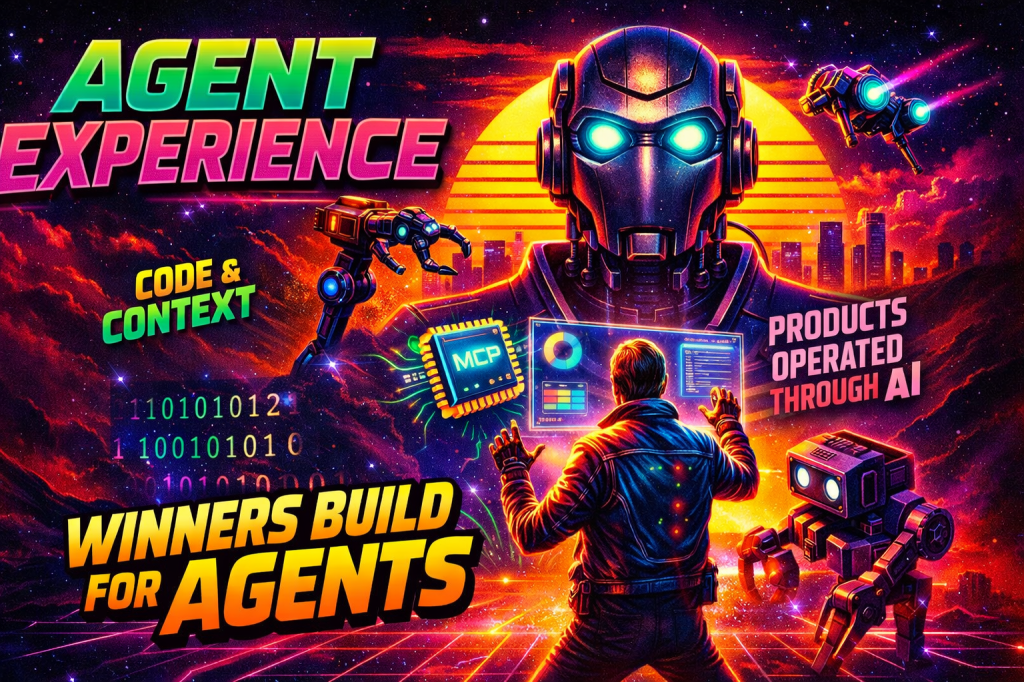
AI is no longer just something you add to a roadmap. It is changing the shape of the product itself.
For the last two years, many companies have treated AI as a feature layer: a copilot here, a chatbot there, maybe a workflow shortcut wrapped in a slick demo. That framing made sense early on. It does not go far enough now. Software has a new kind of user emerging inside it: the agent. Not a person clicking through screens. Not a developer reading your docs. An agent trying to understand your product, retrieve context, make decisions, and complete work on behalf of someone else.
That is why Agent Experience, or AX, matters.
Netlify’s framing of Agent Experience is one of the clearest I have seen. They are not treating AX as a novelty or a thin AI wrapper around an existing platform. They are treating it as a real product and platform design principle. That is the right lens. If agents are becoming real users of software, the experience they have with your product will start to matter almost as much as the experience your human users have today.
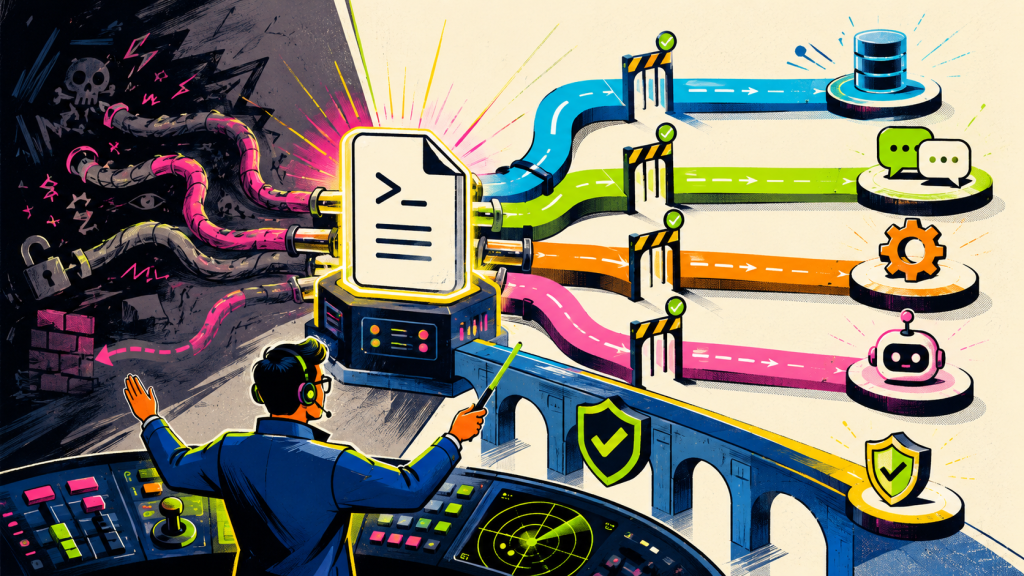
That is the shift many teams are still underestimating. AX is not the same thing as adding a chatbot to your product. It is much closer to what happened when companies realized that UX shaped adoption and DX shaped ecosystems. AX belongs in that same category. It is about whether an agent can discover your capabilities, understand your rules, authenticate safely, retrieve the right context, and execute reliably without constant human rescue.
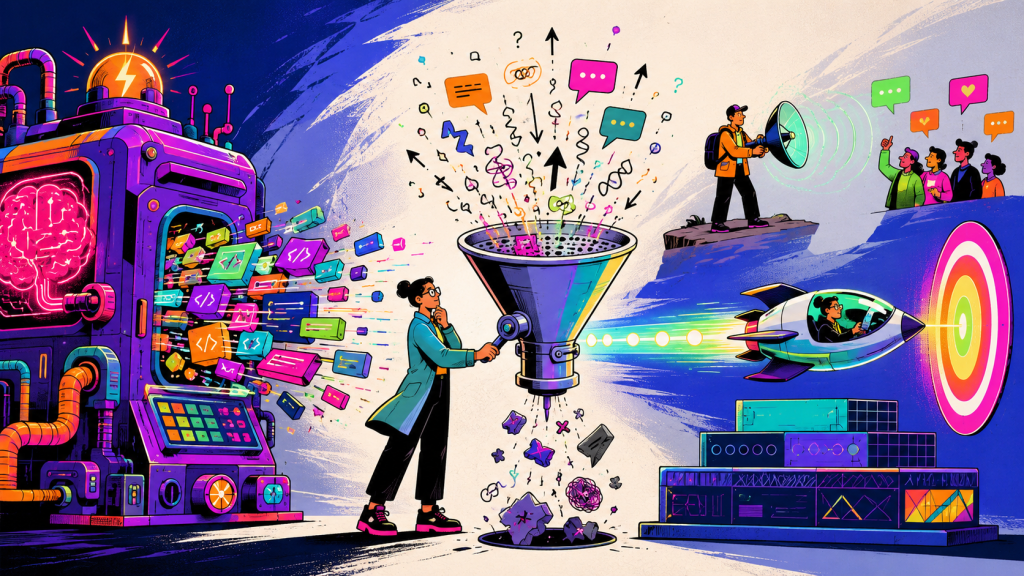
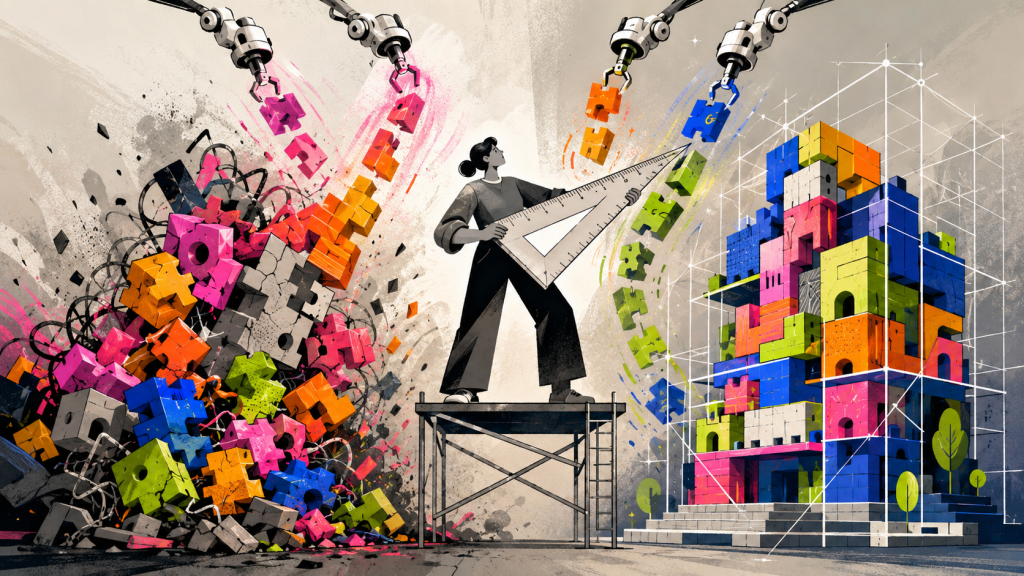
From an engineering perspective, AX starts with a simple truth. Agents usually do not fail because they are incapable. They fail because our systems are ambiguous, brittle, poorly documented, or hidden behind interfaces designed only for humans. That is why Netlify’s post on AI as a better pair programmer through Agent Experience is so relevant. Their argument is not that better models alone solve the problem. It is that better context, better contracts, and better platform cues create better outcomes for agents. That is a much more useful lens for engineering teams.
This is where many organizations need to mature quickly. If your APIs exist but are hard to interpret, your authentication model assumes every action is human initiated, your logs cannot distinguish agent activity from user activity, and your documentation reads more like marketing than operations, you do not have an AI readiness problem. You have an interface quality problem. AX exposes that immediately.
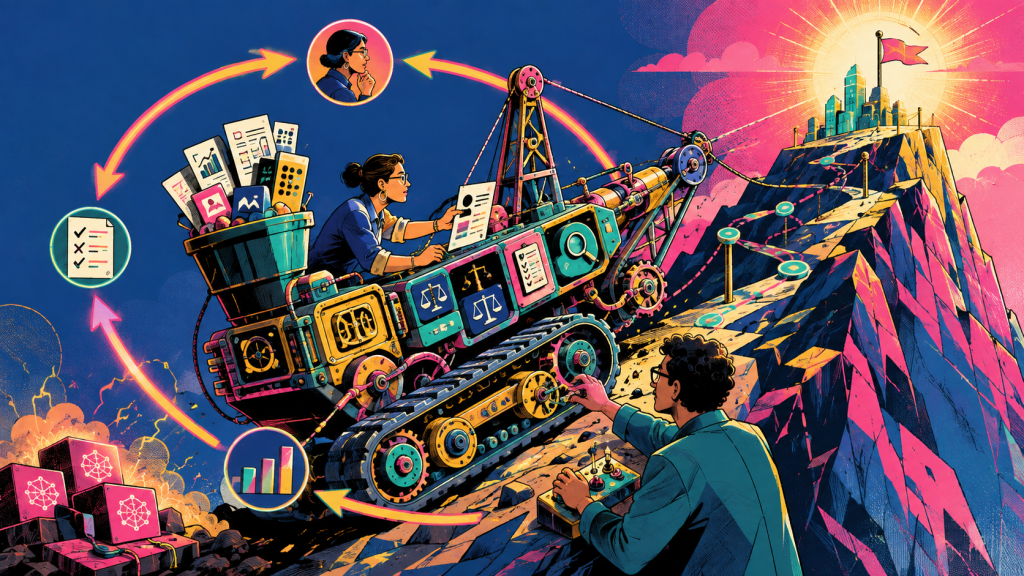
For product management, AX is even more disruptive than it first appears. Product teams have spent years refining user journeys. Now they need to define delegated journeys. That means asking a different set of questions. What should an agent be allowed to do independently? Where is human approval required? What context is necessary to make a safe decision? What should happen when confidence is low? Which parts of the product should be expressed as structured state instead of buried in screens, prose, or tribal knowledge?
This is where AX becomes more than a technical conversation. It becomes a product strategy conversation. The companies that get this will stop asking, “How do we add AI to the product?” and start asking, “How do we make the product operable by the customer’s preferred agent?” Those are very different roadmaps. One produces features. The other can produce distribution.
That distinction matters at the business level. Good AX reduces the cost of interaction across the company. If an agent can reliably discover, configure, and operate your product, fewer workflows need training, support, custom onboarding, or manual intervention. Time to value drops. The need for services-heavy handholding drops. The product becomes easier to consume, easier to extend, and easier to embed into a broader operating model.
This is also why Netlify’s broader idea of the Agent Web is worth paying attention to. Their point is not that the web becomes separate for agents. It is that digital products need more intentional, structured interfaces for agent consumption alongside human experiences. I think that is exactly where this goes. The winning products will not just look elegant to people. They will be legible, constrained, and executable for agents.
Underneath all of this is infrastructure. If you want software to be operable by agents, you need standard ways to expose context and actions. That is why protocols matter. Anthropic’s Model Context Protocol matters not because every company needs to obsess over one standard, but because it shows the direction of travel: agents need a cleaner, safer, more consistent way to connect to tools, data, and workflows.
This is why I think AX will become one of the most important strategic concepts in software over the next few years. UX made software easier to use. DX made software easier to build on. AX will make software easier to operate through. That is where the leverage is. It turns software from a destination into an executable capability.
It also changes the competitive landscape. If your competitor is easier for agents to use, they become the path of least resistance inside increasingly automated workflows. In that world, the product with the best interface does not always win. The product with the cleanest delegation model often will.
My view is that AX should now be treated as a first-order design concern. Engineering teams should see machine-readable context, stable tool surfaces, and agent observability as core product quality. Product teams should define agent job stories alongside user stories. Business teams should start measuring whether high-value tasks can be completed with low retries, low human intervention, and strong auditability.
That is the real opportunity inside AX. It is not simply about making AI feel more natural. It is about building software that is easier for the next generation of work to actually execute.
Netlify deserves credit for pushing the conversation in this direction. They are helping move the market away from thinking about AI as a feature checklist and toward thinking about agents as a new operating layer for software. That is the bigger idea. The companies that internalize it early will not just ship more AI features. They will build products and businesses that are easier for the future of software to choose.

 bencoding