Most “AI-first” transformations are framed like a tooling upgrade. Roll out copilots. Stand up an LLM gateway. Run a few enablement sessions. Add a dashboard. Declare victory.
That framing is convenient, and wrong.
The hard truth is that AI shifts the physics of product delivery. When a small group can generate, test, refactor, and ship at a pace that used to require a larger org, the limiting factor stops being headcount. It becomes judgment. Taste. Systems thinking. The ability to turn fuzzy intent into reliable software that customers trust. In other words, talent density.
What talent density actually means
Talent density is the concentration of high-performing capability on a team, not the average competence across a large group. Netflix popularized the idea as a deliberate strategy: smaller teams of exceptional people outperform larger teams with more “adequate” performance. (Harvard Business School Library) Josh Bersin frames it similarly as the quality and density of skills, capabilities, and performance in a company. (JOSH BERSIN)
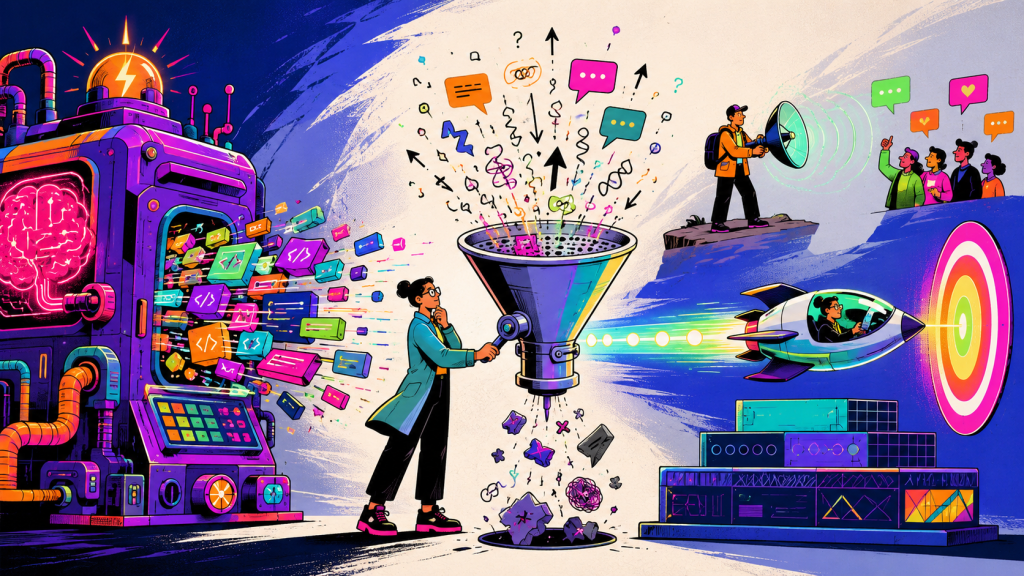
In an AI-enabled model, talent density becomes even more decisive because AI increases the leverage of the people who know what they are doing. A strong engineer with solid product instincts plus AI can explore options faster, generate more working artifacts, and iterate with tighter feedback loops. A weak engineer with AI can generate more output, but not necessarily more value. They may produce plausible code, fragile architecture, and subtle security problems at higher speed.
AI does not replace the need for strong people. It amplifies the gap between strong and average.
Why this breaks the low-cost labor playbook
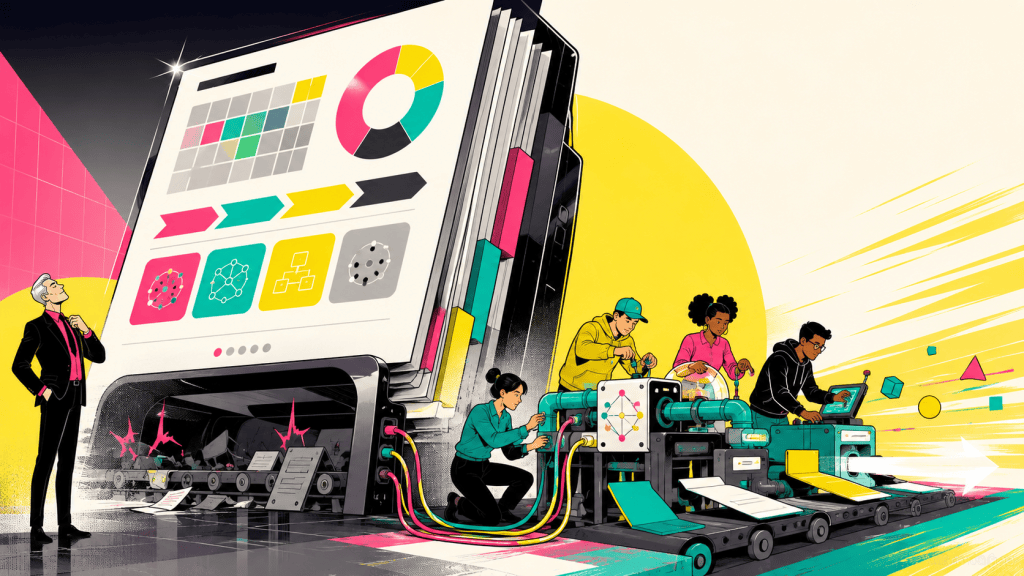
For the last two decades, plenty of product organizations optimized for labor economics. The model was familiar: build a thin layer of senior leadership and architects, then scale delivery through lower-cost labor markets, consultants, staff augmentation, and large delivery pods. It often worked because the bottleneck was production capacity. More people meant more throughput, even if coordination overhead grew.
AI flips that equation.
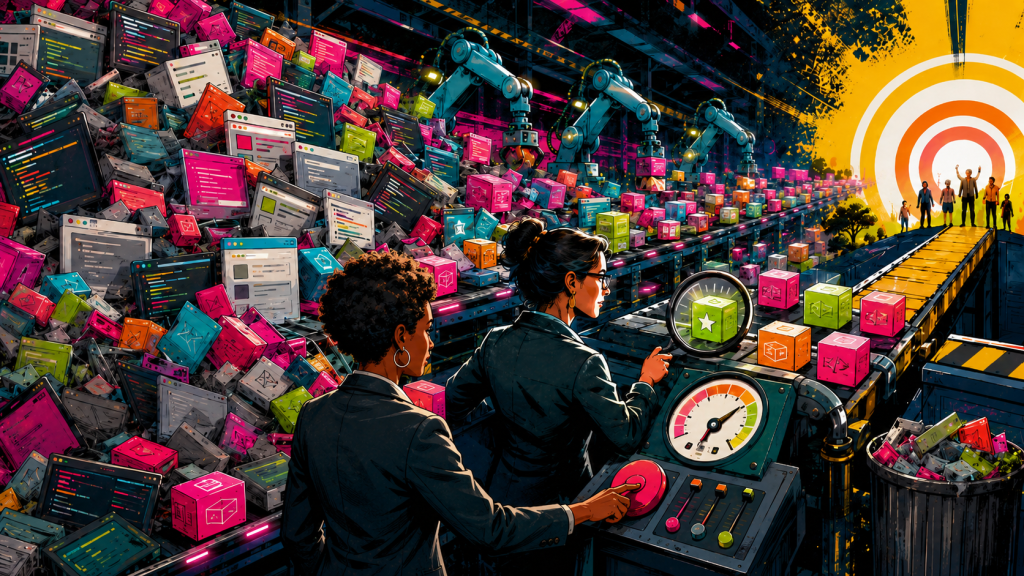
If you can generate a first draft of code, tests, documentation, and even UI variations quickly, the bottleneck shifts from production to evaluation. The real work becomes deciding what to build, validating it fast, and shaping it into a coherent system. That is high-skill work. It is also the kind of work that does not scale linearly with more bodies.
This is why so many “AI-first” moves end up implicitly becoming “talent density” moves.
Shopify’s CEO set a clear expectation: teams should prove AI cannot do the job before hiring, and AI use becomes a baseline expectation that factors into performance. (Business Insider) You can debate the tone, but the operating model is unmistakable. The company is not planning to staff its way to progress. It is planning to skill its way there.
Duolingo communicated something similar when it announced it would become “AI-first,” including gradually reducing contractor work that AI can handle and treating AI usage as part of how work gets done. (The Verge) Again, the signal is not “AI will do everything.” The signal is that the organization expects higher leverage from fewer people, which only works when the people are strong.
Klarna provides another angle. The company publicly tied AI-driven customer service automation to headcount reductions and productivity improvements, while also acknowledging that quality constraints still matter. (reuters.com) This is the reality of AI-enabled operations: cost and speed can improve quickly, but the ceiling is set by judgment, experience design, and risk management.
Talent density is not elitism. It is risk management.
Some leaders hear “talent density” and think “brilliant jerks” or “culture of fear.” That is not the point. Talent density is about outcomes and integrity under acceleration.
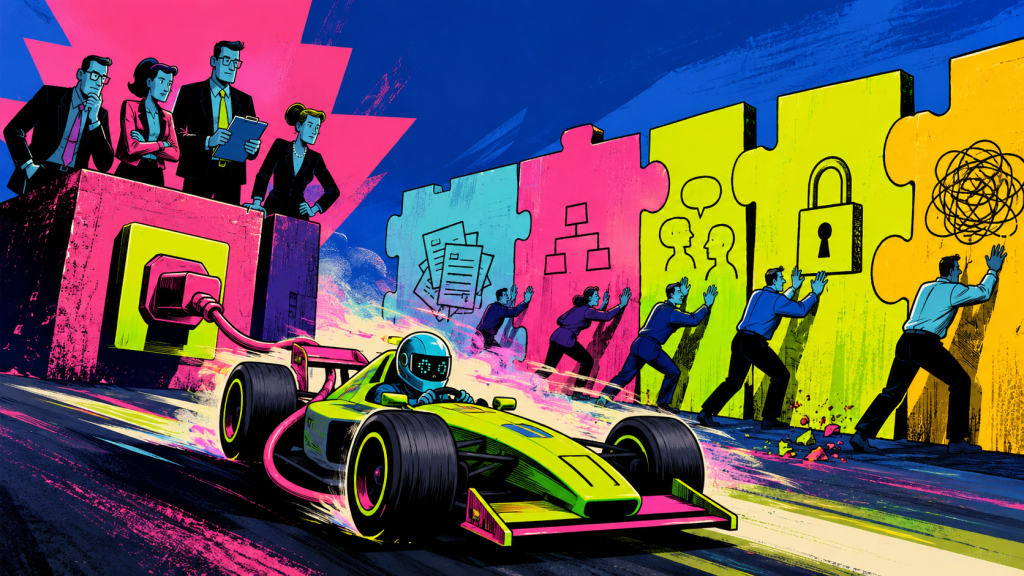
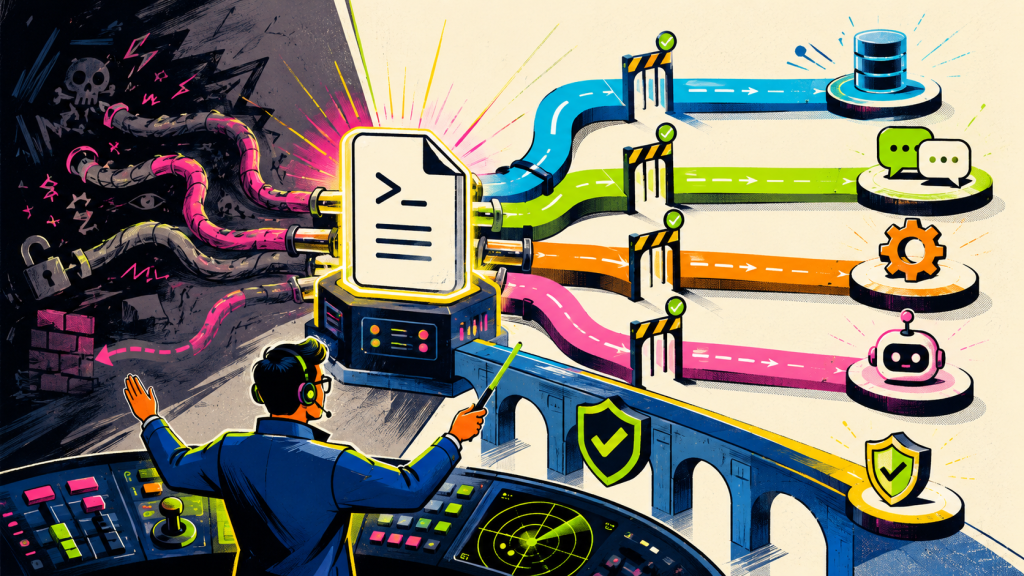
AI increases the rate at which decisions become production artifacts. That means the cost of poor judgment rises. A sloppy approach to data privacy, security, and compliance does not merely create defects. It creates systemic risk at machine speed. If your team cannot consistently evaluate tradeoffs, recognize failure modes, and design for resilience, AI turns your delivery engine into a chaos machine.
High talent density reduces risk because it reduces rework, coordination drag, and operational surprises. It also improves the quality of decisions made under uncertainty, which is what product development is most of the time.
The real shift: from coordination to craftsmanship
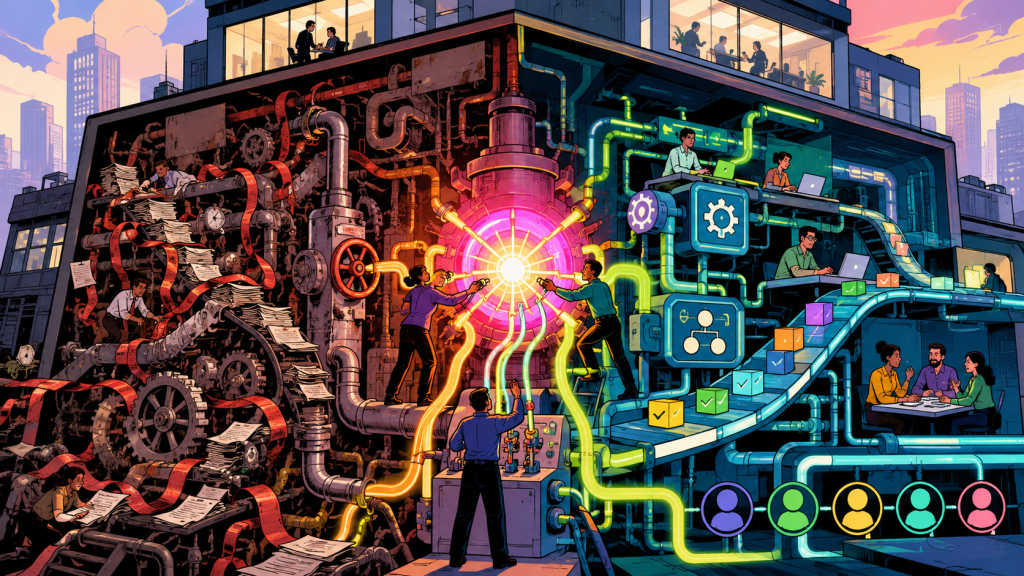
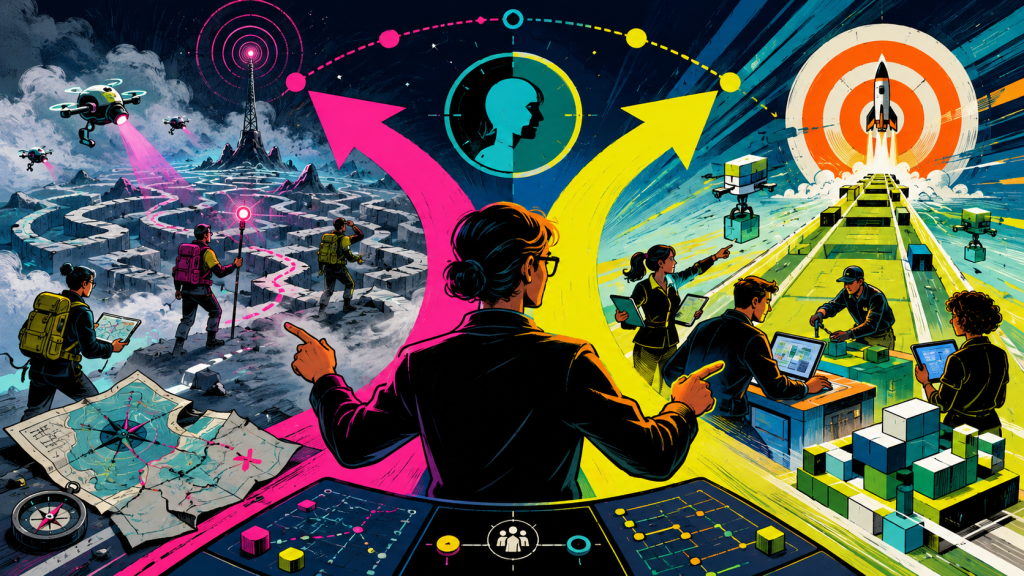
Traditional scaling strategies often rely on coordination. More process. More roles. More layers. More status reporting. That is how you keep large groups moving in the same direction.
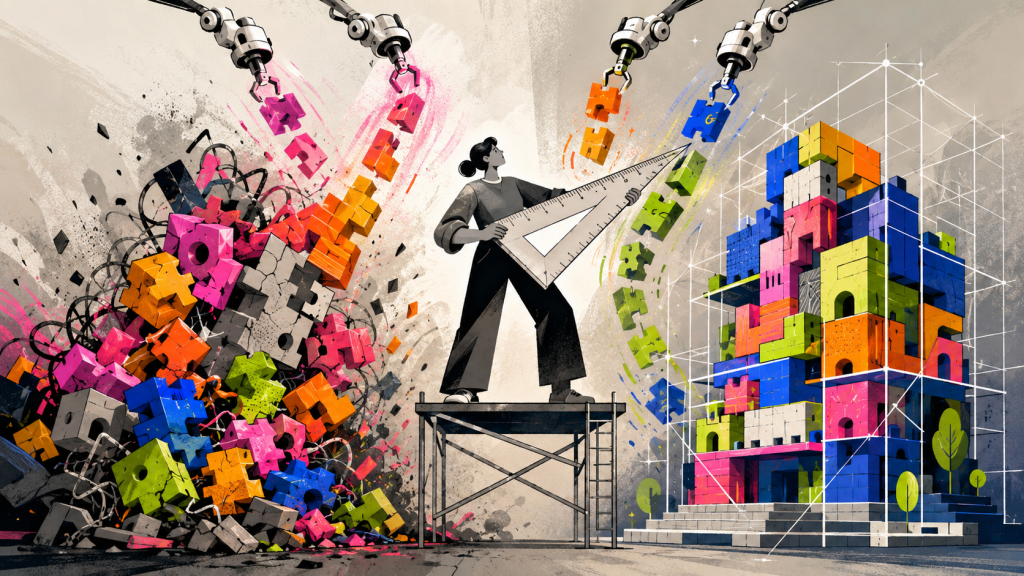
AI-enabled teams win through craftsmanship and tight feedback loops. They do not need more coordination. They need sharper product sense, stronger engineering fundamentals, better testing discipline, and clearer architecture boundaries. They need people who can use AI as an accelerator without outsourcing their thinking to it.
This is also why “consultant-heavy” models get stressed in an AI-first world. Consultants can be excellent, but many consulting engagements are optimized for staffing flexibility, not deep product ownership. AI-first delivery punishes shallow ownership. When iteration cycles compress, you need teams who can make decisions quickly and live with the consequences.
What to do differently if you buy this argument
If talent density is the strategy, then the tactics change.
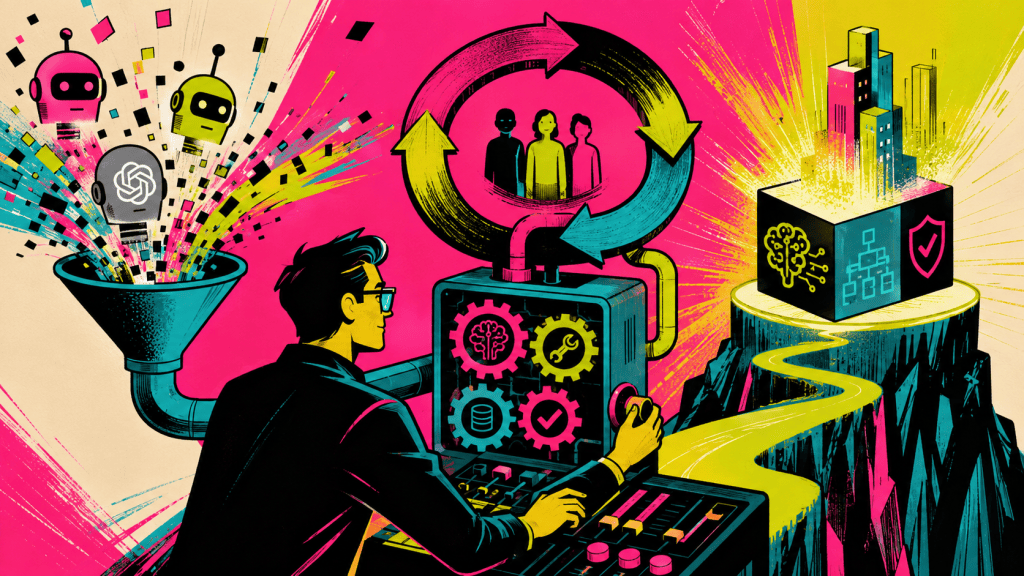
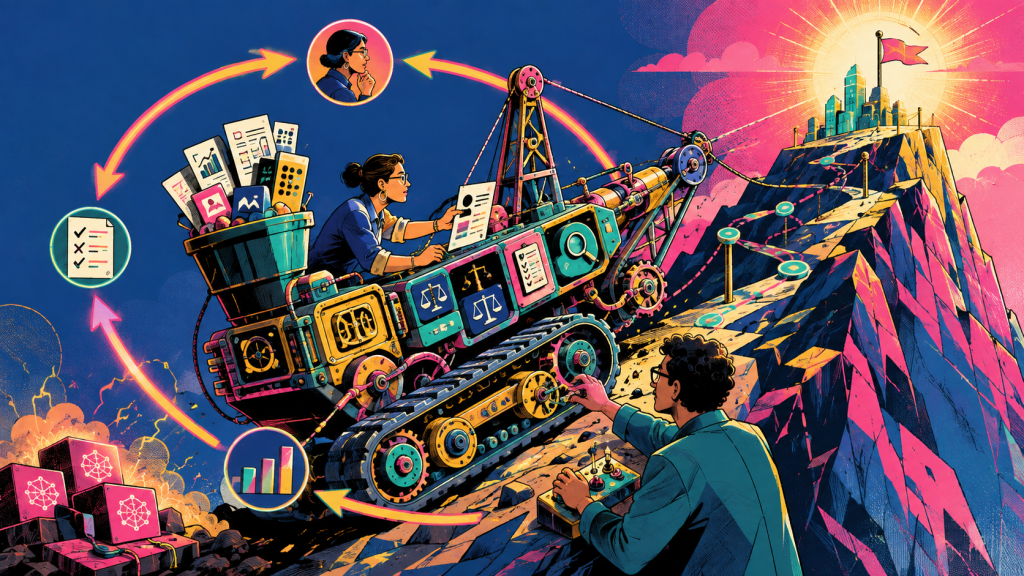
You still invest in tooling, but you prioritize tools that increase feedback quality, not just output volume. You put serious energy into evaluation: test harnesses, observability, security scanning, prompt and model governance, and clear engineering standards. You train people on how to collaborate with AI, but you also raise the bar on fundamentals because fundamentals are what keep AI-generated output safe and maintainable.
You also stop pretending that hiring is the only lever. In many orgs, the biggest gains come from upgrading how the existing team works: clearer product bets, smaller slices, tighter ownership boundaries, better engineering hygiene, and stronger leaders who coach to mastery.
How leadership has to change
This is where the conversation usually gets uncomfortable, because talent density is not a slogan. It forces leadership evolution.
Leaders in AI-enabled product organizations need to do three things differently.
First, they need to hire and develop for slope, not just experience. The best people in an AI-first model are curious, adaptable, and obsessed with learning. They treat AI as a new instrument to master, not a shortcut to avoid thinking.
Second, they need to redesign teams around ownership and leverage. That often means fewer handoffs, fewer committees, and smaller teams with clear product surfaces. The goal is not to maximize utilization. The goal is to maximize decision quality per unit time.
Third, they need to lead with standards and context, not control. AI makes micro-management obsolete and dangerous. If you want speed with safety, you set clear principles, create guardrails, and build a culture where strong peers review work aggressively and constructively.
In an AI-enabled world, talent density is not a nice-to-have. It is the operating system. If you want smaller teams to ship more, you cannot cling to the old comfort blanket of cheaper labor and more bodies. You have to build teams that can think, decide, and craft at high velocity. And you have to lead in a way that makes those teams sustainable.